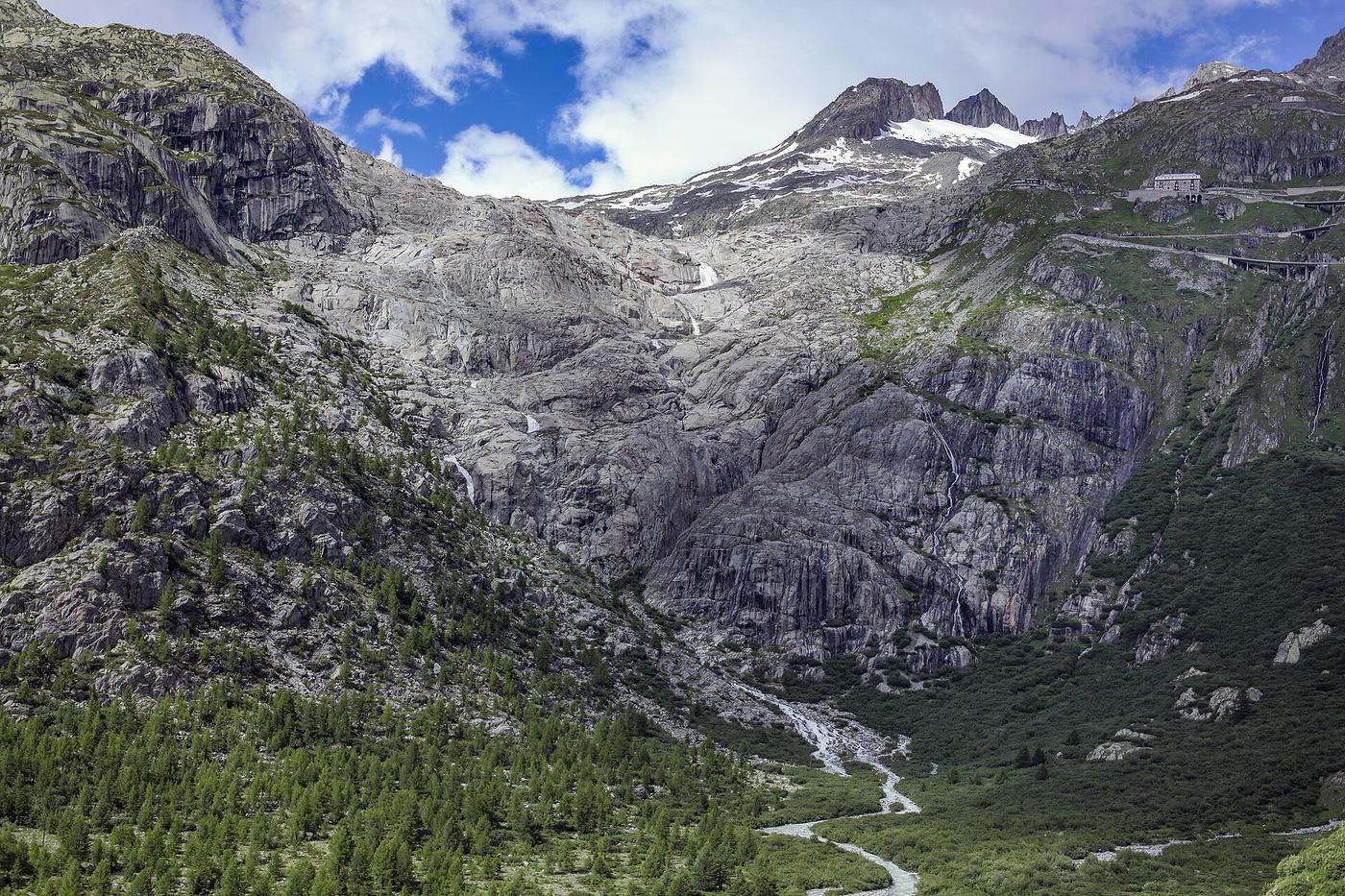
Swiss glaciers lose 5.5% of their ice in a single year
Switzerland's glaciers lost 5.5% of their remaining ice in 2026, the GLAMOS monitoring network reported, the second-worst year on record after 2022. Nearly a fifth of the country's glacier ice has vanished in five years. From July to September, melt released about 2,200 billion liters of water, more than four times what Swiss homes drink in a year.
Switzerland's glaciers had another brutal summer. They lost 5.5% of their total ice volume in 2026, swissinfo.ch reported, citing the annual report from the Glacier Monitoring Switzerland network, known as GLAMOS, and the Swiss Academy of Sciences. Over five years, almost 20% of Swiss glacier ice is gone.
On average, glaciers thinned by 2.5 to 4 meters this year, ETH Zurich said. The Rhône, Aletsch and Clariden glaciers all had their biggest melt on record. At the lowest measuring point on the Aletsch Glacier, the largest in the Alps, the ice thinned by 13 meters, swissinfo said.
Some glaciers are simply gone. Bella Tola in Valais and Griessfirn in Glarus disappeared completely, ETH said. GLAMOS director Matthias Huss told swissinfo that at least 30 small glaciers may have ended this summer. The Plattalva Glacier, home to one of the world's most detailed glacier studies in the 1950s, vanished in September.
"What used to be extreme events, by definition rare and very intense, now occur almost every summer," Huss said.
Two things did the damage. The winter of 2025-26 was among the 10 least snowy on record, so glaciers had a thin blanket. Then heat waves ran from May to September. For 76 days, the freezing level stayed above 4,000 meters, or about 13,100 feet. That is more than double the average and a Swiss record. Glaciers began losing mass on June 29, the second-earliest date since 2000.
The year still ranked second to 2022. Temperatures were higher this year, but more snow cover on many glaciers and less Saharan dust on the snow slowed melting slightly, swissinfo said.
The melt fed Europe's rivers. From July to September, glaciers released about 2,200 billion liters of water. That is more than four times what Swiss households use for drinking water in a year, and it eased summer shortages. But that supply is shrinking. Alpine glaciers have reached, or soon will reach, "peak water," when runoff starts to fall. That matters for farming, shipping, drinking water and power along the Rhine, Rhône and Danube.
A 2025 study found that without deep cuts in greenhouse gas emissions, half of all Alpine glaciers could vanish within 20 years.
What we know: Swiss glaciers lost 5.5% of their ice in 2026, second only to 2022.
What we don't: How many more small glaciers will be declared gone.
Where outlets agree ETH Zurich and swissinfo.ch both report that Switzerland has lost nearly 20% of its glacier volume in five years, with more than 5% lost in 2026 alone.
Where they differ ETH Zurich says some glacier tongues lost up to 10 meters of ice this year, while swissinfo.ch reports 13 meters lost at the lowest point on the Aletsch Glacier.