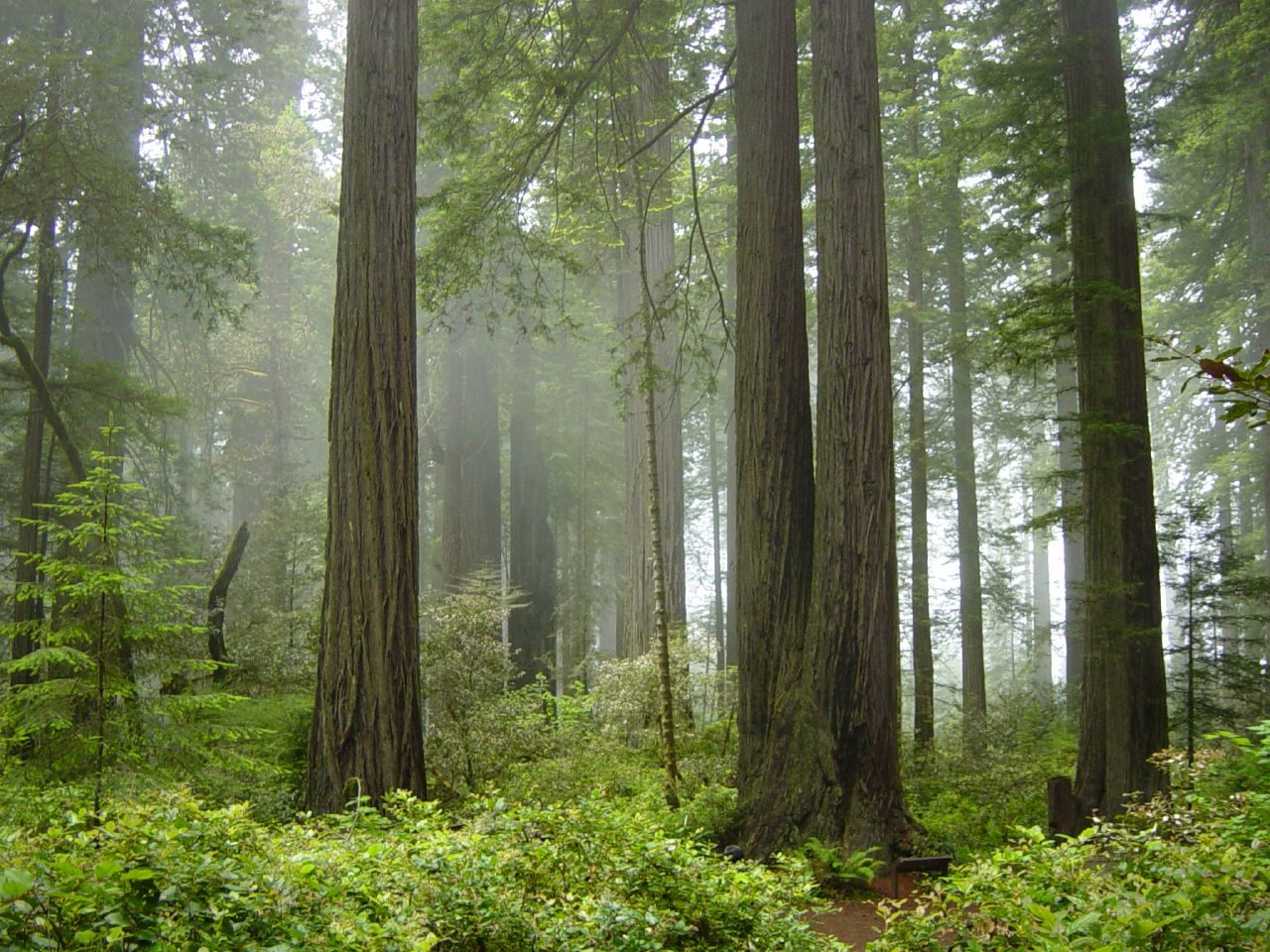
Heat waves make California's redwoods slow down photosynthesis
California's coast redwoods slow photosynthesis, the process that feeds them, during heat waves, a UC Davis study finds. When the air topped 86 degrees, some leaves ran nearly 20 degrees hotter than the air. It is the first study of heat's effect on redwood photosynthesis, and scientists worry about trees that can live more than 1,000 years.
The world's tallest trees are feeling the heat. Coast redwoods slow down photosynthesis when temperatures spike, a University of California, Davis study found. Photosynthesis is how trees turn sunlight, water and carbon dioxide into food. The study was published in the journal JGR Biogeosciences.
Redwoods grow in cool coastal places where the average temperature is about 59 degrees, UC Davis said. But heat waves now push past 100 degrees. When the air topped 86 degrees in the summers of 2022 and 2024, some leaves got nearly 20 degrees hotter than the air around them.
"The leaves aren't able to cool down," said lead author Lily Klinek, a Ph.D. candidate at UC Davis. Leaves cool off by letting water out through tiny pores, much like sweating. When water is short, the pores close. That saves water but stops the tree from taking in carbon dioxide.
Lab tests went further. Branches sat in jars of water so the pores could stay open. At temperatures up to 110 degrees, photosynthesis still dropped. Heat itself seems to harm the leaf's machinery.
That could starve the trees over time, Vox reported. Oregon State forest ecologist Chris Still, who was not part of the study, called it "carbon starvation." Fog makes it worse. Redwoods drink from coastal fog and use it as shade. But fog has declined 30 to 40 percent, said UC Berkeley's Todd Dawson, who also was not involved. "It's kind of a double whammy," he said.
Whole worlds live in redwood treetops. Soil mats and ferns grow hundreds of feet up. The wandering salamander can spend its whole life in one tree. The marbled murrelet, a seabird, nests there.
There is some hopeful news. The leaves in the study regained their ability to photosynthesize after the heat passed, Klinek told Vox. "But in five or 10 years, if temperatures are even hotter and heat waves are even more frequent, we don't really know if there would be a recovery," she said.
The team studied a redwood forest in Mendocino County, near the southern part of the range. UC Davis said the central, southern and eastern parts of the range are already the most at risk. The trees there can live for more than a thousand years.
What we know: Heat cuts redwood photosynthesis even when the trees have water.
What we don't: The heat limits at which redwoods stop recovering or die.
Where outlets agree UC Davis and Vox both report this is the first study of how heat affects coast redwood photosynthesis, based on measurements in Mendocino County.
Where they differ UC Davis describes measurements over three summers, while Vox describes measurements taken twice a month over two years.