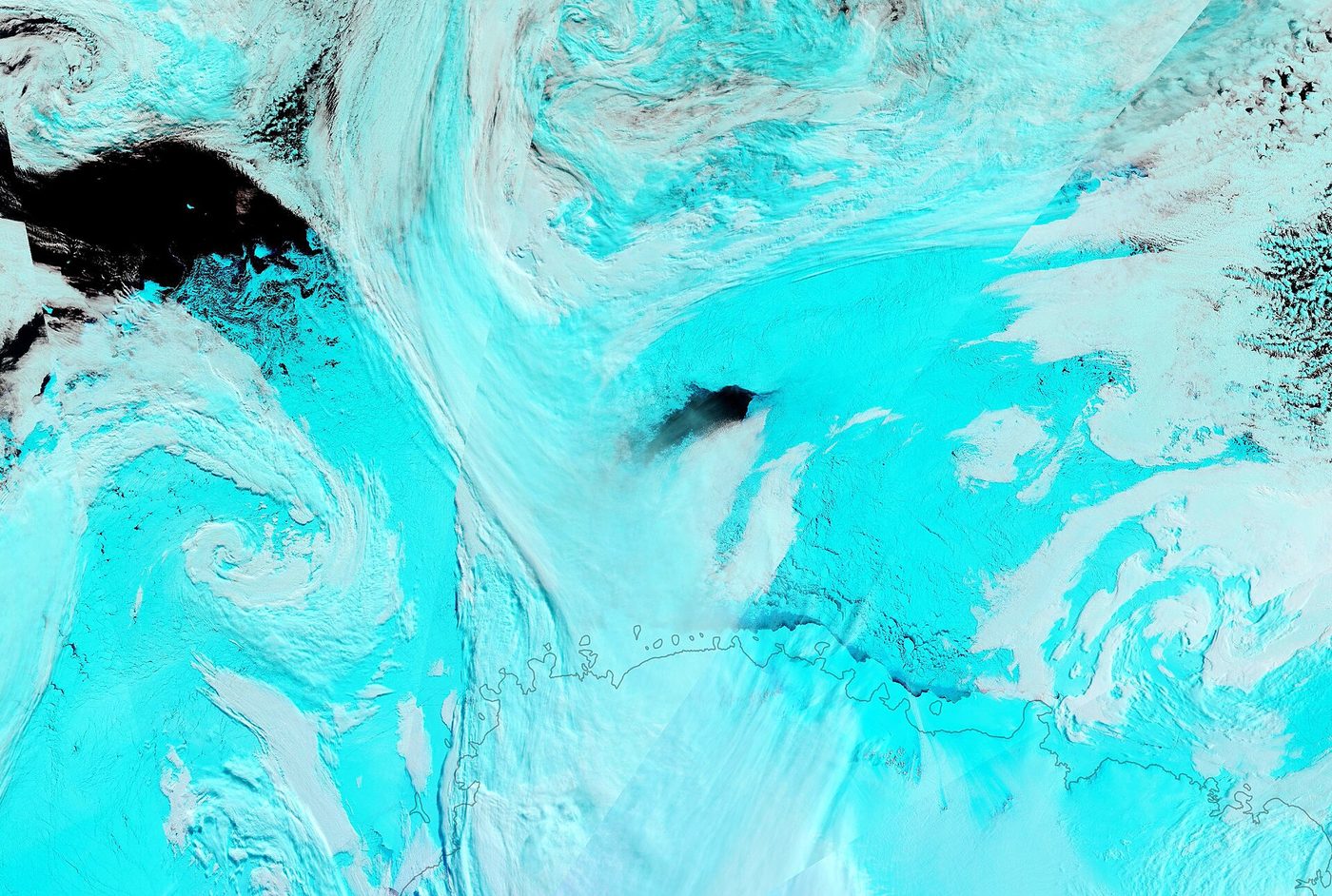
'Rivers in the sky' opened a Portugal-size hole in Antarctic ice
In August 2024, a hole nearly the size of Portugal opened in the winter sea ice of East Antarctica's Breid Bay, something scientists had never seen there at that time of year. A new study blames six strong atmospheric rivers and ocean heat waves. The researchers warn such openings may become more common as the climate warms.
Every winter, sea ice spreads around Antarctica and roughly doubles the continent's size. In August 2024, that did not happen in one spot. A huge area of open water appeared in Breid Bay, in East Antarctica, which is usually frozen over from July through August, ScienceAlert reported.
At its biggest, the hole covered 89,121 square kilometers, about 34,400 square miles. That is only slightly smaller than Portugal. Scientists call this kind of opening a polynya. They had never seen one there at that time of year.
A research team from India, led by earth scientist Jeebanjyoti Swain, has now explained it in the journal Geophysical Research Letters. Nature highlighted the study on Tuesday.
The cause was a run of extreme weather. Six atmospheric rivers, long bands of warm, wet air sometimes called "rivers in the sky," flowed toward Antarctica from July into August 2024. They were among the strongest midwinter moisture events on record. They warmed the air, dropped warm snow and pushed sea ice toward the pole.
The ocean helped too. Strong winds pulled warmer water up from below, a process called Ekman suction. Ocean heat waves kept the surface too warm to freeze.
Why it matters: Sea ice floats, so it does not raise sea level when it melts. But it shields the ice shelves and glaciers that can. Less sea ice exposes more of Antarctica's ice sheet to warm ocean water. Sea ice also anchors food webs that feed much of the world's oceans.
The trend is clear. This year Antarctica hit its third-lowest winter sea ice extent on record, ScienceAlert said. The four lowest years have all come in the past four years, led by 2023 and then 2024. Nature said low ice signals a big shift over the past decade, driven by both natural swings and human-caused warming.
The team expects more of these holes. "The low sea-ice conditions and polynya formation may become frequent in regions where sea-ice has historically remained stable," the authors wrote.
What we know: Strong atmospheric rivers and ocean heat opened the 2024 hole.
What we don't: How often holes like this will return.
Where outlets agree Nature and ScienceAlert both report that atmospheric rivers helped keep an area about the size of Portugal free of ice in Antarctica's winter.
Where they differ The study explains one 2024 event, but how much of the past decade's sea ice decline comes from natural swings versus human-caused warming is still open, and Nature cites both.