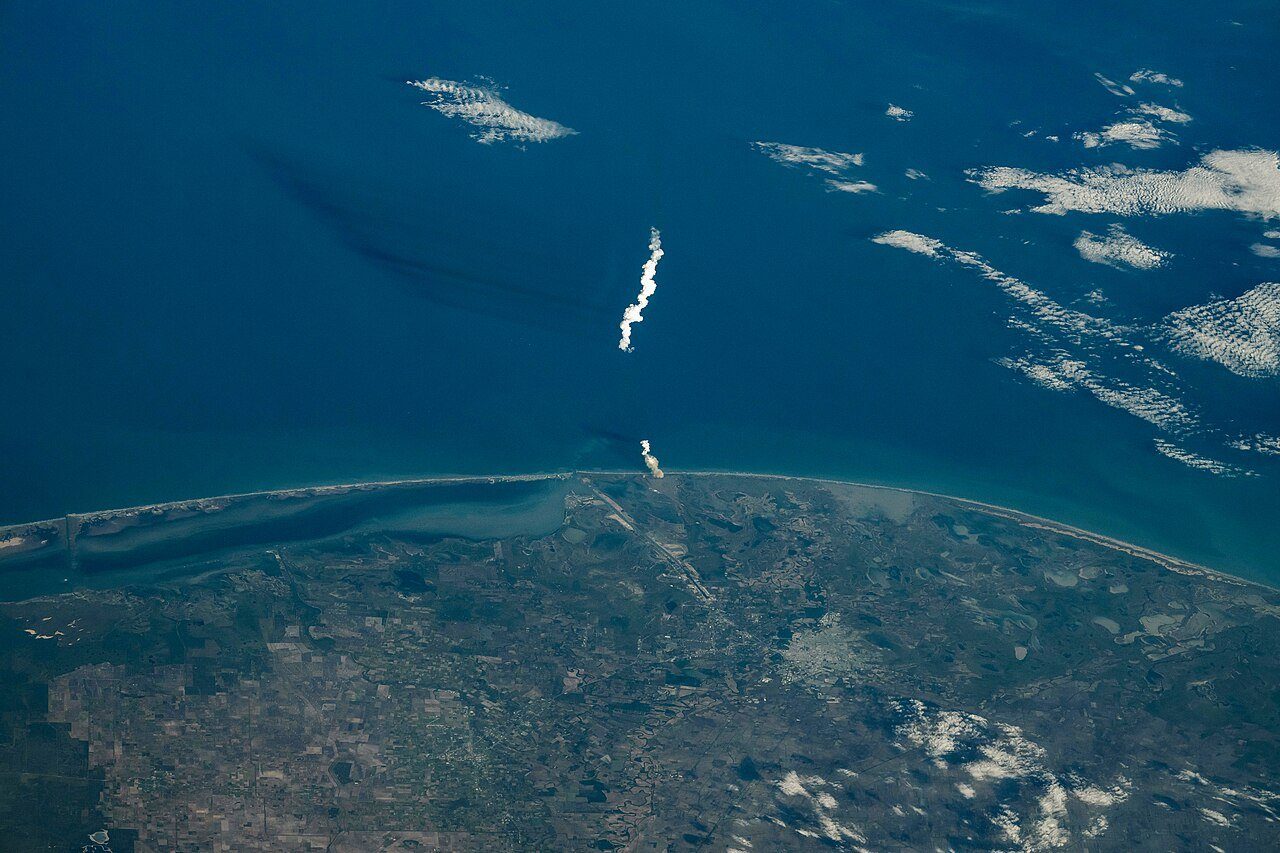
Starship Flight 14 reaches orbit, deploys 26 Starlinks
SpaceX’s Starship completed its first orbital flight on Sept. 28, deploying 26 third-generation Starlink satellites before an early Pacific splashdown north of Hawaii. A Raptor engine shut down early on ascent, but controllers still cleared the orbit burn. Replay and mission recaps remain on SpaceX and space-desk channels.
Starship is no longer only a suborbital spectacle. Space.com and Ars Technica reported that Flight 14 lifted off from Starbase, Texas, around 8:48–8:49 a.m. EDT on Sept. 28, lofting the Super Heavy–Starship stack on the program’s first trip to low Earth orbit after 13 suborbital tests. One of Ship’s six Raptors shut down early during ascent. SpaceX commentator Dan Huot briefly said the orbit attempt was off, then reversed as flight controllers cleared a single-engine second burn that finished insertion near 170–180 miles altitude.
A Pez-style dispenser then released 26 Starlink V3 satellites — the first operational next-gen batch to stay in orbit. Each V3 platform is described as adding about 1 Tbps of network capacity, roughly 10 times prior Falcon 9-class birds, and too large for Falcon fairings. Controllers later chose an early end out of caution after the ascent engine issue, bringing the ship down about three hours after launch with a controlled splashdown north of Hawaii instead of a nearly 10-hour multi-orbit plan aimed toward Chile. The Super Heavy booster also returned to a Gulf splashdown; tower catches remain a later goal.
SpaceNews said SpaceX and outside analysts were largely satisfied despite the technical issues. NASA still ties Starship-derived landers to Artemis timelines later this decade; tanker-flight cadence and on-orbit refueling remain unproven. Next engineering goals include longer orbital loiter, ship catch attempts, and propellant transfer demos. Florida pad work continues as SpaceX prepares additional flights from the Cape.
Where to watch: SpaceX and major space desks keep Flight 14 webcast replays and stills online; follow company launch pages for the next Starbase window the FAA schedule has flagged as soon as October.
What we know:
Flight 14 reached orbit, deployed 26 Starlink V3 satellites, and splashed down early north of Hawaii after an ascent engine anomaly.
What we don’t:
How soon SpaceX will attempt a ship tower catch or on-orbit refueling after the abbreviated flight.
Where outlets agree Ars Technica, SpaceNews, and Space.com agree Flight 14 reached orbit and deployed Starlink V3 satellites despite an early engine issue.
Where they differ Analysts split on how much the abbreviated mission and engine shutdown cloud the scorecard versus the orbital first.