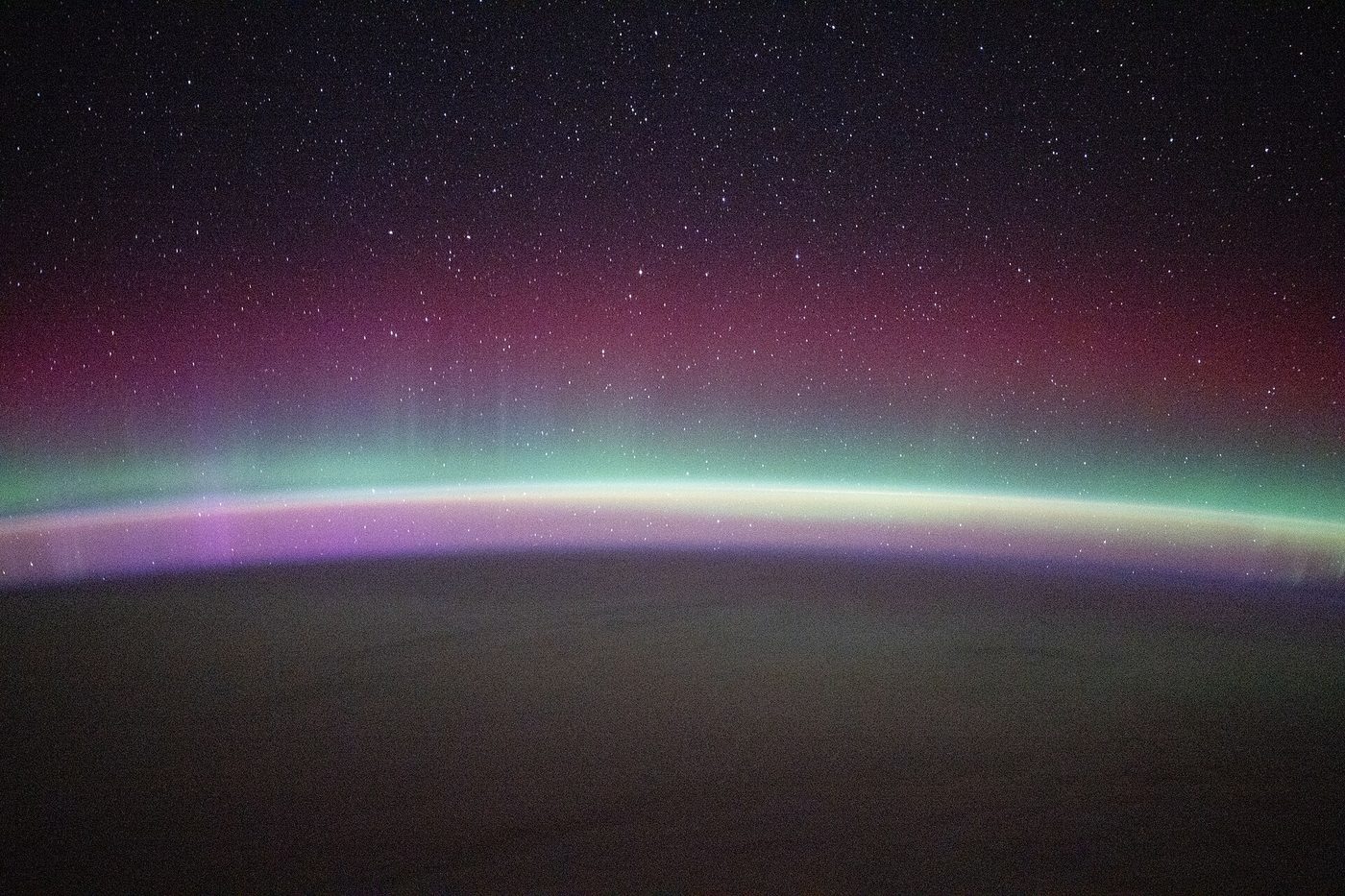
Stargazers' photos help explain a red glow above the northern lights
Photos taken by stargazers during the huge solar storm of May 2024 have helped explain red glows seen above some auroras, according to The Independent. Bright rays linked the red glow to the green aurora below. Scientists now want more photos from the public.
Earth was struck by its strongest solar storms in decades in May 2024, The Independent reports. Stargazers and researchers went outside to see bright auroras, some of which could be seen far from the poles.
In several images taken by scientists and amateur stargazers, a reddish glow sat above the green auroras, the paper says. Bright rays ran down from the red glow to the green.
That detail helped explain how the colors form, The Independent reports. The way red auroras form had long been unclear, partly because few satellites pass through that part of space.
“Rays continuously connecting the red aurora above to the green aurora below have not been reported in any scientific paper,” said Bruce Tsurutani, an author of the new study, according to the paper. The study was published in the journal Annales Geophysicae.
Green auroras form when fast electrons race along Earth's magnetic field lines to a height of about 85 to 130 kilometers, The Independent says. There they make oxygen atoms glow green.
The study found the same process seems to work for red auroras, but much higher up, at about 200 to 800 kilometers, the paper reports. As the electrons sink into thicker air, they set off the familiar green glow.
Sami Solanki, director of the Max Planck Institute for Solar System Research in Germany, took some of the photos, The Independent says. He said he first had no plan to use them for science.
Scientists suspect there could be several kinds of red aurora, the paper reports. They want more photos taken with a shutter open for 6 seconds or less.
“Anyone who takes photos of the aurora with a smartphone or camera can contribute to their study,” said study author Yasuhito Narita, according to The Independent.
Only The Independent has reported this so far, and NewsHabit hasn't seen independent confirmation.
What we know: A new study used stargazer photos to link red auroras to the green aurora below.
What we don't: How many kinds of red aurora there are. No second outlet has confirmed the study's findings yet.
Where outlets agree This is one outlet's report, with The Independent describing a study in Annales Geophysicae.
Where they differ The cited reports agree on the key facts so far.