NASA's Swift observatory expected to fall back to Earth
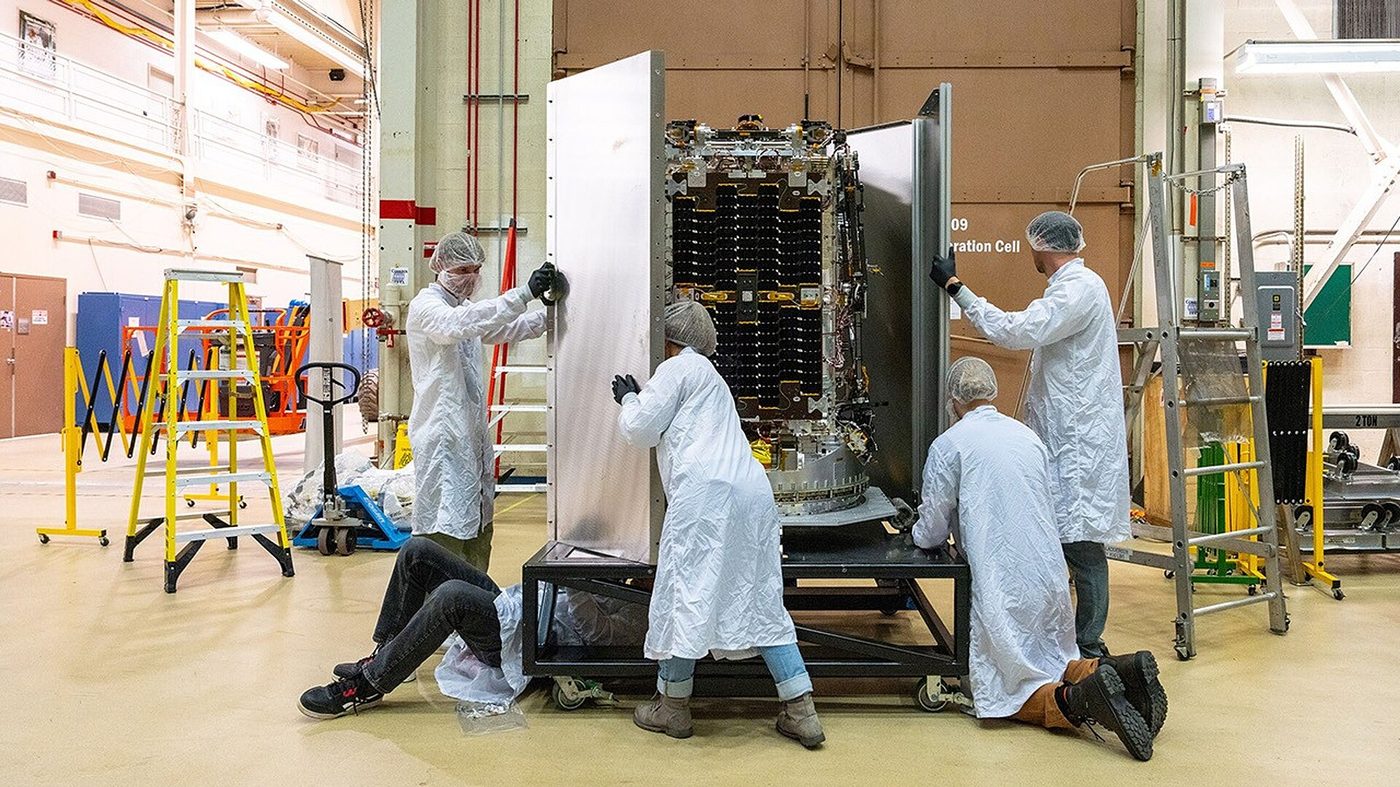
NASA's Neil Gehrels Swift Observatory was expected to fall back into Earth's atmosphere early Wednesday, nearly 22 years after it launched, CNN, The Verge and The Guardian report. Most of the 3,200-pound spacecraft should burn up, but NASA expects some pieces to survive. NASA puts the risk of harm to anyone at about 1 in 2,100.
Swift was launched in 2004 to study the most powerful explosions in the universe, called gamma-ray bursts, The Guardian reports. It was built to work for just two years, the paper says. It went on to detect more than 2,000 of the bursts.
“The risk of harm coming to anyone on Earth is unlikely, approximately 1 in 2,100,” NASA said in a statement, CNN reports.
NASA says any surviving pieces would land between 20.6 degrees south and 20.6 degrees north latitude, CNN reports. That band covers much of Central and South America, Central Africa, southern India, Southeast Asia and northern Australia, as well as large areas of ocean, CNN says.
The exact timing was not clear. Prediction models usually have a margin of error of at least a few hours, CNN reports. The Verge says NASA's estimate had a margin of plus or minus eleven hours.
The satellite can no longer steer or observe, and its fall is uncontrolled, The Guardian reports. NASA had hoped a rescue mission launched in July could boost Swift to a higher orbit, CNN says. The Verge reports that the effort was dropped after the Link spacecraft had problems controlling its position.
Solar storms pushed Swift into a lower orbit, The Verge reports.
If Swift launched today, it would likely have to meet much stricter rules for its end of life, CNN reports, citing The Aerospace Corporation. Current standards require uncontrolled reentries to have an expected casualty risk of less than 1 in 10,000, CNN says.
What we know: Swift's fall is uncontrolled, and NASA says some pieces should survive but the risk to people is low.
What we don't: Exactly when and where it came down. NASA and the Space Force said they would keep updating predictions.
Where outlets agree CNN, The Verge and The Guardian report NASA's estimate of a 1 in 2,100 risk of harm from Swift's reentry.
Where they differ The cited reports agree on the key facts so far.