Study finds human-caused warming halted the start of an ice age
A study in Science says the last piece of an ancient North American ice sheet began to grow again about 2,000 years ago, Smithsonian and Euronews report. The authors call that the start of the next ice age. They say human-caused summer warming reversed it around 1960.
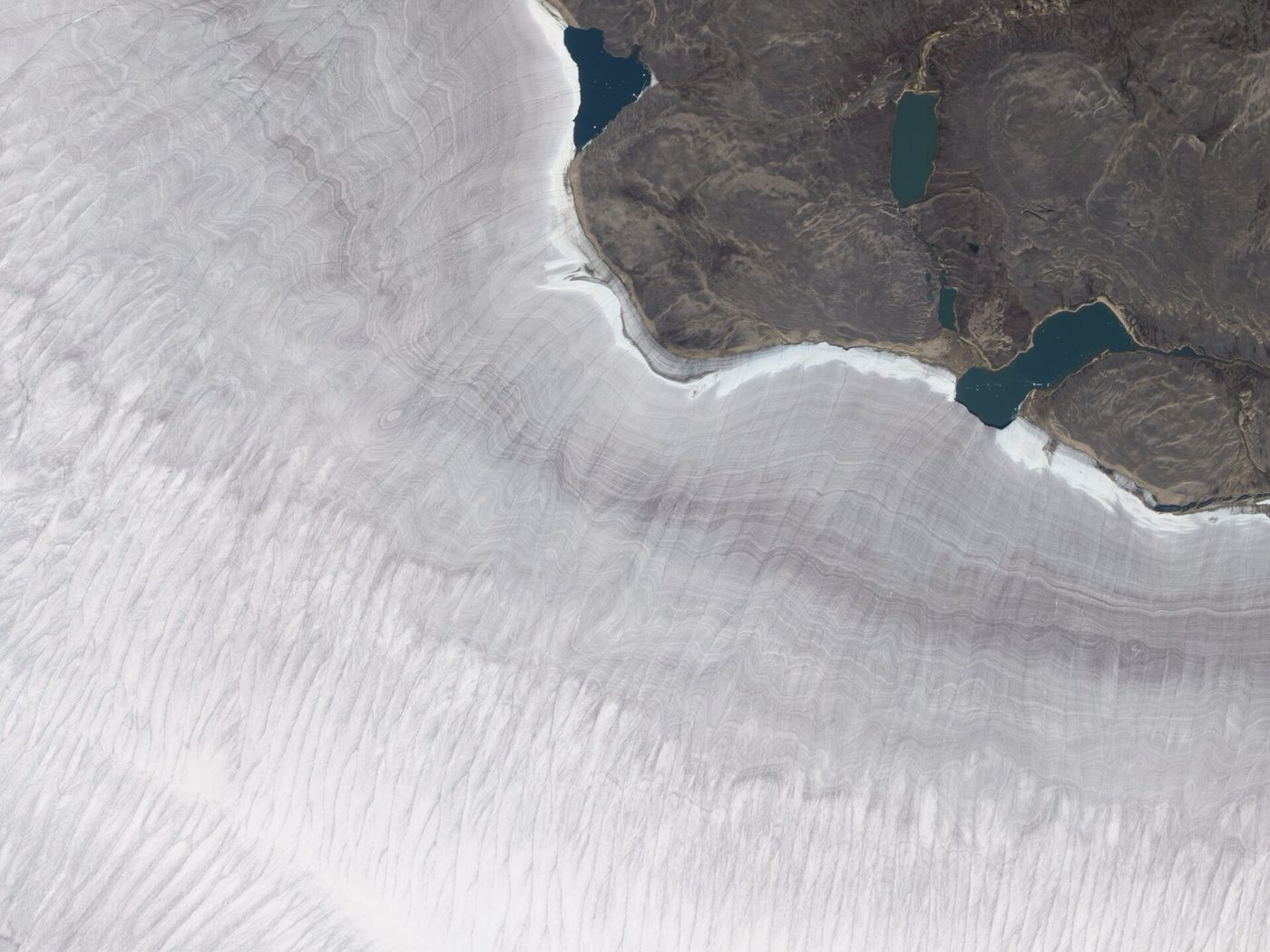
A huge sheet of ice once covered much of North America. Its last piece is the Barnes Ice Cap on Baffin Island, in Nunavut, Canada, Smithsonian reports. A new study in Science says that ice cap tells the story of an ice age that started and then stopped.
The ice cap shrank to its smallest size “after ~3.6 thousand years ago,” the paper says. It then began to grow again about 2,000 years ago, “marking the onset of the next glaciation,” the authors write. It kept growing until about 1960.
After that, “anthropogenic summer warming” made the ice cap lose more ice than it gained, the paper says. The authors call that “the termination of the next glaciation.”
The team dated rock and boulders near the ice edge. It also dated moss and other plants that had been buried under the ice and are now coming out as it melts, Smithsonian reports. “The ice covers the moss and kills it,” lead author Nicolás Young said in an interview with Wired, Smithsonian reports.
The researchers stress that, strictly speaking, this was the start of a new cold period, Euronews reports. Young says the team has something close to proof that it began, the outlet reports.
Shaun Marcott, an Earth scientist at the University of Wisconsin-Madison, was not part of the study. He wrote a commentary that ran with it. “The next glacial inception is generally considered unlikely to occur in the next predicted cycle, but ultimately how many skipped glacial cycles occur is left to choices made by humanity and tied to the future carbon emissions,” he wrote, Smithsonian reports.
The paper itself says that as carbon dioxide keeps rising, “a return to glacial conditions is extremely unlikely.” Earlier models had said the next ice age would not start for thousands or even tens of thousands of years, Euronews reports.
What we know: The study finds that the ice cap grew for about 2,000 years and has shrunk since about 1960.
What we don't: Whether other scientists agree that this growth marked the start of an ice age.
Where outlets agree The Science paper, as Smithsonian and Euronews describe it, finds the ice cap began to regrow about 2,000 years ago and began to shrink around 1960.
Where they differ The Science paper and Smithsonian place the ice cap's smallest size after about 3,600 years ago, while Euronews puts it at about 3,000 years ago.