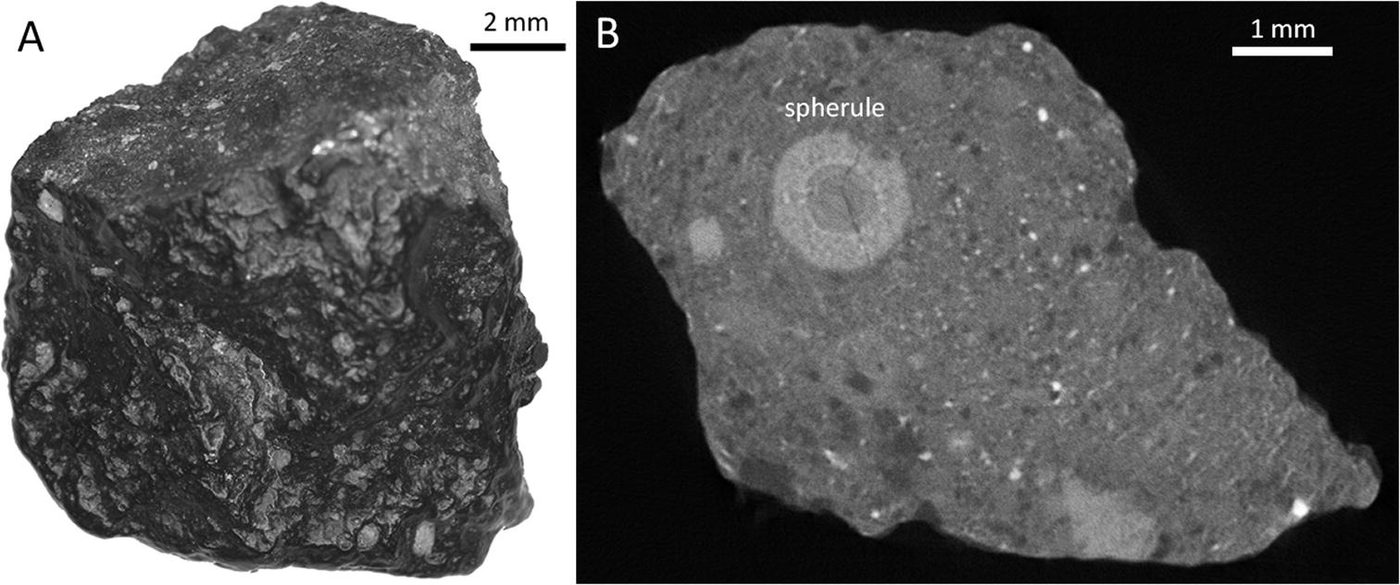
Sahara meteorite is a 4.1 billion-year-old piece of Mars
A meteorite found in the Sahara Desert in 2022 is a piece of Mars at least 4.1 billion years old, CBS News and Scientific American report. The rock, called Teghaza 001, is one of the oldest Martian meteorites ever found. Scientists say it shows that water changed the planet's early crust.
A meteorite found in the Sahara Desert in 2022 is a piece of Mars at least 4.1 billion years old, CBS News and Scientific American report. The rock is called Teghaza 001.
Scientific American says the new research, published in the journal Science, identifies it as the oldest Martian meteorite ever found. CBS News reports NASA called it one of the three most ancient Martian meteorites found on Earth. CBS News says the nearly two-pound rock was found in Mali.
The meteorite formed from cooling magma and was once part of Mars's crust, the outlets report. Its chemistry most closely matches the planet's southern highlands, the outlets report. Some of its minerals were changed by water, a sign that liquid water once moved through the ancient crust, CBS News and Scientific American report.
"We're holding a piece of a rock that's dated even before the oldest Earth rock," lead author Yang Liu of NASA's Jet Propulsion Laboratory said, Scientific American reports. One reviewer of the paper called the meteorite a Rosetta Stone for Mars, Liu said, the outlets report. "We've only scratched the surface," she said.
Most Martian meteorites are relatively young, Scientific American reports. Arya Udry, a planetary scientist at the University of Nevada, Las Vegas, who was not involved in the study, said it shows the need to bring back samples from Mars, the outlet reports.
What we know: Teghaza 001 is a piece of Martian crust at least 4.1 billion years old.
What we don't: Exactly where on Mars the rock came from.
Where outlets agree CBS News and Scientific American report Teghaza 001 is a piece of Mars's crust about 4.1 billion years old that was altered by water.
Where they differ The cited reports agree on the key facts so far.