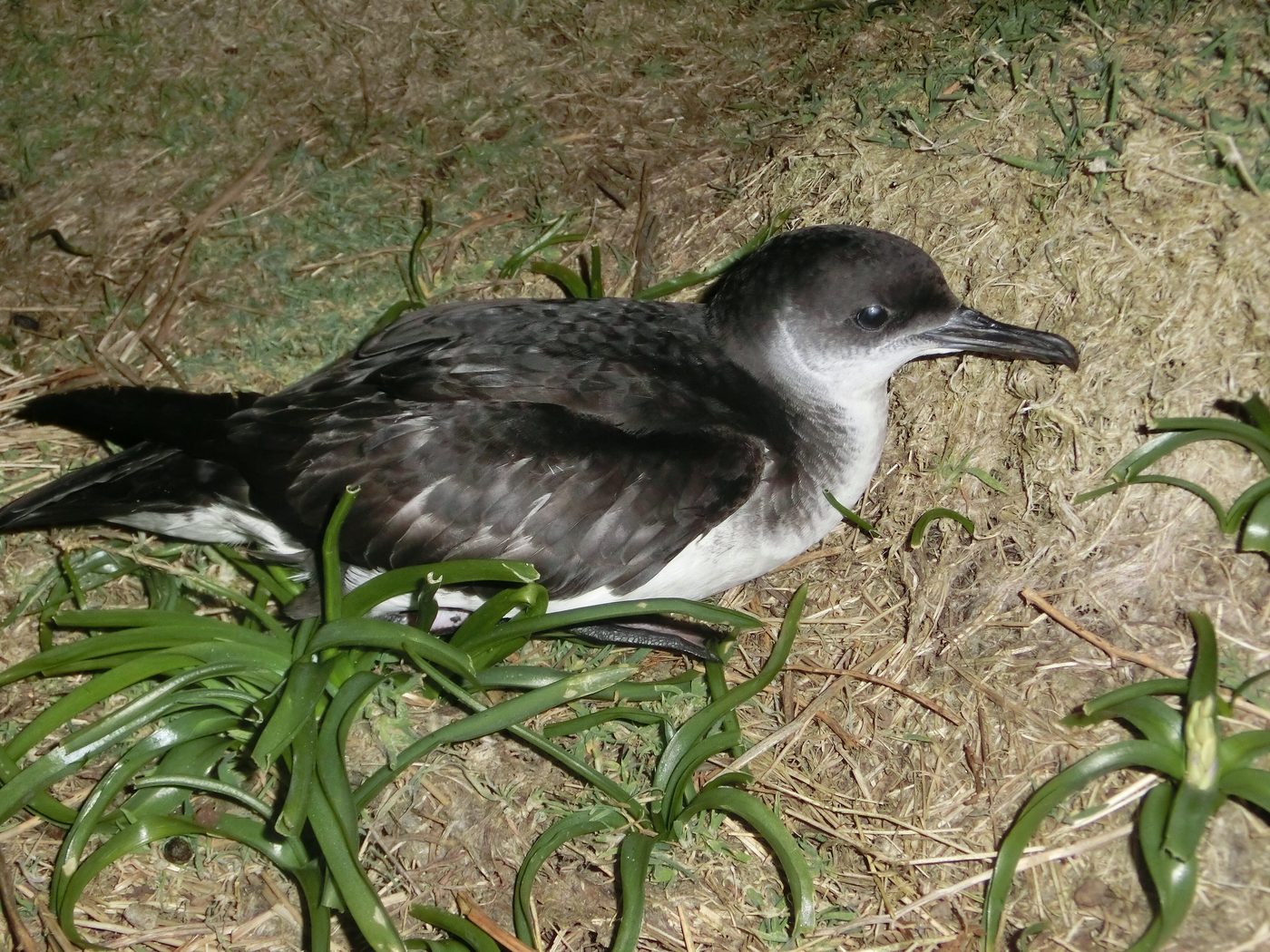
Migrating seabirds can get a kind of jet lag, study finds
Manx shearwaters can get a form of jet lag that pushes them slightly off course as they fly home across the Atlantic, The Guardian and NPR report. The birds use the sun as a compass, so a body clock out of sync with local time throws off their heading. The study was published in the journal Science.
Manx shearwaters can get a form of jet lag that pushes them slightly off course as they fly home across the Atlantic, The Guardian and NPR report. The study was published in the journal Science.
The seabirds breed in burrows on islands off the west coast of the UK and hunt far out at sea, the outlets report. Researchers led by Patrick Lewin of the University of Oxford studied 20 years of GPS tracking data, The Guardian and NPR report.
Shearwaters use the sun as a compass, which means they must know the time of day to read its position, the outlets report. "To use the sun as a compass you have to know what time of day it is," Lewin said, NPR reports. Flying fast to the east put the birds' internal clocks out of sync with local time, The Guardian reports.
For adult birds, the error added only about 3 miles to a 600-mile trip, the outlets report. But first-time migrants could stray hundreds of miles because they lack a map sense to correct their course, Lewin said, The Guardian reports.
"This paper is so cool," said Alice Boyle, a biologist at Western University in Canada who was not part of the study, NPR reports. Richard Holland of Bangor University, also not involved, called it a significant finding, The Guardian reports.
What we know: Shearwaters drift slightly off course when their body clocks fall out of sync with local time.
What we don't: How often young birds get badly lost because of the effect.
Where outlets agree The Guardian and NPR report Manx shearwaters drift off course when their body clocks fall out of sync with local time.
Where they differ The outlets give different figures for how far the birds veer. The Guardian says up to about 15 degrees, while NPR says the maximum was seven degrees.