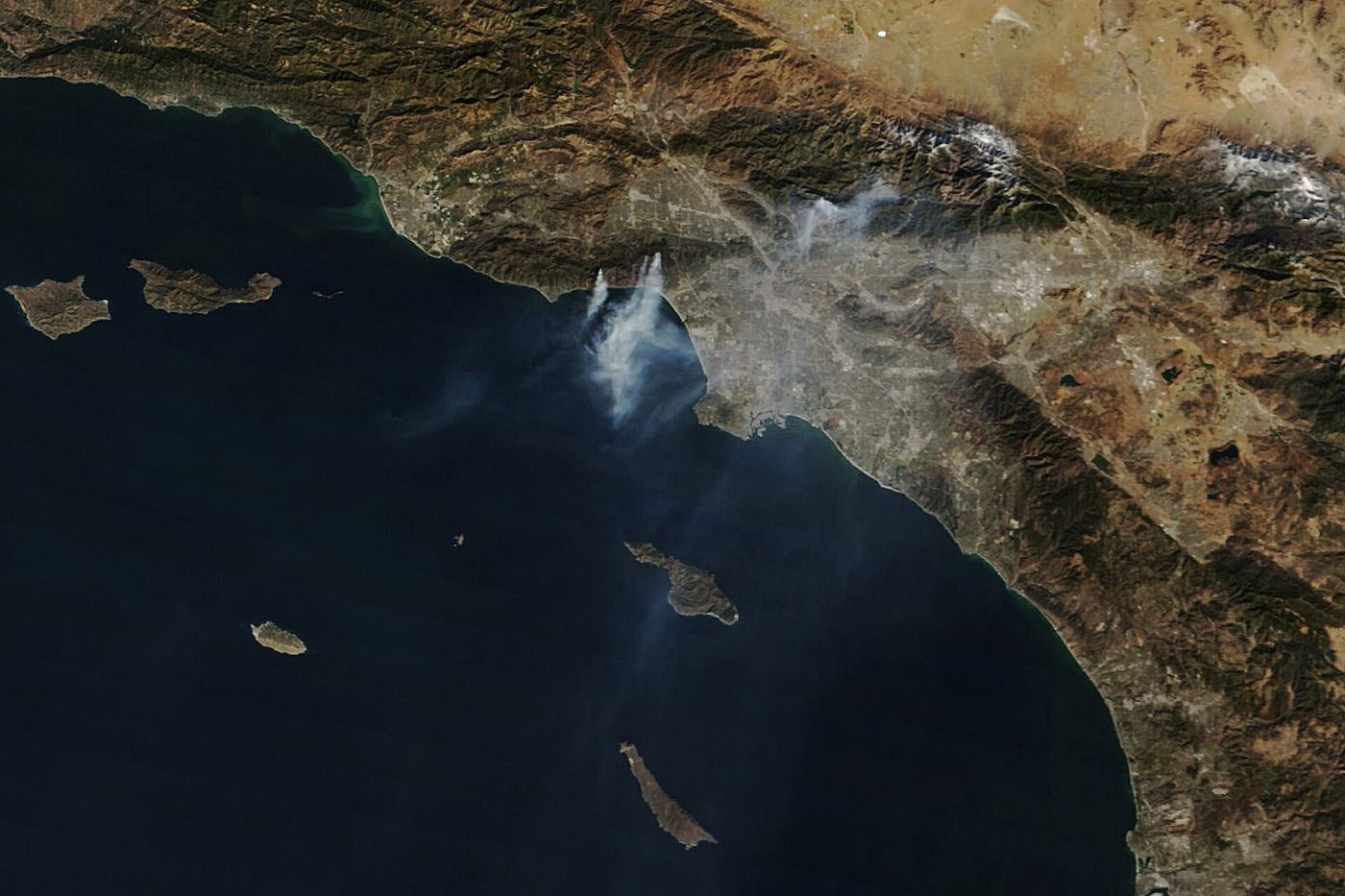
LA fire smoke exposed 7 million people to high lead levels
Smoke from the Eaton Fire exposed about 7 million Los Angeles residents to lead levels more than 80 times normal for a day, a Caltech study finds, the Associated Press and ScienceAlert report. The plume carried far more lead and arsenic than smoke from a fire in wild land. The health effects remain unknown.
At the height of the January 2025 Los Angeles fires, about 7 million residents breathed air with lead levels more than 80 times normal over 24 hours, a new study finds. The Associated Press and ScienceAlert report the study was published Wednesday in the journal Science Advances.
Researchers at the California Institute of Technology used a real-time network of air monitors to track what was in the smoke, hour by hour. ScienceAlert reports a monitoring site in Pico Rivera, south of the fire, picked up the plume.
They compared smoke from the Eaton Fire with smoke from a 2024 fire in Riverside County that burned mostly plants. The Eaton plume had 50 times more lead, three times more arsenic and seven times more chlorine and bromine, the AP reports. The metals came from burning homes, cars, building materials and electronics.
ScienceAlert notes that many Altadena homes were built in the early to mid 1900s, when lead paint was common. The worst air hit eastern Los Angeles and the San Gabriel Valley in the fire's first two days.
"The main, key finding is really that wildfire smoke is very different fundamentally from the urban smoke," study author Sally Ng said, according to the AP.
Lead can stunt children's development and raise blood pressure in adults. Arsenic is linked to cancers. Scientists do not know how a short burst of high exposure affects health, and the authors call for studies of people who were exposed.
The Eaton and Palisades fires began on January 7, 2025. They killed at least 31 people and destroyed more than 16,000 buildings, the AP reports.
What we know: About 7 million people were exposed to lead at more than 80 times normal levels for a day during the Eaton Fire.
What we don't: What that short, heavy exposure will mean for people's health.
Where outlets agree The Associated Press and ScienceAlert report a Caltech study found about 7 million people were exposed to lead at more than 80 times normal levels during the Eaton Fire.
Where they differ The cited reports agree on the key facts so far.