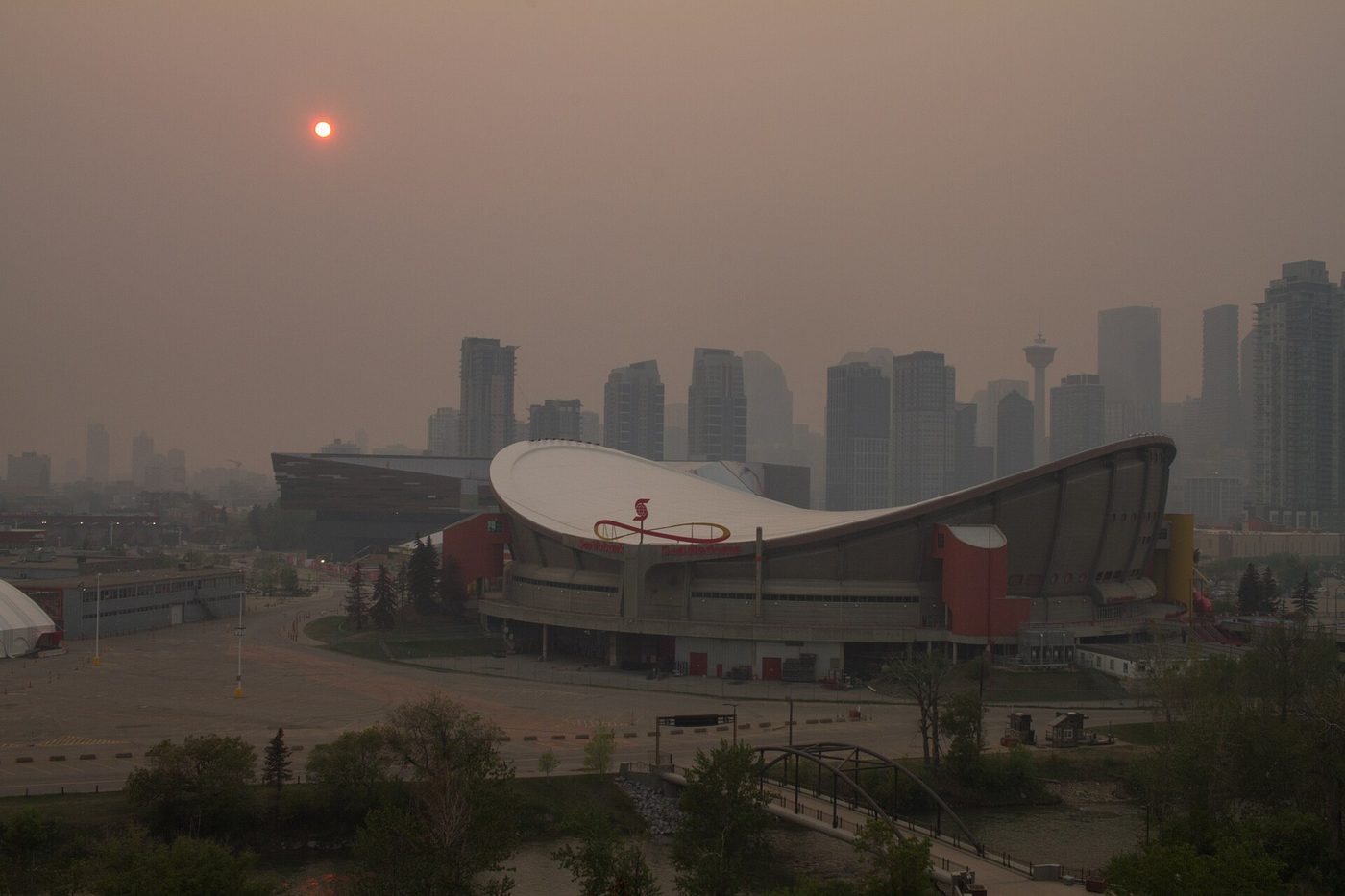
Wildfire smoke deaths in Canada up about 275 percent, report says
Deaths linked to wildfire smoke in Canada have risen about 275 percent since the early 2000s, a Lancet report finds, CBC News and Global News report. About 4,000 deaths a year were tied to smoke from 2021 to 2025. Health groups say Canada needs to do more to adapt.
Deaths linked to wildfire smoke in Canada have risen by about 275 percent since the early 2000s, according to a major global report on climate and health. CBC News and Global News report the Lancet Countdown was published Tuesday in the medical journal The Lancet.
The report found about 4,000 deaths a year were associated with wildfire smoke in Canada from 2021 to 2025. That compares with an average of 1,050 a year from 2003 to 2012.
Co-author Ian Hamilton of Imperial College London said the team counted extra deaths during smoky periods compared with past records, rather than case by case. "For any individual, it might not be that [wildfire smoke] was the trigger," he said, according to CBC News.
Canada lost about 5.2 million hectares of tree cover in 2024, 148 percent more than in 2016. Wildfires caused 86 percent of that loss, which also removed shade that helps cool people on hot days.
The report found 80 percent of Canada's heat wave days in 2025 were directly caused by climate change. People in Canada also faced about 36 more hours a year when outdoor activity carried a risk of heat stress, compared with the 1990s.
Global News reports the past three fire seasons are among the 10 worst on record. "You don't have to live beside a forest fire to experience its health effects," said Ian Culbert of the Canadian Public Health Association. McGill University professor Scott Weichenthal said smoke also carries chemicals that cause cancer.
Dr. Courtney Howard, president-elect of the Canadian Medical Association, warned that young athletes may push through heat exhaustion. The public health association wants a permanent climate and health fund, as current Health Canada funding ends in 2027-28.
What we know: The Lancet report ties about 4,000 deaths a year in Canada to wildfire smoke, up sharply from the 2000s.
What we don't: How Ottawa will fund climate and health work after current funding ends.
Where outlets agree CBC News and Global News report a Lancet study ties about 4,000 deaths a year in Canada from 2021 to 2025 to wildfire smoke, up about 275 percent.
Where they differ The cited reports agree on the key facts so far.