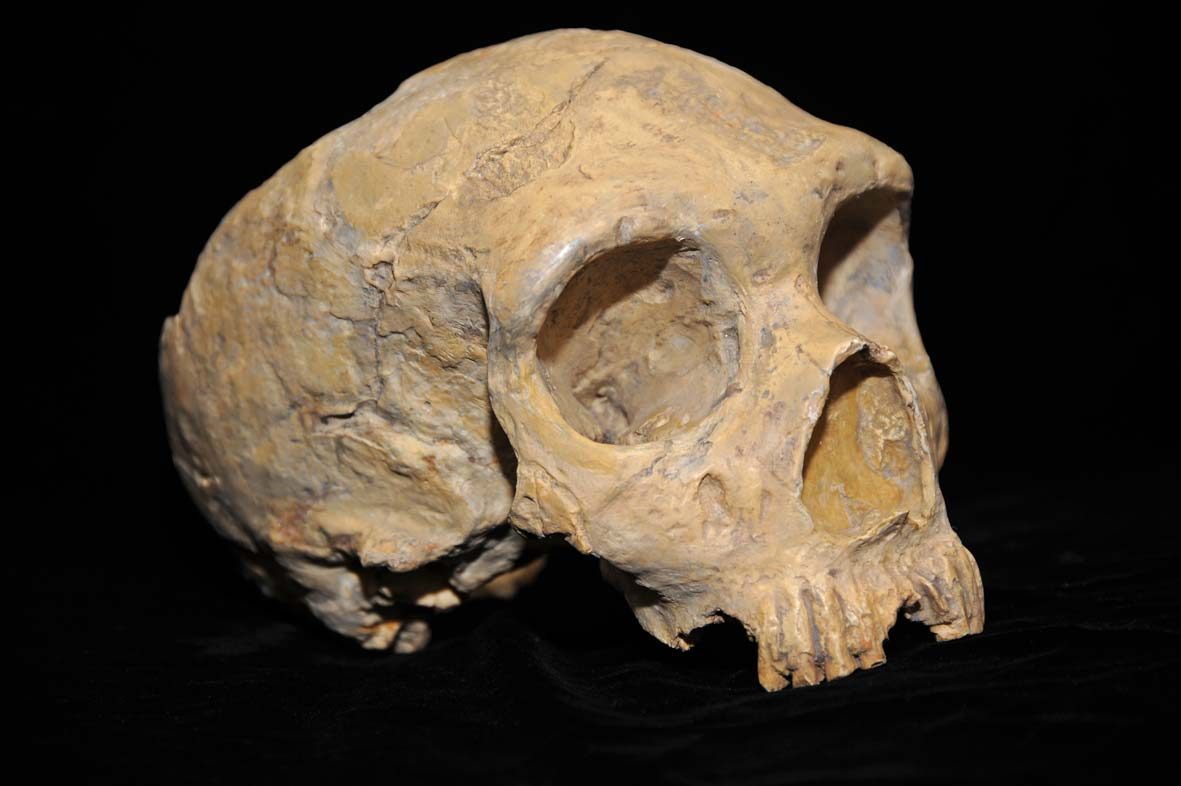
Neanderthal hand bones found in Navarre are 46,000 years old
Scientists have identified six hand bone fragments from a Neanderthal man who lived about 46,000 years ago in a cave in Navarre, Spain. They are the first Neanderthal remains found in the region. Some of the bones still hold ancient DNA and show bite marks from carnivores.
An international team of researchers has identified the first Neanderthal remains ever found in Navarre, in northern Spain, Euronews and El Mundo reported. The six bone fragments came from Abauntz Cave and belonged to a man who lived about 46,000 years ago.
The find was presented on Monday, October 19, at an event led by the president of Navarre's regional government, María Chivite, Euronews reported. The bones were recovered during earlier digs at the cave, which is in Arraitz-Orkin in the Ultzama valley, according to El Mundo (translated from Spanish).
The fragments include three bones from the palm and a middle finger bone from the right hand of an adult, Euronews reported. Two more pieces were identified as human through protein analysis. Genetic tests confirmed the remains are from a male Neanderthal, and radiocarbon dating set their age.
"For the first time we have human remains that allow us to directly identify the presence of Neanderthals in Navarre," said Andion Arteaga, who co-directs the project, in a press release quoted by Euronews and El Mundo.
Some of the bones have bite marks from carnivores, which give clues about what happened to the body after death. The bones were found with stone tools and animal remains, some of which show signs of being butchered and eaten.
Finding ancient DNA in remains this old is unusual because genetic material breaks down over time, Euronews explained. The team is working with the University of Vienna and the Max Planck Institute for Evolutionary Anthropology in Leipzig. More genetic results are expected.
The cave sits in a natural corridor between the Iberian Peninsula and the rest of Europe, which makes it useful for studying how groups moved across the Pyrenees, Euronews reported. Neanderthals disappeared from Europe around 40,000 years ago, a period when Homo sapiens was spreading.
What we know: Six hand bone fragments from a Neanderthal man about 46,000 years old have been identified in Abauntz Cave.
What we don't: What the ongoing DNA analysis will reveal about his population.
Where outlets agree Euronews and El Mundo both report six hand bone fragments from a male Neanderthal dated to about 46,000 years ago, with preserved DNA and carnivore bite marks.
Where they differ Euronews says Neanderthals vanished from Europe around 40,000 years ago, while El Mundo adds that some populations survived longer.