On this day, 2017: Astronomers reveal they saw neutron stars collide
On Oct. 16, 2017, scientists said they had seen two dead stars, called neutron stars, crash together, the Guardian and BBC News reported. It was the first time one cosmic event was picked up in both gravitational waves and light. The blast showed that such crashes make gold and platinum, the outlets said.
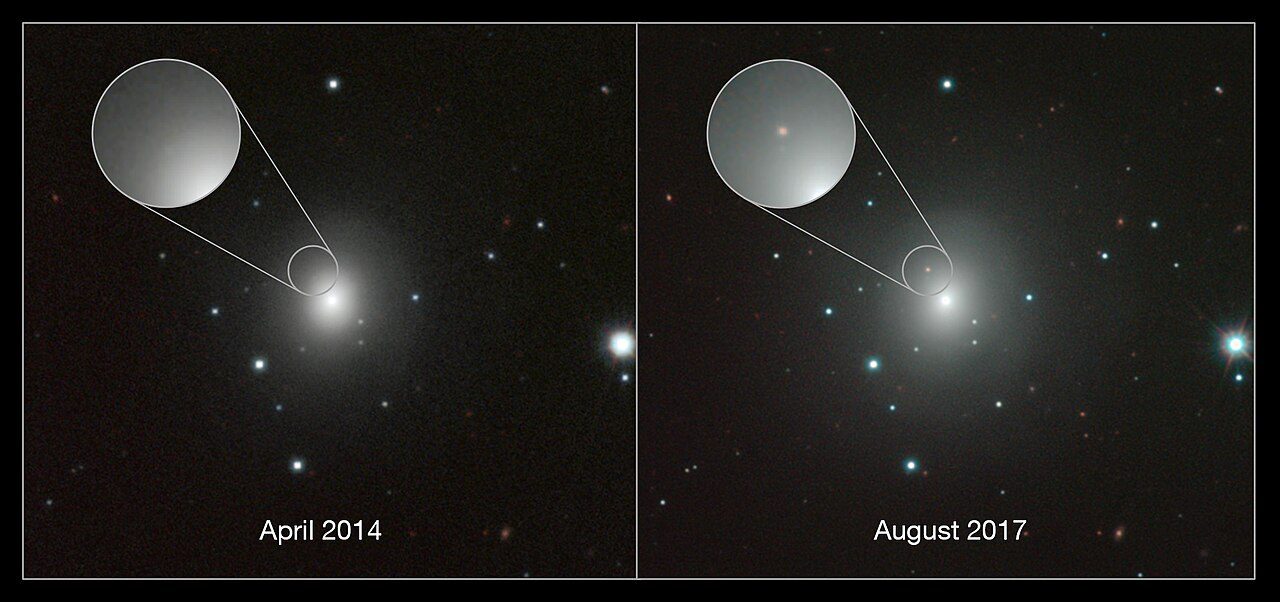
On Oct. 16, 2017, scientists announced that they had watched two neutron stars collide, the first cosmic event ever "seen" in both gravitational waves and light, the Guardian and BBC News reported.
The ripples in space-time from the crash were picked up on Aug. 17 that year by the U.S.-based Laser Interferometer Gravitational-Wave Observatory, or LIGO, the Guardian reported. Its twin detectors are in Louisiana and Washington state. Within an hour, the signal was confirmed by Virgo, a European detector near Pisa, and a global alert went out, the newspaper said.
About 70 telescopes on the ground and in space then turned to the spot, the outlets reported. The crash happened about 130 million light-years away, the Guardian reported, in a galaxy called NGC 4993 in the constellation Hydra, according to BBC News. Two seconds after the gravitational waves, NASA's Fermi space telescope picked up a burst of gamma rays, the Guardian reported.
Neutron stars are the crushed cores of massive stars that exploded long ago, BBC News said. They are so dense that a teaspoon would weigh about a billion tons, both outlets reported.
The telescopes saw a fireball of heavy elements called a kilonova. "We dropped everything and pointed at that bit of sky," Prof. Stephen Smartt of Queen's University Belfast said, according to the Guardian.
The light confirmed that such collisions make gold and platinum, the outlets reported. "These new results have significantly contributed to solving the long-debated mystery of the origin of elements heavier than iron in the periodic table," said Dr. Kate Maguire of Queen's University Belfast, who analyzed the light, according to BBC News.
"The wedding band on your finger or the gold watch you're wearing was most likely produced a billion years ago by two neutron stars colliding," LIGO executive director David Reitze said, according to the Guardian.
Stephen Hawking of Cambridge University told BBC News that the find was "the first rung of a ladder" for a new way to measure distances in the universe.
What we know: The 2017 merger was the first event seen in both gravitational waves and light, and it showed such crashes forge gold and platinum.
What we don't: Exactly what the crash left behind; the Guardian said a black hole was the most likely result.
Where outlets agree The Guardian and BBC News both report that the 2017 neutron star merger was seen in gravitational waves and light and confirmed that such crashes make gold and platinum.
Where they differ The outlets cited here report the same key facts so far.