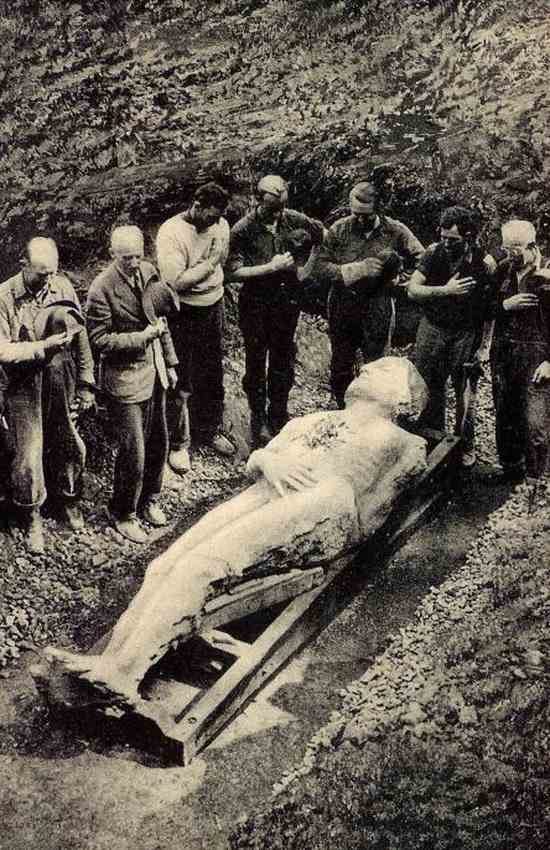
On this day, 1869: Well diggers find the Cardiff Giant hoax
On Oct. 16, 1869, two men digging a well on a farm in Cardiff, New York, found a 10-foot stone man. People paid to see the "giant," but it was a statue George Hull had made as a hoax, according to Archaeology magazine and Smithsonian. Hull confessed that December.
On Oct. 16, 1869, two laborers digging a well on a farm in Cardiff, New York, uncovered a stone figure of a man about 10 feet tall, according to Archaeology magazine and Smithsonian magazine. It became known as the Cardiff Giant, which scholar Michael Pettit has called one of 19th-century America's most famous hoaxes, Smithsonian reported.
The workers, Gideon Emmons and Henry Nichols, were digging on the farm of William "Stub" Newell, both outlets reported. They had been told where to dig, and the giant had been planted there about a year earlier, the outlets said.
The figure was the work of George Hull, Newell's cousin, both outlets reported. Smithsonian described Hull as an atheist who wanted both to get rich and to make a point about science and faith. Archaeology said the idea came to him after an argument with a Methodist revivalist.
The find drew crowds, and visitors paid 50 cents to see it, both outlets reported. Many people wanted to believe the giant was real because it seemed to confirm biblical accounts of giants, Smithsonian said. Hull later sold the giant to a group of businessmen, the outlets reported.
Showman P.T. Barnum then had a copy made and showed it as the real thing, both outlets reported. When the giant's owners went to court, the judge told them, "Bring your giant here, and if he swears to his own genuineness as a bona fide petrifaction, you shall have the injunction you ask for," Archaeology reported. Hull confessed in December 1869, both outlets said.
"The most obvious explanation is that the Cardiff Giant confirmed biblical stories of giants," Ken Feder, author of "Frauds, Myths, and Mysteries," said in the Archaeology feature, explaining why people believed it.
The giant is now displayed at the Farmers' Museum in Cooperstown, New York, Archaeology reported.
What we know: The giant was found on Oct. 16, 1869, and was a statue made by Hull and planted as a hoax.
What we don't: How many people paid to see the giant in all.
Where outlets agree Archaeology and Smithsonian both report that well diggers found the Cardiff Giant on Oct. 16, 1869, and that George Hull had made it as a hoax.
Where they differ The outlets cited here report the same key facts so far.