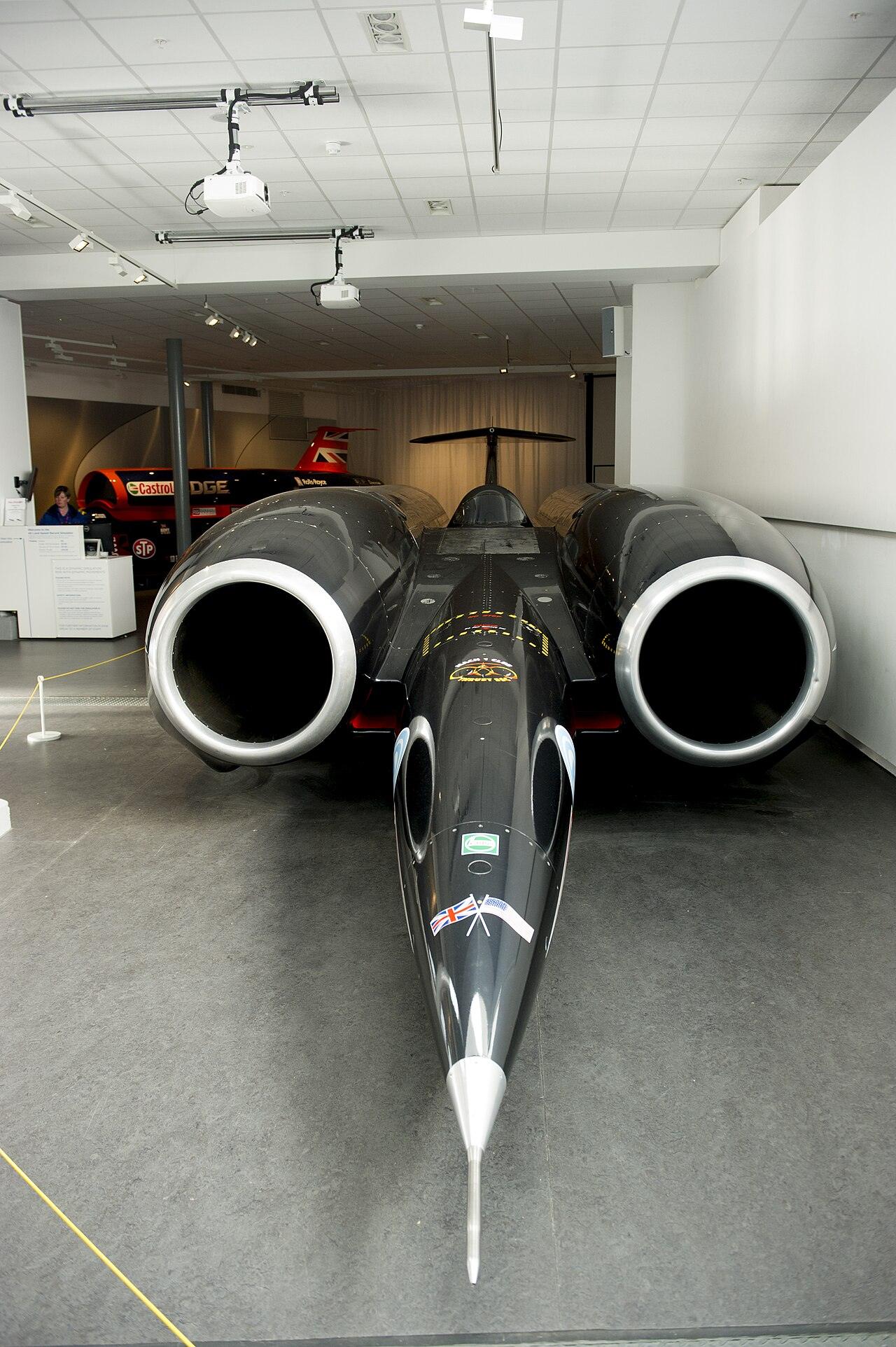
On this day, 1997: Jet car sets first supersonic land speed record
On this day in 1997, British driver Andy Green drove the jet-powered ThrustSSC faster than sound across a Nevada desert, The Independent and Reuters reported. His average speed over two runs was 763.035 mph. It was the first supersonic land speed record.
On Oct. 15, 1997, Royal Air Force pilot Andy Green drove the jet-powered car ThrustSSC across Nevada's Black Rock Desert to set the first supersonic land speed record, The Independent and Reuters reported.
On its first run, the car reached 759.333 mph, or 1.5% above the speed of sound, according to official timekeepers from the United States Automobile Club, The Independent reported. Some 55 minutes later, it went back down the track at 766.609 mph, or 2% above the speed of sound. That gave Green an average two-way speed of 763.035 mph, both outlets reported.
"Thrust is now genuinely the Thrust Supersonic Car. This is the first supersonic team. We did it," Green said afterward, The Independent reported.
The 10-ton car was powered by two Rolls-Royce engines from a Phantom fighter jet, Reuters reported. It created a sonic boom, Reuters said.
Under international rules, both runs must be made within one hour. Earlier that week, Green broke the sound barrier twice, but the second run came 61 minutes after the first, so the attempt did not count, The Independent reported.
Green had already broken the land speed record on Sept. 25, 1997, with an average of 714.144 mph, The Independent reported. That beat the 633.46 mph record set in 1983 by team leader Richard Noble.
"It's a fantastic moment, absolutely fantastic moment," Noble said, comparing it to Charles Lindbergh's solo flight across the Atlantic, The Independent reported.
ThrustSSC is now on display at the Coventry Transport Museum in England, the museum says. "Andy Green, our driver, was incredibly brave. It was a difficult car to drive but he battled away and we managed to go supersonic twice," Noble said in 2022, the museum reported.
What we know: ThrustSSC averaged 763.035 mph on Oct. 15, 1997, the first supersonic land speed record.
What we don't: When another team will try to go faster.
Where outlets agree The Independent and Reuters both report that ThrustSSC averaged 763.035 mph over two runs on Oct. 15, 1997.
Where they differ The outlets cited here report the same key facts so far.