On this day, 1783: A man first rises in a balloon
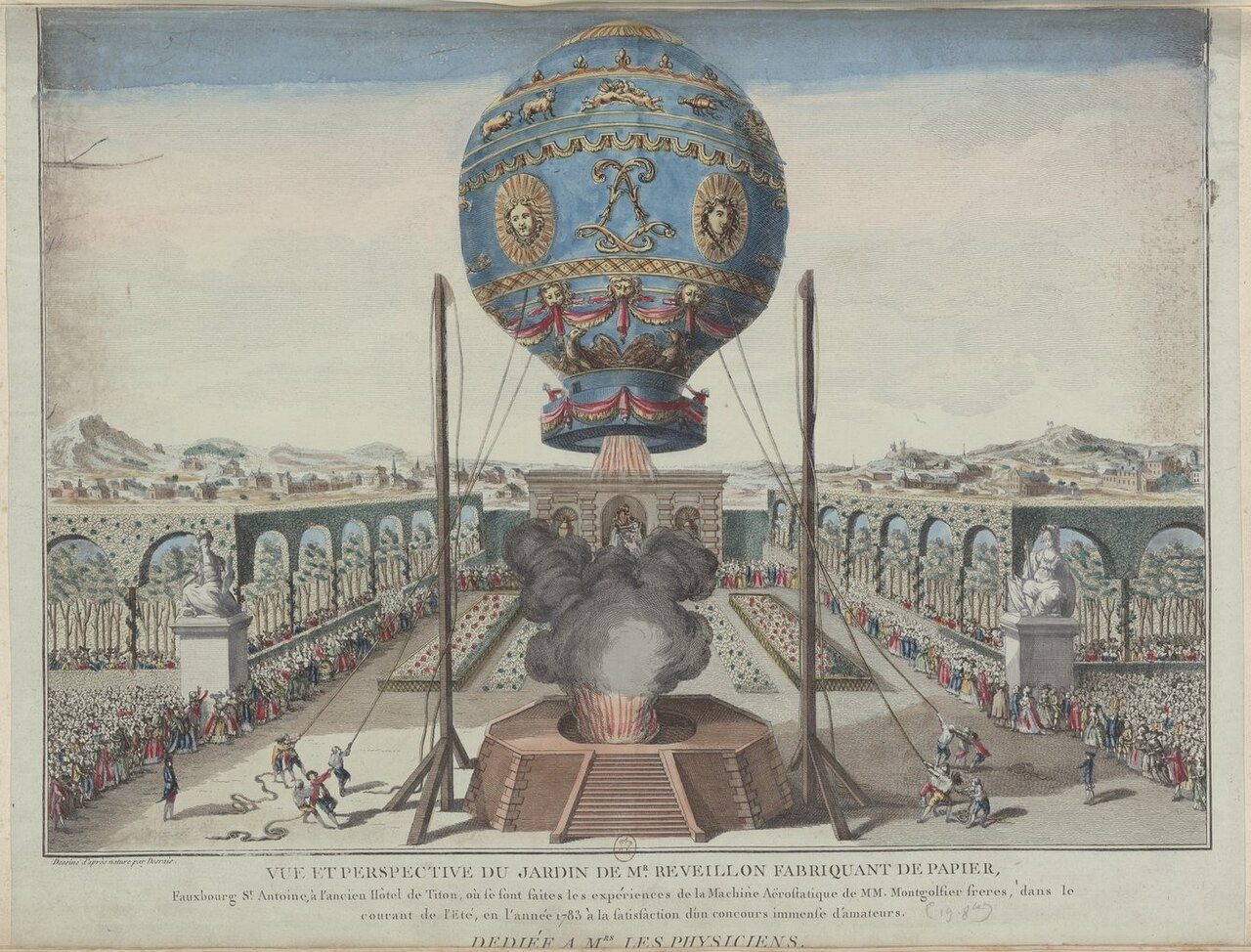
On Oct. 15, 1783, Jean-François Pilâtre de Rozier rose into the air in a hot-air balloon held by ropes in a Paris garden. He was the first person known to go up in a balloon. About a month later, he made the first free balloon flight with a fellow passenger.
On Oct. 15, 1783, Jean-François Pilâtre de Rozier went up in a tethered hot-air balloon built by the Montgolfier brothers, History.com and PBS NOVA reported.
The flight took place in the garden of the Réveillon wallpaper works in Paris, the museum reported. Toward evening, Pilâtre de Rozier was lifted in the balloon, held at the end of ropes, to a height of about a hundred feet, the museum reported, citing the historian Charles Dollfus. Newspapers, a book by Barthélemy Faujas de Saint-Fond and a text by Étienne Montgolfier all agree on the date, according to the museum.
History.com says he rose only briefly before coming back to earth. NOVA reported that the balloon, called the Aerostat Réveillon, rose to the end of a 250-foot tether and stayed up for 15 minutes. NOVA's height is higher than the museum's account.
The test came after a summer of balloon trials. Because no one knew whether there was breathable air high above the ground, the Montgolfiers sent a sheep, a duck and a rooster aloft at Versailles first, the Science History Institute reported. On Sept. 19, after a royal inspection, that balloon carried the animals into the sky.
The museum also quotes a Paris report from Oct. 18 saying calm weather had allowed more trials. Others rode in the balloon's gallery in the days that followed, and two men were lifted to 50 feet, the report said.
On Nov. 21, Pilâtre de Rozier and the marquis d'Arlandes made the first untethered hot-air balloon flight, flying about 5.5 miles over Paris in about 25 minutes, History.com reported. The marquis visited Benjamin Franklin that evening to tell him about it, the institute reported.
On Dec. 1, 1783, Jacques Charles and Marie-Noël Robert made the first manned hydrogen balloon flight, staying up for about two hours, the institute reported.
What we know: Pilâtre de Rozier made the first known human balloon ascent, on ropes, in Paris on Oct. 15, 1783.
What we don't: Exactly how high he rose, since accounts of the height vary.
Where outlets agree History.com and PBS NOVA both say Pilâtre de Rozier rose in a tethered Montgolfier balloon on Oct. 15, 1783.
Where they differ NOVA says the balloon rose to the end of a 250-foot tether for 15 minutes, while the British Balloon Museum & Library puts the height at about a hundred feet.