Tiny ocean microbe has smallest known genome of its kind
Scientists have described a tiny microbe called Sukunaarchaeum with the smallest genome ever found in its group of life, ScienceAlert reported. It lives inside a tiny ocean plankton. It seems to rely on its host for almost everything and mostly just copies itself.
Scientists have formally described a tiny microbe with the smallest genome ever found in its branch of life, ScienceAlert reported. The microbe is named Sukunaarchaeum mirabile, after a small but powerful spirit in Japanese myth.
It belongs to the archaea, a group of single-celled life that is separate from bacteria, ScienceAlert said. Its genome is just 238,000 DNA base pairs long.
Some viruses have bigger genomes than this microbe, ScienceAlert noted. Viruses are usually not considered alive because they cannot run their own chemistry.
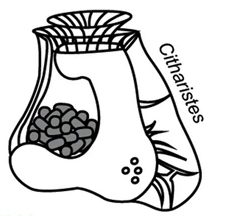
The microbe was found by chance, Science reported. Researchers in Japan were studying the DNA inside Citharistes regius, a single-celled ocean plankton. Among the expected DNA, they spotted a strange small loop of genetic material.
"Initially, we suspected this tiny circular genome might be some kind of artifact," Takuro Nakayama of the University of Tsukuba told Science.
The microbe lacks almost all the genes it would need to make its own food or building blocks, both outlets reported. Most of its genes are used to copy its own DNA. It seems to take everything else from its host.
When a draft of the study came out in 2025, the microbe was described as living a "virus-like" life, ScienceAlert said. The final paper, now published in the journal Current Biology, drops that comparison.
"The key to defining life is whether something can replicate itself, and whether it can do this autonomously," Thorsten Allers of the University of Nottingham told ScienceAlert. He said the find gives new clues about how simple a living cell can become.
Researchers also found similar DNA in seawater samples from around the world, Science reported. That suggests a whole group of these microbes exists.
What we know: Sukunaarchaeum has a 238,000-base-pair genome, the smallest known in archaea, and relies on its host.
What we don't: What the microbe looks like, since it has not yet been photographed.
Where outlets agree ScienceAlert and Science both report that Sukunaarchaeum has a 238,000-base-pair genome and lacks almost all metabolic genes, relying on its dinoflagellate host.
Where they differ The outlets cited here report the same key facts so far.