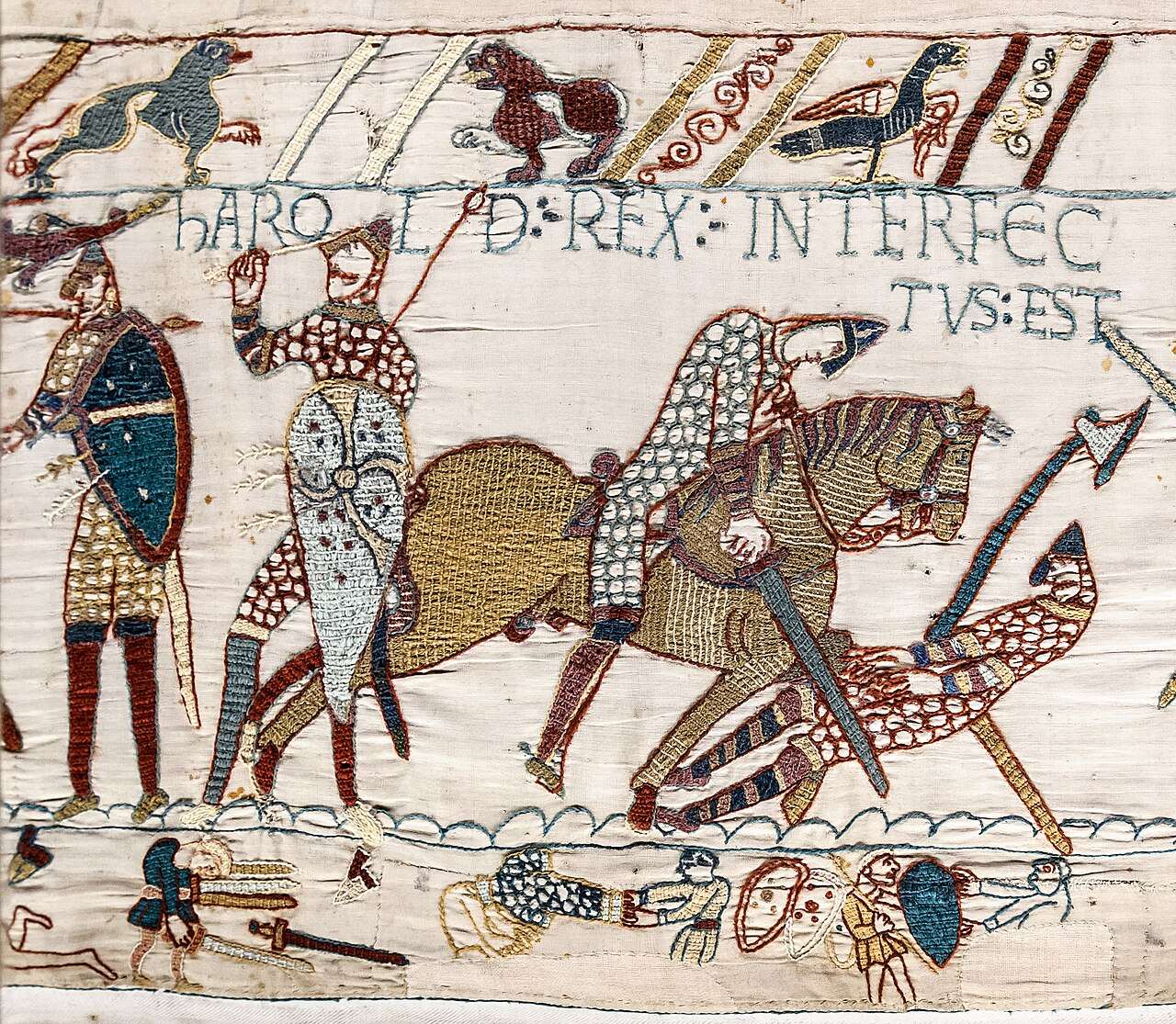
On this day, 1066: William of Normandy wins at Hastings
On Oct. 14, 1066, William, duke of Normandy, beat the army of King Harold II of England at the Battle of Hastings. The bloody fight lasted all day, and Harold was killed near the end. William was crowned king of England on Christmas Day that year, and the Norman conquest began.
On Oct. 14, 1066, William, duke of Normandy, defeated the army of King Harold II of England at the Battle of Hastings, History.com and HistoryExtra report. The win marked the start of the Norman conquest of England, HistoryExtra says.
The year had been turbulent. King Edward the Confessor died on Jan. 5 with no direct heirs, English Heritage says, and Harold was crowned the next day.
Harold soon faced two invasions. He beat an army led by Harald Hardrada, king of Norway, at the Battle of Stamford Bridge in Yorkshire on Sept. 25, HistoryExtra says. Three days later, William landed at Pevensey in Sussex.
Despite its name, the battle was not fought in Hastings itself. HistoryExtra says it took place about six miles to the northwest, at a site now called Battle.
The English fought on foot behind their famous "shield wall," HistoryExtra says. The bloody battle lasted all day, both History.com and English Heritage report. English Heritage says the Normans slowly gained the upper hand until Harold was killed in the last attack, and the English then fled.
How Harold died is debated. History.com says he was shot in the eye with an arrow, "according to legend." Historian Marc Morris, writing in HistoryExtra, says that story seems to go back to the Bayeux Tapestry, but there are reasons to doubt it. Two of Harold's younger brothers also died in the battle, HistoryExtra says.
William was crowned king of England on Christmas Day 1066 and ruled until he died in 1087, English Heritage says. He later founded Battle Abbey on the battlefield, both HistoryExtra and English Heritage report. Its high altar was placed where Harold was said to have been killed.
What we know: William of Normandy defeated and killed Harold II at Hastings on Oct. 14, 1066.
What we don't: Exactly how Harold died.
Where outlets agree History.com and HistoryExtra both report that William of Normandy defeated King Harold II at Hastings on Oct. 14, 1066, and that Harold was killed in the battle.
Where they differ History.com repeats the legend that Harold was shot in the eye with an arrow, while HistoryExtra says there are reasons to doubt he died that way.