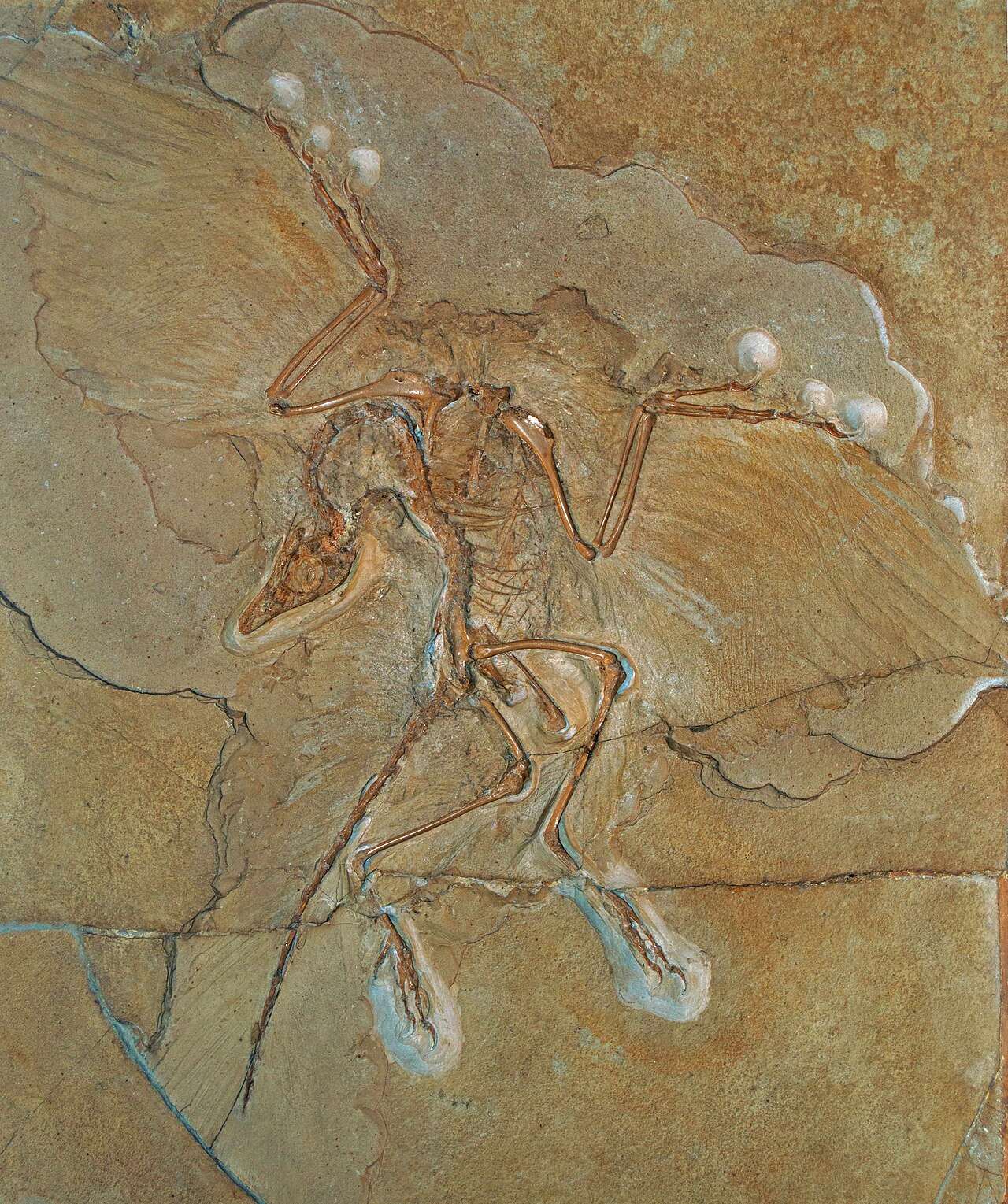
Jurassic bird with tiny wings was likely a runner, not a flier
Scientists in China found the fossil of a bird that lived about 150 million years ago and had small wings. Its wings were a third shorter than its legs, so it likely ran more than it flew. The find suggests flight was not the only force shaping early birds.
Scientists have found the fossil of a bird that lived in China about 150 million years ago and had wings too small for strong flight, New Scientist and Live Science reported. The study was published Wednesday in the journal Nature.
The new species is called Yuezhuornis yangyuanensis, both outlets said. It is one of the earliest known birds, close in age to the famous Archaeopteryx from Europe.
The nearly complete fossil was found in August 2024 near Yangyuang village in Fujian Province in southeastern China, New Scientist reported. It is about 148 million to 150 million years old. The bird is named after Yuezhuo, a bird from Chinese mythology.
Its front limbs were about one-third shorter than its back limbs, Live Science said. Most modern birds and many other early relatives have long front limbs, which help them lift off.
The researchers compared the fossil with 377 living bird species, Live Science reported. Its body was most like that of ground-dwelling birds such as pheasants, both outlets said. Pheasants can fly in short bursts but spend most of their time on the ground, New Scientist said.
The bird also had features of meat-eating dinosaurs, including sickle-shaped toe claws like those of Velociraptor, Live Science reported. It was likely a small predator that was good at running.
Min Wang of the Chinese Academy of Sciences, who helped lead the study, said the find could mean that flying did not drive the evolution of birds' special body shape, New Scientist reported.
"I think there are no directly comparable modern birds," Wang said, according to Live Science.
The researchers say early birds quickly tried many lifestyles, including some that did not involve flying, New Scientist reported.
What we know: Yuezhuornis had short wings and a body built for running.
What we don't: Whether it could fly at all.
Where outlets agree New Scientist and Live Science both report that Yuezhuornis yangyuanensis had short wings and a body most like ground-dwelling pheasants, based on a study in Nature.
Where they differ The outlets cited here report the same key facts so far.