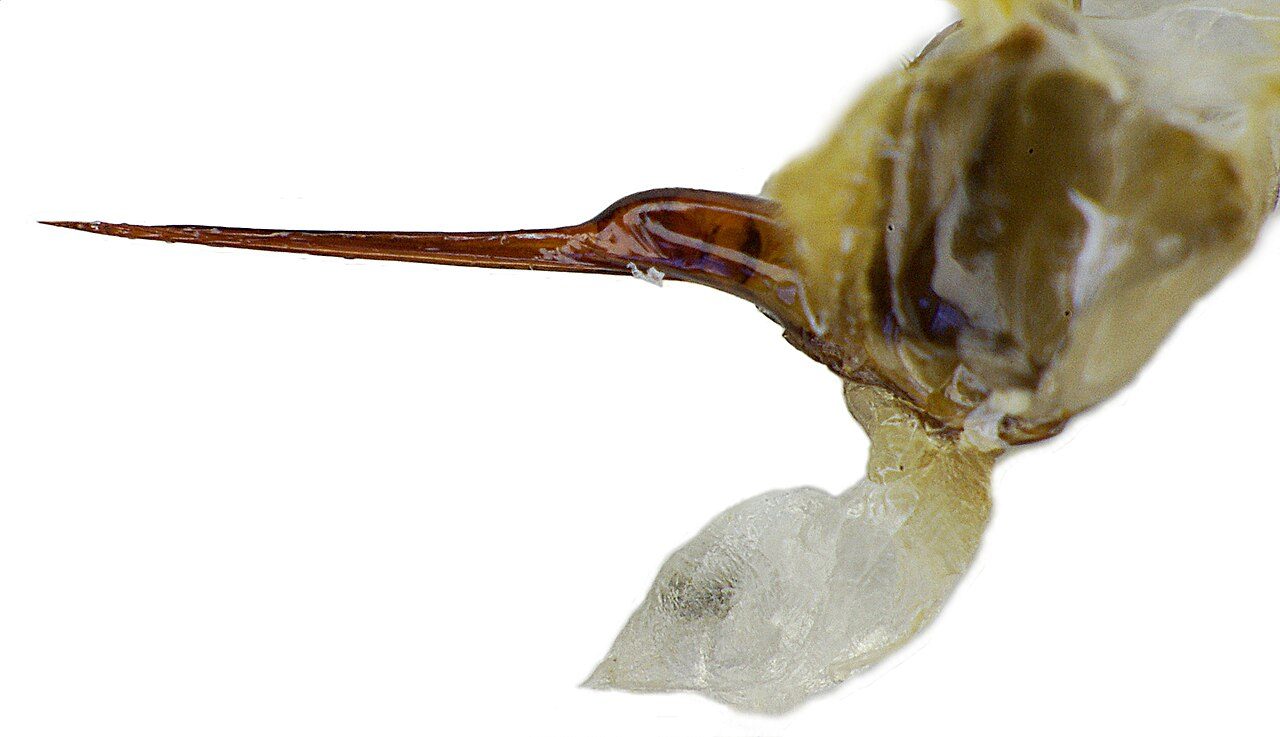
Video shows how a bee's stinger keeps pumping venom on its own
Scientists used high-speed video to film how a honey bee's stinger keeps pumping venom after the bee flies away. They found that two valves inside it work like a pair of pistons. The study was published in the Proceedings of the National Academy of Sciences.
Scientists have filmed how a honey bee's stinger keeps pumping venom into skin after the bee has flown away, Ars Technica and CBC News reported.
When a worker honey bee stings, it leaves its stinger behind. The stinger keeps working on its own, driving deeper and pushing out venom. Experts knew this happened, but no one had watched exactly how it worked, both outlets reported.
The team, led by Fiorella Ramirez Esquivel of Macquarie University in Australia, published the study in the Proceedings of the National Academy of Sciences. The researchers removed stingers from live bees and pushed them into blocks of clear gel. Then they filmed them with high-speed cameras.
The video showed two valves inside the stinger. They work as a "double piston" pump, both outlets reported. The valves slide past each other and fold up as they change direction, so venom keeps flowing.
"Being able to actually film them in action was a brand new thing that is only really possible thanks to modern cameras," Ramirez Esquivel told CBC News.
She compared it to a syringe. "It's not stopping and starting like a … syringe," she said, CBC reported. "But because we have two plungers effectively, then you can have continuous flow."
A stinger stays active for only about two minutes after it is removed, CBC reported. But small twitches can last up to 15 minutes, the study says, according to CBC.
Juliana Rangel, a bee expert at Texas A&M University who was not part of the study, said scientists had long known the parts of the stinger. "But we just didn't know, really, how that venom continues to be pumped for so long after the release of the stinging apparatus," she told CBC News.
The findings could one day have medical uses, CBC reported.
What we know: Two valves in a honey bee's stinger act like a double piston to keep venom flowing.
What we don't: Whether the design will lead to new medical devices.
Where outlets agree Ars Technica and CBC News both report that a new study used high-speed video to show a honey bee stinger pumps venom with a double-piston design after the bee flies away.
Where they differ The outlets cited here report the same key facts so far.