Moroccan fossil reveals croc relative with needle-thin teeth
Scientists have named a previously unknown crocodile relative from Morocco that lived about 170 million years ago. Tiny black dots on its fossil turned out to be extremely thin, needle-like teeth. The researchers think it probably ate soft, small prey such as shrimp, worms and tiny fish.
Scientists have named a new crocodile relative that lived in what is now Morocco about 170 million years ago, Earth.com and The Times of India reported on Tuesday.
The animal is called Ctenosuchus tenuidens. A team from the University of Portsmouth in the UK and Hassan II University in Casablanca, Morocco, described it in the Journal of Vertebrate Paleontology.
The find began with a few small black dots on a fossil. The team looked at them under a microscope. "We carefully scratched around one of the black circles with a scalpel, and as we uncovered more of it, it became longer and longer," said lead author Hamzah Imran, Earth.com reported. "That's when we realized these little black circles were actually incredibly thin teeth."
The teeth are about 10.4 times taller than they are wide. They sit about 2.3 millimeters apart, and there were more than 40 on each side of the snout, Earth.com reported. Its name refers to a comb, a crocodile and thin teeth, both outlets said.
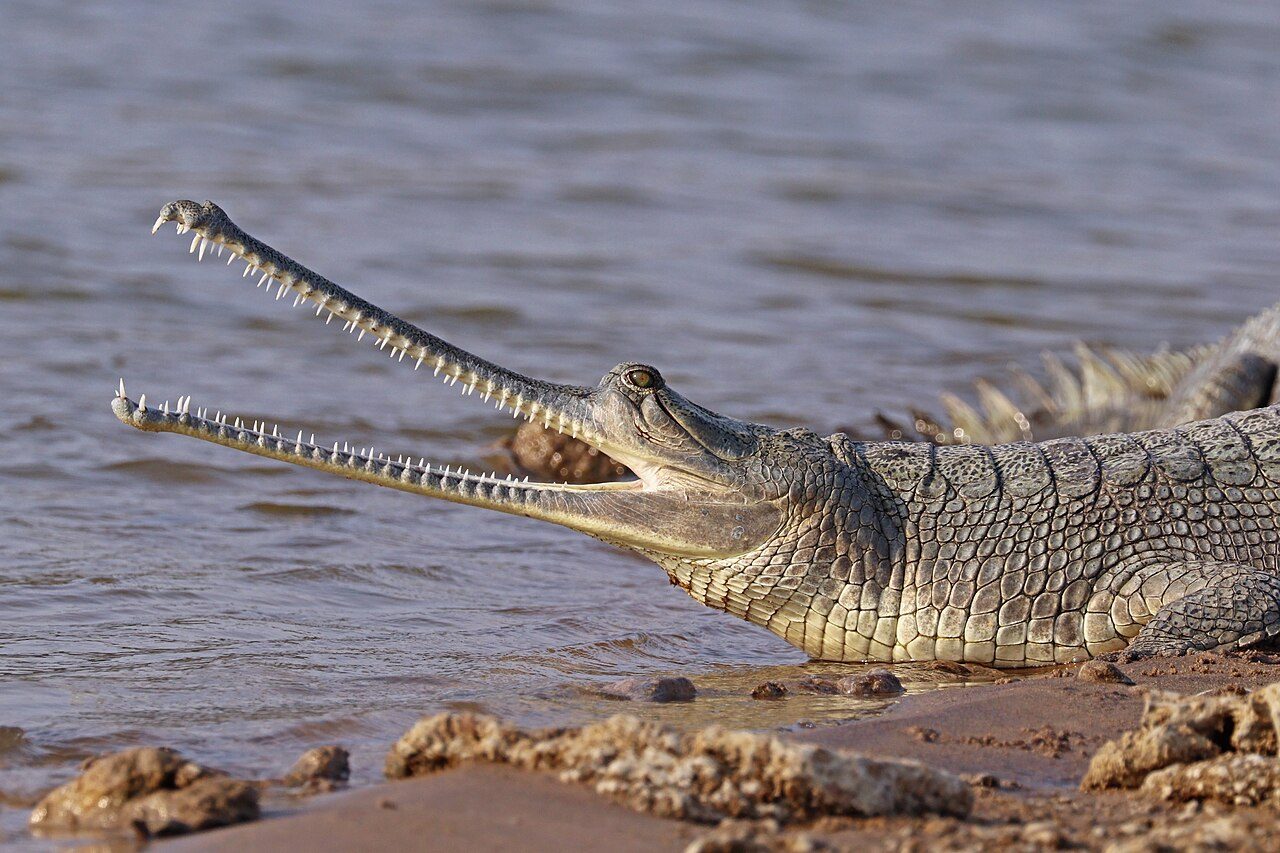
The animal had a long, narrow snout. It lived in rivers and lakes, not the open sea, The Times of India reported.
The teeth were too fragile for big, struggling fish, the researchers said. "We think the animal was probably eating soft prey like shrimp, worms and tiny fish, so nothing that would break its teeth," Imran said, Earth.com reported. The Times of India said its diet likely included tiny fish, fairy shrimp and worms.
Its teeth look like those of some ancient flying reptiles that may have strained food from water, both outlets said. But much of the skull is missing. So the idea that it filtered its food is still a "tentative hypothesis," the study authors wrote, Earth.com reported.
"Morocco has an incredibly rich fossil history, but there is still so much waiting to be discovered," Imran said, Earth.com reported.
What we know: A new crocodile relative with needle-like teeth lived in Morocco about 170 million years ago.
What we don't: Exactly how it fed, since much of its skull is missing.
Where outlets agree Earth.com and The Times of India both report that scientists have named Ctenosuchus tenuidens, a crocodile relative from Morocco with needle-like teeth that likely ate small, soft prey.
Where they differ The outlets cited here report the same key facts so far.