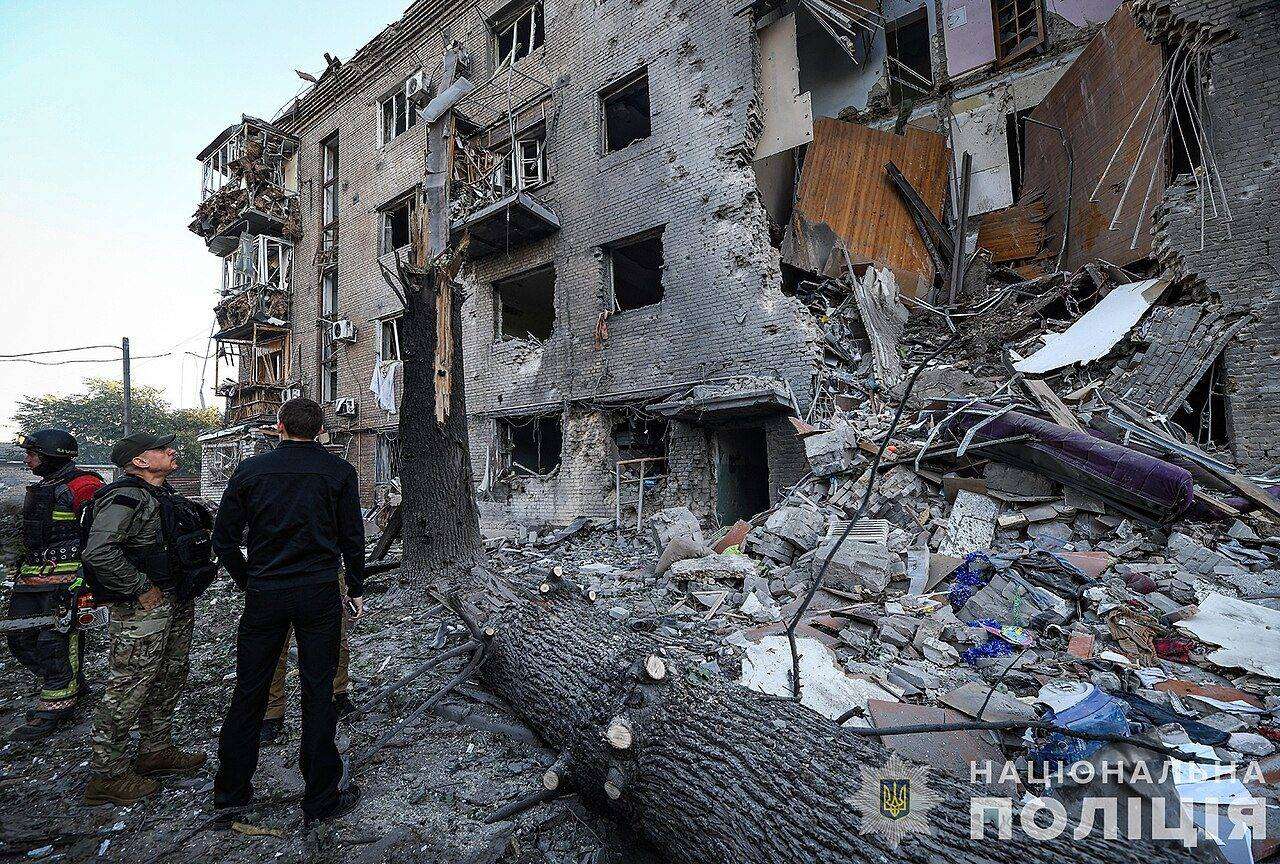
Zaporizhzhia death toll rises to 23 after Russian glide-bomb strike
Ukrainian rescuers say 23 people, including four children, died when Russian glide bombs hit a five-story apartment building in Zaporizhzhia on Saturday. Search work ended Sunday. The city of more than 700,000 sits less than 10 miles from the front line, and Russian drones and missiles hit it often.
The death toll from Saturday's Russian strike on Zaporizhzhia has risen to 23, including four children. Yuliia Barysheva, a regional spokesperson for Ukraine's emergency service, confirmed the new count on Sunday.
Russian glide bombs hit a five-story apartment building in the southern city on Saturday morning. The BBC reported five bombs and said at least 32 people were hurt. Rescuers said Sunday morning that search work at the site was over, with 20 dead. President Volodymyr Zelenskyy then put the toll at 23, and the emergency service confirmed it.
"The ground floor was hit, and the floors above just collapsed," acting Mayor Regina Harchenko told Ukrainian television. More than 80 workers took part in the search. They stopped often to listen for sounds from people trapped under the rubble. Harchenko said Russia had struck "our littlest ones."
Zaporizhzhia, a regional center of more than 700,000 people, sits less than 10 miles from the front line, and Russian drones and missiles hit it often.
Zelenskyy tied the strike to President Donald Trump's deal, announced the night before, to ease sanctions and buy Russian diesel. He said Russia was expressing "its thanks." He said 13 other regions were also attacked overnight.
The strike came in a deadly week. The BBC reported that a glide bomb attack on two buses in Kramatorsk killed at least 33 people on Thursday. A day earlier, a missile on an apartment block in Pryluky killed 22. The United Nations says civilian casualties in Ukraine rose 55% in the first eight months of this year.
On Sunday, Trump announced an "energy ceasefire" between Russia and Ukraine. Kyiv said Russian strikes on its power plants went on after the post.
What we know: Twenty-three people, four of them children, died in the Saturday strike, and the search at the building is over.
What we don't: How many of the injured remain in serious condition, and whether Russia will answer for the attack.
Where outlets agree The BBC and Ukrainska Pravda both report that Russian glide bombs hit a residential building in Zaporizhzhia on Saturday and killed children.
Where they differ The outlets cited here report the same key facts so far.