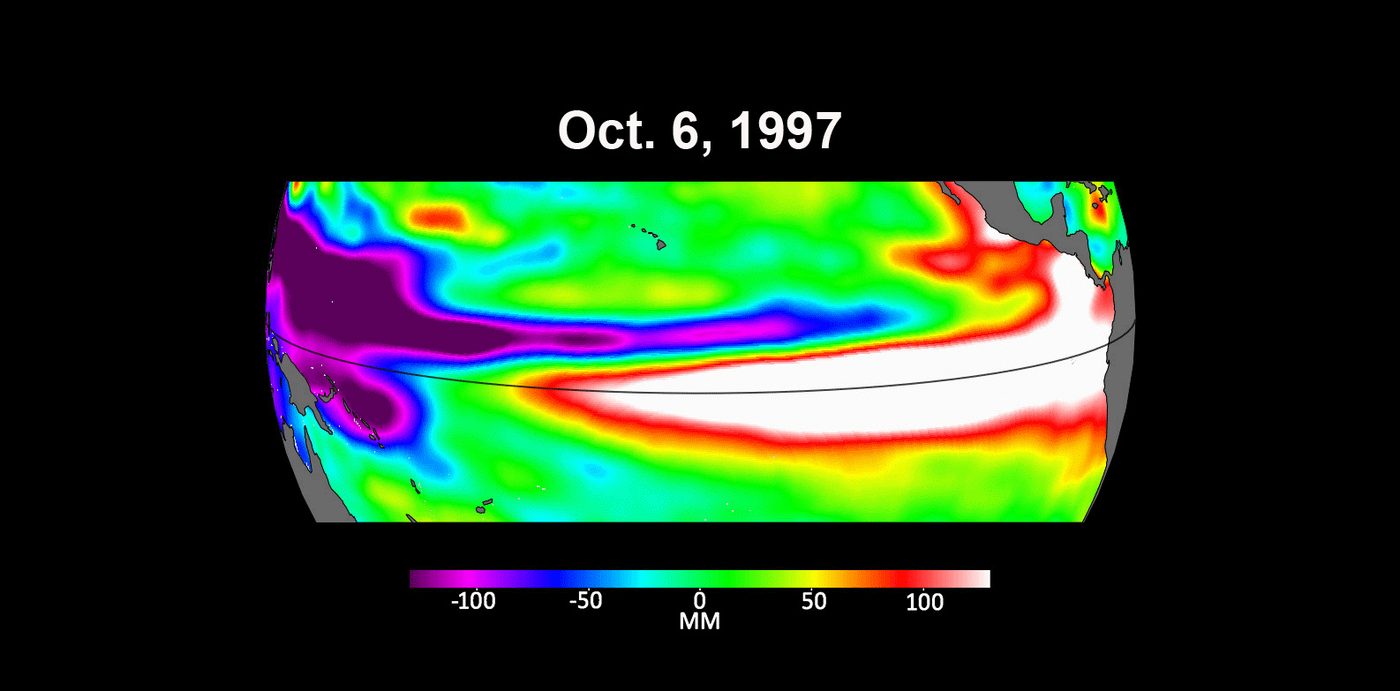
Slow ocean bulge from El Niño lifts West Coast sea levels
A broad bulge of warm water called a Kelvin wave reached Southern California's coast last week and is moving north toward Oregon and Washington, National Geographic reported. It can raise sea level 6 to 12 inches. Scientists say that matters most when high tides and storms stack up, with unusually high tides due in late November.
A wave you can't see is raising the sea along the West Coast. A huge, thin bulge of warm water, called a Kelvin wave, arrived on Southern California's coast last week and will keep moving north, National Geographic reported Tuesday.
The wave began thousands of miles away in the western Pacific near Indonesia. Weak trade winds let warm water slosh east along the equator. That trip takes six to eight weeks. When the bulge hits Central America, it splits and travels along the coast toward Alaska and Patagonia.
Don't picture a surf break. North Carolina State University scientist Dillon Amaya compares it to a pancake: wide, thin and moving about six miles per hour. It can lift sea level by 6 to 12 inches. Even 2 to 4 inches of extra water roughly doubles flood risk in low-lying places, he told the magazine.
The danger comes when it stacks up. High tides, big swells and storm surge all raise the risk, and El Niño tends to bring all three, Amaya said. Late November is a worry, when California expects unusually high tides. Last month, about 20 homes were evacuated in Long Beach after heavy surf caused flooding, the magazine said. NBC News reported that scientists expect El Niño storms to batter the coast and cause unusual beach erosion.
This is the biggest Kelvin wave of the year, Amaya said. He expects three or four more through the winter.
Sea life feels it too. The warm bulge pushes down the layer that lets nutrients rise from the deep. Tiny plankton can go hungry, and that can ripple up the food chain. "You have the potential for a collapse with massive bird die-offs and fish die-offs," said University of Washington oceanographer Michael McPhaden. In Peru, warm water ended the anchoveta fishing season months early, with less than a quarter of the expected catch. A whale shark was spotted off Catalina Island, and spinetail rays near San Diego.
Kelvin waves are named for the 19th-century physicist who described them. They help drive El Niño itself. "You can see the link from the tropical ocean all the way to the West Coast," said NOAA oceanographer Michael Jacox.
What we know: The wave has reached Southern California and is heading north.
What we don't: How much it will add to flooding when winter storms hit.
Where outlets agree National Geographic and NBC News both report that warmer, expanding ocean water is raising sea levels along the U.S. West Coast as El Niño builds.
Where they differ Scientists quoted by National Geographic say the wave itself does little damage, while NBC News stresses that El Niño storms are expected to batter the coast, so the real risk depends on how the two combine.