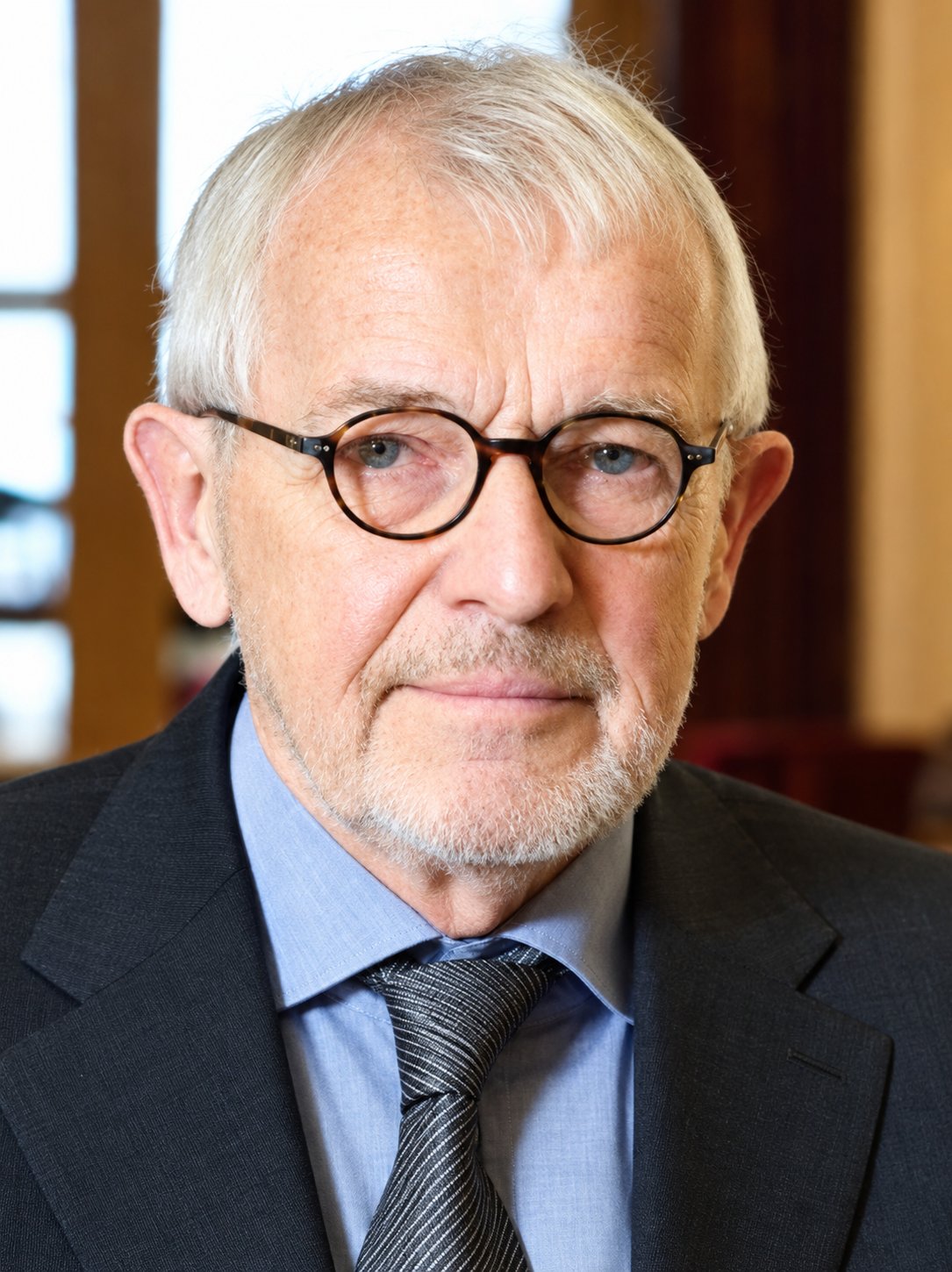
Wisconsin physicist Francis Halzen wins Nobel Prize for South Pole neutrino observatory
Updated: Francis Halzen won the 2026 Nobel Prize in Physics on Tuesday. He led the work on IceCube, a South Pole observatory that uses a huge block of ice to catch tiny particles from deep space called neutrinos. Halzen, 82, was born in Belgium, works at the University of Wisconsin–Madison, and wins the full prize, about $1.2 million.
Updated Tuesday: Francis Halzen has won the 2026 Nobel Prize in Physics. The Royal Swedish Academy of Sciences named him in Stockholm "for decisive contributions to the IceCube Neutrino Observatory and the discovery of high-energy neutrinos of astrophysical origin." Halzen, 82, was born in Belgium and works at the University of Wisconsin–Madison. He wins the prize alone, so he keeps the full 12 million Swedish kronor, about $1.2 million.
Neutrinos are tiny particles that are almost everywhere, yet they rarely leave a trace. Every second, billions from the sun pass through an area the size of a fingernail, the BBC explains. They have no electric charge, so magnetic fields in space do not bend their path. That means a neutrino can point back to where it came from, even from a galaxy far away.
The hard part is catching one, because most pass right through the Earth. Very rarely, one hits an atom and gives off a faint flash of blue light. To see enough of those flashes, scientists need a huge, clear and quiet detector.
Halzen first shared his idea in 1988: use the ice at the South Pole. The ice there is very clear, free from outside noise and does not shake from earthquakes. Teams drilled deep holes and froze thousands of light sensors on long cables into a block of ice one kilometer on each side. IceCube was finished in 2011. Researchers soon found the first high-energy neutrinos. A few years later, they showed some came from far outside our solar system.
"His tenacity and scientific vision has paved the way for a new kind of astronomy," said Mark Pearce, who chairs the Nobel physics committee. The University of Wisconsin–Madison leads the observatory, AP reports.
Halzen told a news conference he was surprised the idea worked so well. "Very few thought it would work, including myself," he said, according to the BBC.
Nobel week began Monday with the medicine prize for optogenetics, a way to control brain cells with light. Chemistry is next, Wednesday at 11:45 a.m. Stockholm time, or 5:45 a.m. ET, streamed live at nobelprize.org. Literature follows Thursday and peace on Friday in Oslo. Economics comes Oct. 12. Last year's physics prize went to three scientists for work on quantum tunneling.
What we know: Halzen alone wins the 2026 physics prize for his work on IceCube.
What we don't: Which distant objects make most of the high-energy neutrinos IceCube detects.
Where outlets agree The Nobel academy, AP, Reuters and the BBC all report that Halzen alone won the 2026 physics prize for his work on the IceCube Neutrino Observatory.
Where they differ AP said early Tuesday it could not yet reach Halzen, while the BBC later quoted him at a news conference saying few people, himself included, thought the idea would work.