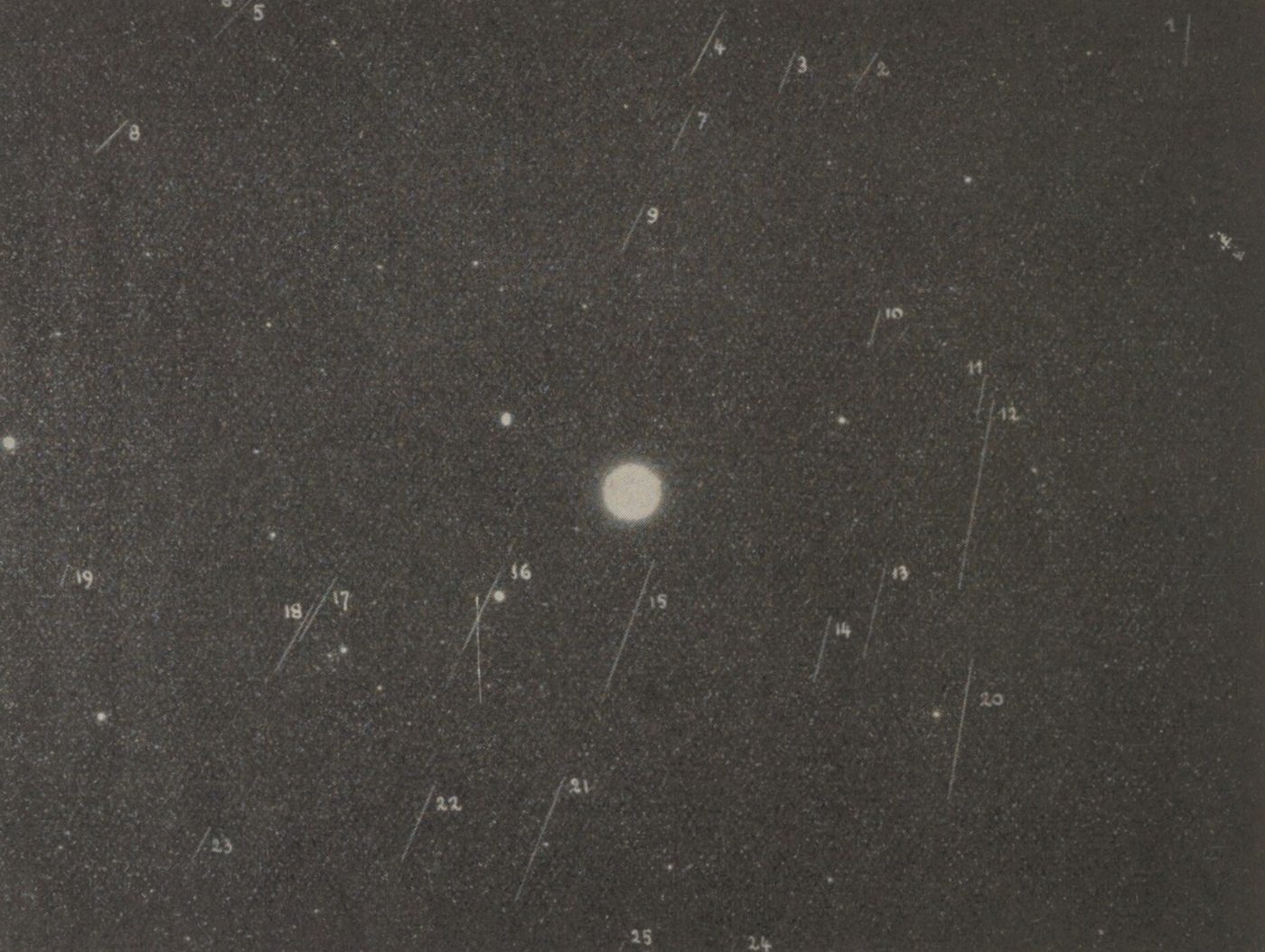
Draconid meteors peak Thursday evening, an early-night show
The Draconid meteor shower peaks Thursday evening, Oct. 8, into early Friday, with viewing starting around 9 p.m. EDT, NASA says. Unlike most showers, it is best soon after dark, so families can watch before bedtime. Expect a modest show of up to about 10 meteors an hour under dark skies.
Here is a meteor shower that does not ask you to set an alarm. The Draconids peak on the evening of Thursday, Oct. 8, into early Friday, starting around 9 p.m. EDT, NASA said in its October sky guide.
Most meteor showers are best before dawn. The Draconids are the odd one out. Their radiant, the point in the sky where the meteors seem to start, sits highest as darkness falls, EarthSky explains. That makes evening the best time to look.
The Moon will help. It is nearly new, so its light should not wash out faint streaks. EarthSky puts the peak at about 1 a.m. UTC on Oct. 9, which is 9 p.m. EDT Thursday. The shower runs from Oct. 6 to 10.
How to watch: Find a dark spot away from streetlights, let your eyes adjust and look up. You do not need a telescope. NASA calls it a modest shower where viewers may spot a few meteors an hour. EarthSky says up to about 10 an hour is possible under ideal dark skies.
There is a wild card. The Draconids come from dust shed by Comet 21P/Giacobini-Zinner, which last swung closest to the Sun in March 2025. In 1933 and 1946, the shower erupted into storms of thousands of meteors an hour. European observers saw more than 600 an hour in 2011. Could it surprise this year? EarthSky's answer: "Maybe."
October has more on the calendar. Early Tuesday, the Moon was set to pass in front of Jupiter for about an hour over much of North America, NASA said. The Orionid shower, made of debris from Halley's Comet, peaks Oct. 21. Viewers may see 3 to 6 meteors an hour from the suburbs, more from darker places, best after the Moon sets around 3 a.m. The full Hunter's Moon rises Monday, Oct. 26.
What we know: The Draconids peak Thursday evening with little moonlight.
What we don't: Whether the comet's dust will deliver a rare burst.
Where outlets agree NASA and EarthSky both say the Draconids peak the evening of Oct. 8 into Oct. 9, with the best viewing soon after dark.
Where they differ NASA expects a few meteors an hour, while EarthSky says up to about 10 an hour is possible and leaves the door open to a rare outburst.