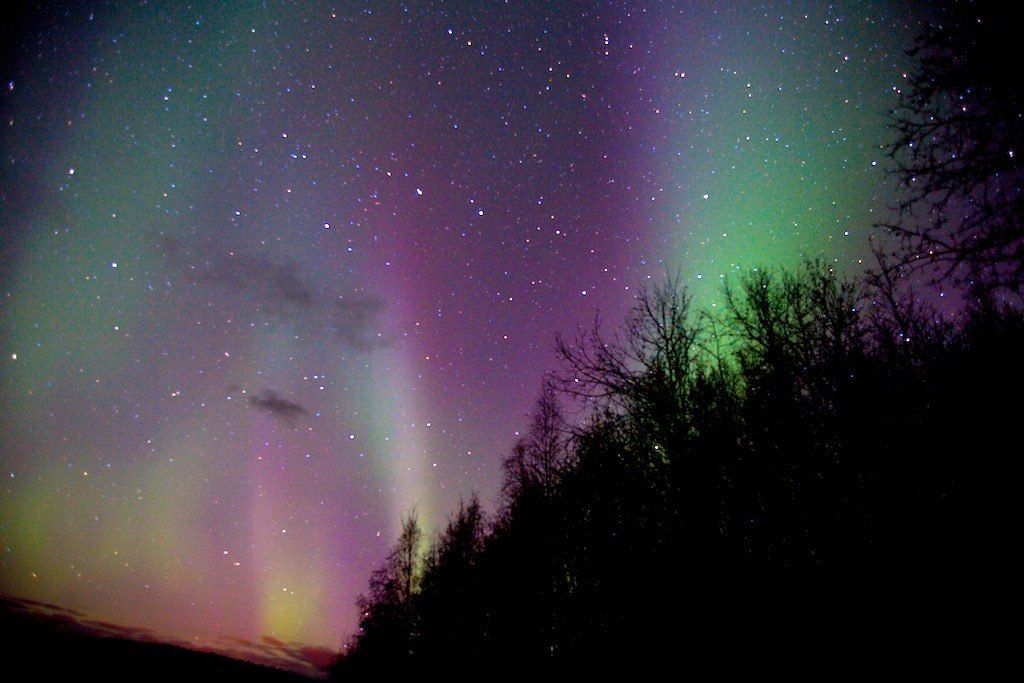
NOAA sees active-to-G1 aurora chances into Monday night
NOAA's Space Weather Prediction Center flagged active conditions into Monday with about a 35% chance of minor G1 storming. A coronal-hole high-speed stream already drove G2 levels recently. Chances are expected to ease through Tuesday and Wednesday for most mid-latitude viewers.
Skywatchers have a short window for northern lights farther south than usual. NOAA's Space Weather Prediction Center's three-day outlook called for active geomagnetic conditions into Oct. 5 with roughly a 35% chance of minor G1 storm levels, after a coronal-hole high-speed stream recently pushed conditions to G2.
G1 storms can create aurora visible in northern-tier U.S. states on a dark, clear night and can cause weak power-grid fluctuations. G2 events push the oval farther south and raise the odds of visible glows in places like New York or Illinois when timing and clouds cooperate.
Forecasts can shift within hours as solar wind data arrive from spacecraft upstream of Earth. The SWPC text product remains the authoritative short-term guide. Space.com and other outlets translate the jargon into viewing tips: get away from city lights, look north after local midnight, and use a phone camera on night mode if your eyes are unsure.
Power companies and satellite operators watch the same scales for different reasons. Airlines on polar routes sometimes adjust paths during stronger storms. Most Monday impacts, if any, should stay at the minor end of the scale if the forecast holds.
Conditions are expected to quiet from Oct. 6 into Oct. 7 as the high-speed stream influence fades. That makes Monday night the better bet for casual aurora hunters in the northern United States and Canada.
Photographers should use a tripod, a wide lens, and manual focus set near infinity. Avoid car headlights in the frame, and give your eyes ten minutes to adapt. If the oval stays north, enjoy the stars anyway — clear October air is worth the trip.
What we know: SWPC sees active to minor-storm chances Monday after a recent G2 episode from a coronal hole stream.
What we don't: Whether clouds and moonlight will cooperate for mid-latitude viewers.
Where outlets agree NOAA SWPC's three-day geomagnetic forecast and Space.com's aurora guide both describe active to minor-storm chances around Oct. 5 tied to coronal-hole solar wind.
Where they differ Casual alerts sometimes imply nationwide light shows, while G1 odds mainly favor northern states unless the storm overperforms.