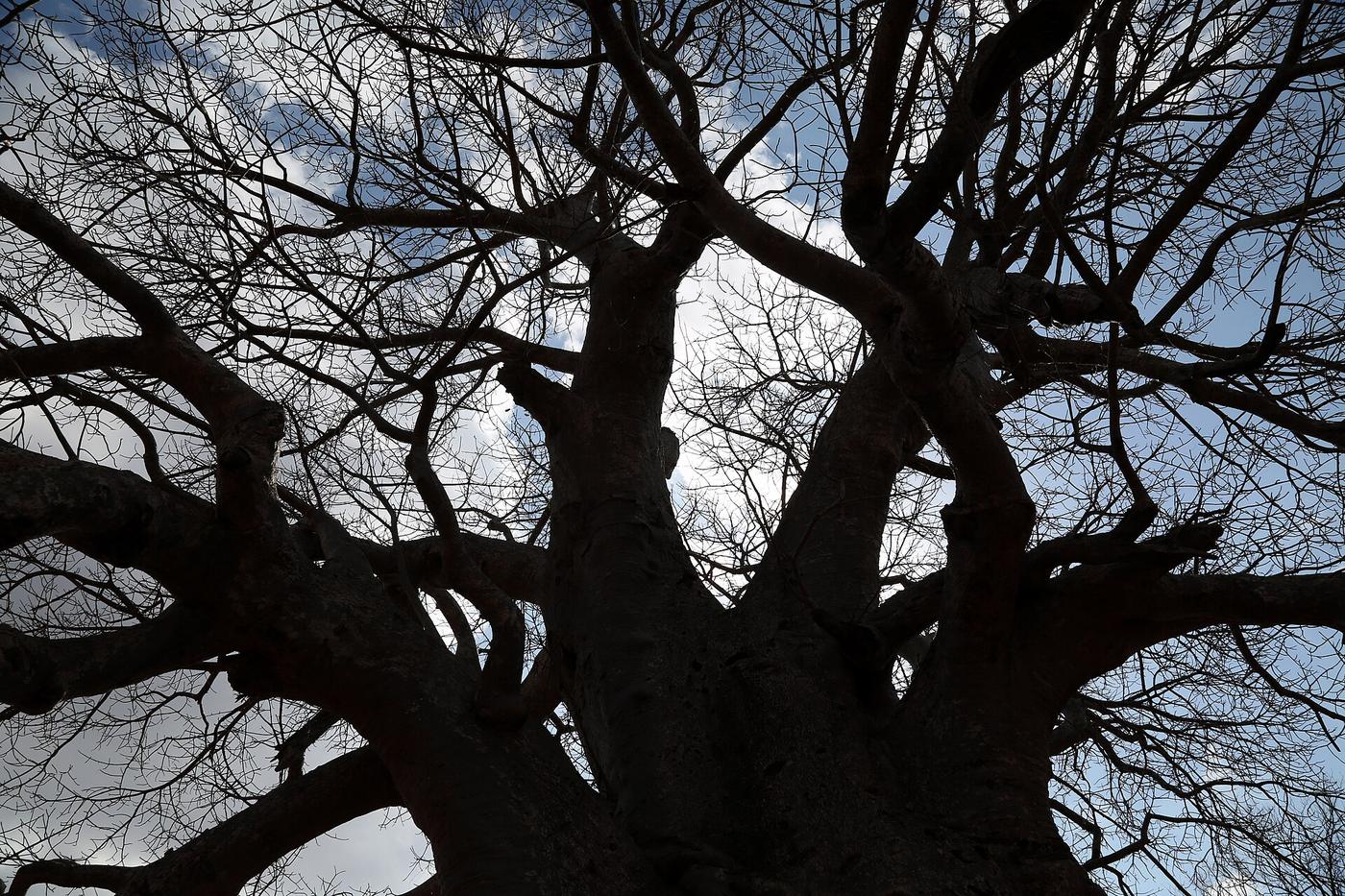
Rescued baobab trees replanted in South Africa after smuggling bid
According to the Associated Press, five old baobab trees taken without a permit have been replanted in northern South Africa. Officials found them lying in a parking lot at a port. They were moved nearly 1,000 kilometers back to the wild.
According to the Associated Press, five old baobab trees taken without a permit have been replanted in northern South Africa. Officials found them lying in a parking lot at a port. They were moved nearly 1,000 kilometers back to the wild.
Five large baobab trees have been moved nearly 1,000 kilometers (621 miles) and replanted in their natural home in northern South Africa, according to the Associated Press. The trees had been dug up without permission and taken to a port for export.
Environment Ministry officials found the protected trees in July, lying on their sides in a freight company's parking lot in the port city of Durban, the AP reports. They were replanted this month in the Timbavati Nature Reserve near Kruger National Park.
The trees were headed for an unnamed private collector in Georgia, in the Caucasus region, officials said, according to the AP. A landscaper has been charged with wildlife offenses, the AP reports.
The trees are estimated to be between 200 and 300 years old, said Sarah Venter, an ecologist at the Baobab Foundation, the AP reports.
"It's an amazing tree and that's why it's an icon of Africa," Venter said in an interview with the AP. "We want our natural resources to stay here in Africa," she added.
Each tree weighs between 20 and 30 metric tons, and moving them took five flatbed trucks, the AP reports. A crane lifted the trees into large holes filled with water.
It is still not clear whether they will survive months out of the ground, according to the AP. Electric fences will keep out elephants while they recover, and the trees will be checked twice a year for 10 years.
Conservation groups estimate that about 500,000 plants are poached in South Africa every year, the AP reports.
What we know: Five smuggled baobab trees have been replanted in a South African nature reserve. Only the Associated Press has reported this so far; NewsHabit hasn't seen independent confirmation. What we don't know: Whether the trees will survive after months out of the ground.
Where outlets agree The Associated Press reports that five baobab trees taken without permission were rescued at a port and replanted in South Africa's Timbavati Nature Reserve.
Where they differ The Associated Press report includes that the trees were bound for a private collector in Georgia, in the Caucasus region.