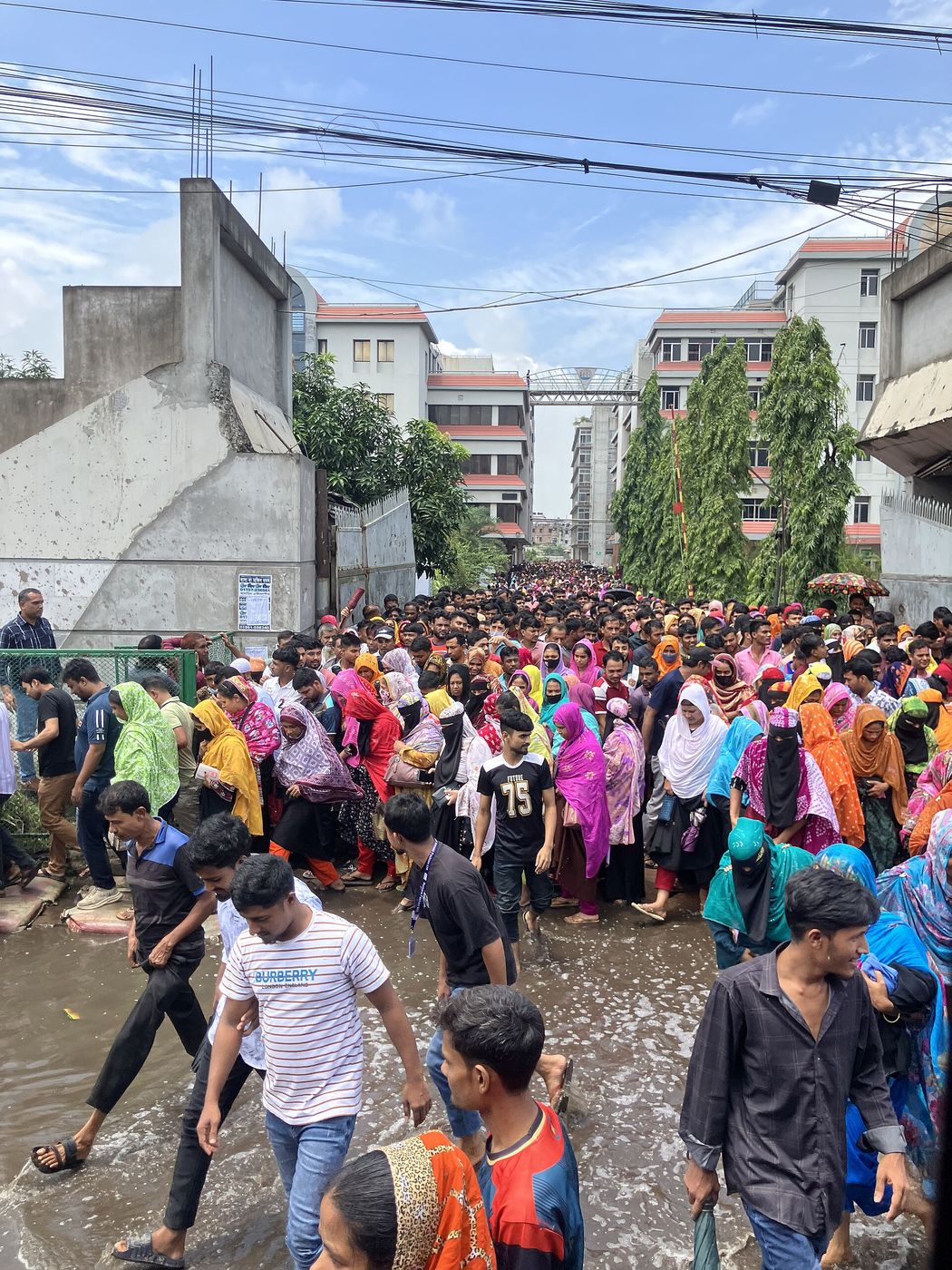
Bangladesh raises garment worker minimum wage by 36% after protests
According to the Associated Press, Bangladesh has raised the minimum monthly wage for entry-level garment workers by 36%. The new wage is 17,000 takas, or about $136. The move follows weeks of violent protests by workers who had demanded that the minimum wage be doubled.
According to the Associated Press, Bangladesh has raised the minimum monthly wage for entry-level garment workers by 36%. The new wage is 17,000 takas, or about $136. The move follows weeks of violent protests by workers who had demanded that the minimum wage be doubled.
A government-appointed wage board approved the new pay on Wednesday, the AP reports. It raises the minimum from 12,500 takas a month. The decision came after nearly 12 hours of meetings between workers' and employers' representatives, according to the wire service.
The six-member board includes two representatives each for workers and employers, the AP says. It voted 4-2 for the 17,000-taka minimum. The other two members backed the workers' revised demand of 18,000 takas a month, the AP reports.
Workers had demanded that the minimum wage be doubled, according to the AP. For weeks, they took to the streets, fought with police and attacked factories. They said higher inflation had made their lives hard. The protests closed factories and disrupted production, the wire service reports.
The garment industry is the main source of export earnings for Bangladesh, the AP says. It makes up about 80% of the country's total exports, mostly to the United States and Europe. The sector directly employs about 4 million workers, most of them women from rural areas, according to the AP.
It was not immediately clear whether workers would accept the new wage, the AP reports. The board's decision follows weeks of unrest in the country's main export industry.
What we know: Bangladesh's wage board raised the garment workers' minimum wage by 36% to 17,000 takas a month. Only the Associated Press has reported this so far; NewsHabit hasn't seen independent confirmation. What we don't know: Whether workers will accept the new wage or keep protesting.
Where outlets agree The Associated Press reports that Bangladesh's wage board raised the minimum monthly wage for entry-level garment workers by 36% to 17,000 takas.
Where they differ The AP report includes the wage board's 4-2 vote, with two members backing the workers' demand for 18,000 takas a month.