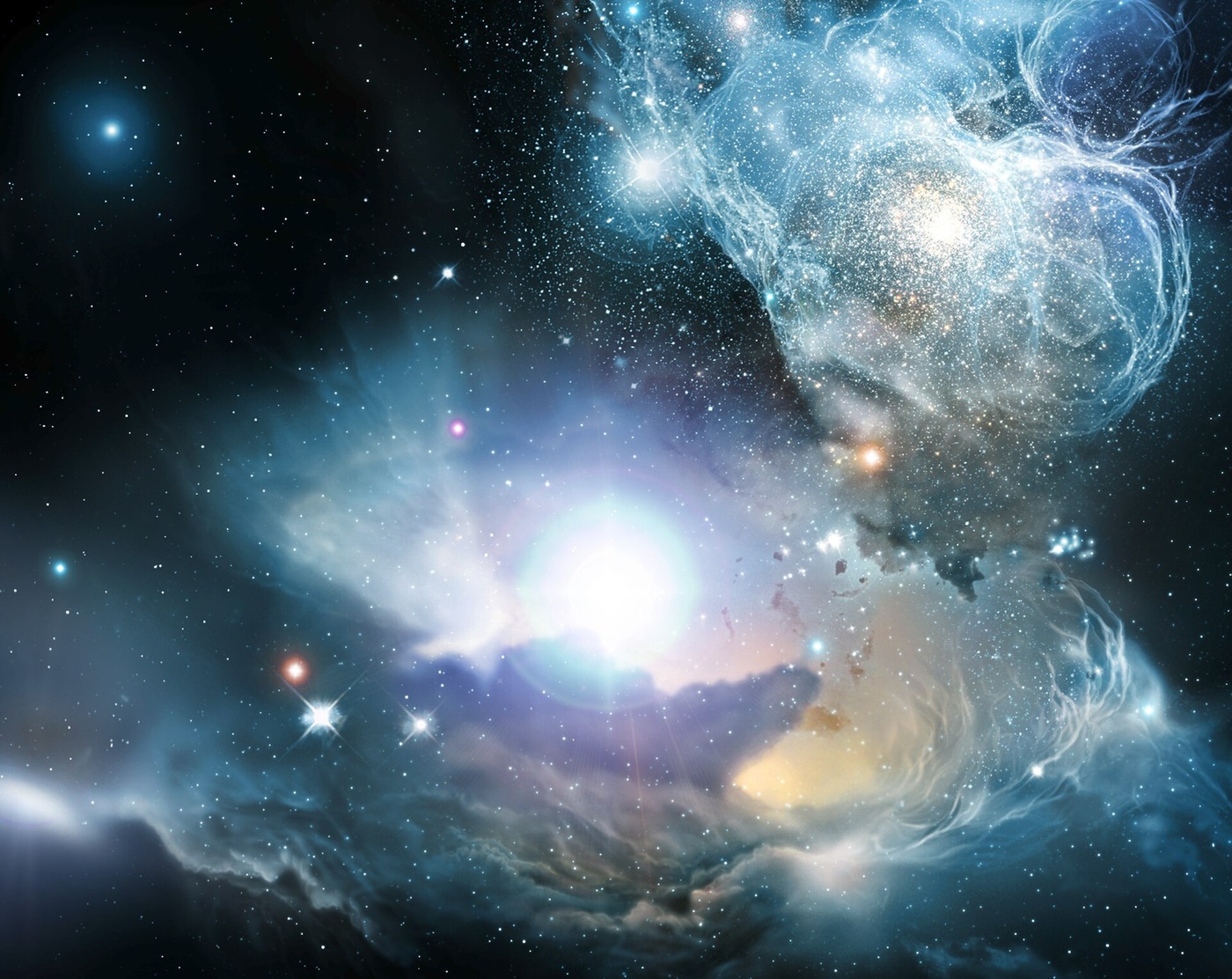
Scientists find most distant quasar, formed soon after the Big Bang
According to the Associated Press, a German-led team has found the most distant quasar yet. It formed within 630 million years of the Big Bang and turned up in images from the Euclid space telescope. Study leader Julien Wolf said it reaches nearly 40 million years farther back than the prior records.
According to the Associated Press, a German-led team has found the most distant quasar yet. It formed within 630 million years of the Big Bang and turned up in images from the Euclid space telescope. Study leader Julien Wolf said it reaches nearly 40 million years farther back than the prior records.
A quasar is the bright core of a galaxy, powered by a black hole that pulls in gas and dust. The Associated Press, in a report by Marcia Dunn, said the new object comes from a time when the universe was less than 5% of its present age. That is close enough to the first era of galaxies that astronomers treat each earlier example as a major find.
Wolf, of the European Southern Observatory, led the work and wrote to the Associated Press that prior records had moved the mark by about 15 million years or less. He nicknamed the quasar Dun Aonghasa, after a stone fort in Ireland's Aran Islands that he once visited with his family. The team found the object while sifting through millions of Euclid observations. Euclid launched in 2023 to map galaxies and to study dark matter and dark energy.
Wolf said a record of this kind can fall again in a few months or stand for years. He also pointed to the large size of the black hole, given how early it appears in cosmic time. How that black hole grew so quickly remains an open question in the Associated Press account.
What we know: According to the Associated Press, a German-led team found the most distant quasar yet in Euclid telescope data, dating to within 630 million years of the Big Bang. Only the Associated Press has reported this so far; NewsHabit hasn't seen independent confirmation. What we don't know: Whether a later survey will beat the record, and how the black hole grew so large so early in the universe.
Where outlets agree The Associated Press reports that a German-led team found the most distant quasar yet, formed within 630 million years of the Big Bang.
Where they differ The Associated Press report includes comments from study leader Julien Wolf of the European Southern Observatory.