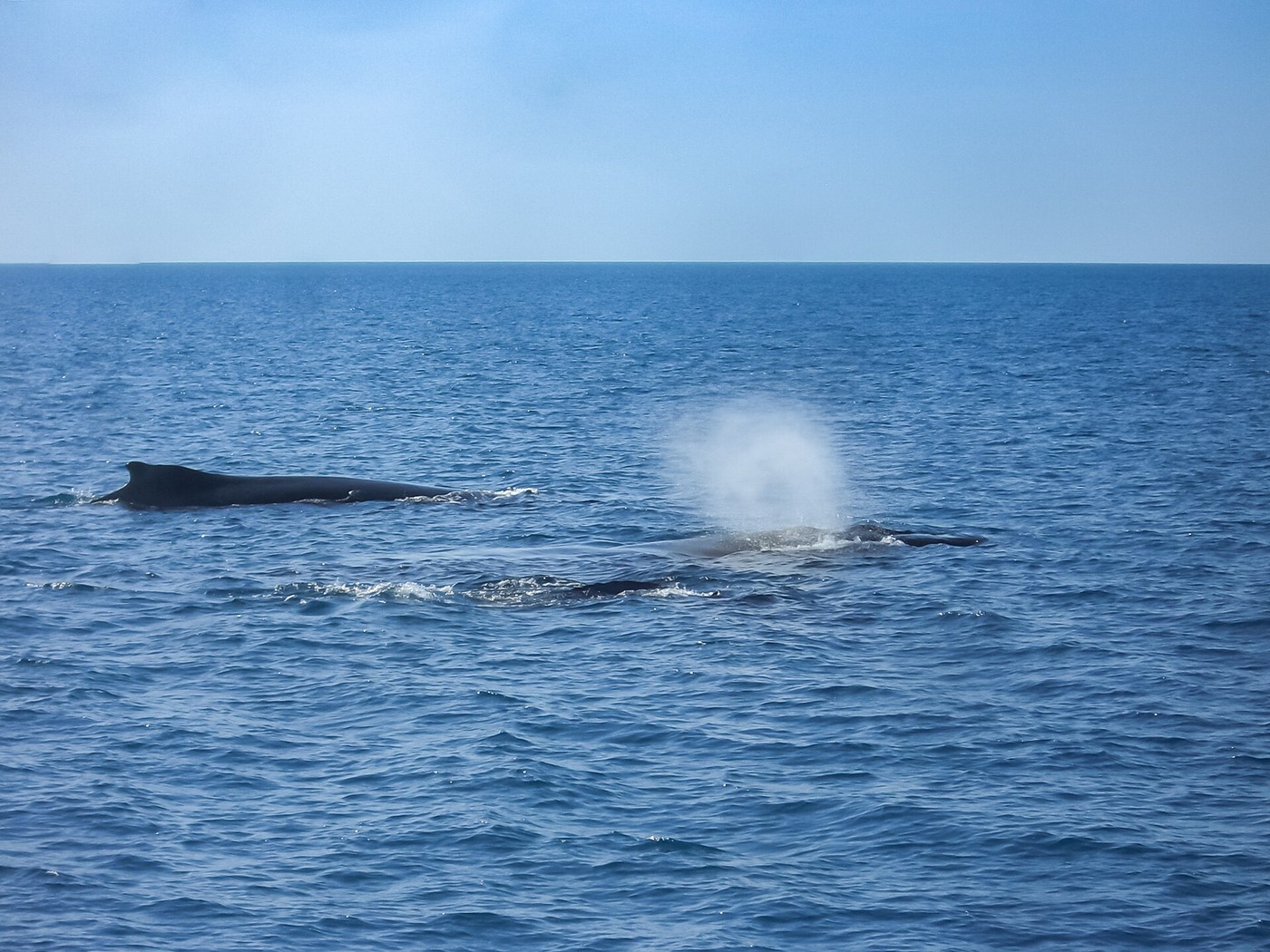
Scientists sequence whale genomes from drone-collected snot
Scientists have sequenced whole whale genomes using snot, or blow, collected by drones carrying petri dishes, NPR and Popular Science report. It is the first time a whole whale genome has been sequenced this way, NPR says. The method avoids darting whales to take skin samples.
Scientists have sequenced whole whale genomes using snot, or blow, collected by drones carrying petri dishes, NPR and Popular Science report. It is the first time a whole whale genome has been sequenced this way, NPR says. The method avoids darting whales to take skin samples.
The drones fly through the mist a whale blows out when it breathes, NPR and Popular Science report. "The drones have got sterile petri dishes attached to them, literally Velcroed on," study author Éadin O'Mahony said, according to NPR.
The team studied humpback whales off the coast of British Columbia, Canada, Popular Science reports. It included scientists from Scotland's University of St Andrews and the University of Copenhagen, the magazine says. The study was published in the journal Molecular Ecology Resources, the outlets report.
The results from blow matched those from skin samples taken from the same whales, Popular Science reports. The method also correctly found every whale's sex, the magazine says. About 16% of the DNA in each sample came from germs living in the whale's airways, which could offer clues to its health, Popular Science reports.
"So this just opens the door," said Amy Apprill of the Woods Hole Oceanographic Institution, who was not part of the study, NPR reports. The older method uses a dart to cut out a small piece of skin and blubber, which can upset the whales, NPR says.
The team stopped flights if a whale reacted, and more than a third of samples were collected by drones flown from land, Popular Science reports. O'Mahony said the team will use the data to learn whether whales that feed together are family or "long-term friends," according to the magazine.
What we know: Scientists sequenced whale genomes from drone-collected blow. What we don't know: How widely the method will be used for other whale species.
Where outlets agree NPR and Popular Science report that scientists sequenced whole whale genomes from blow samples collected by drones.
Where they differ The cited reports agree on the key facts so far.