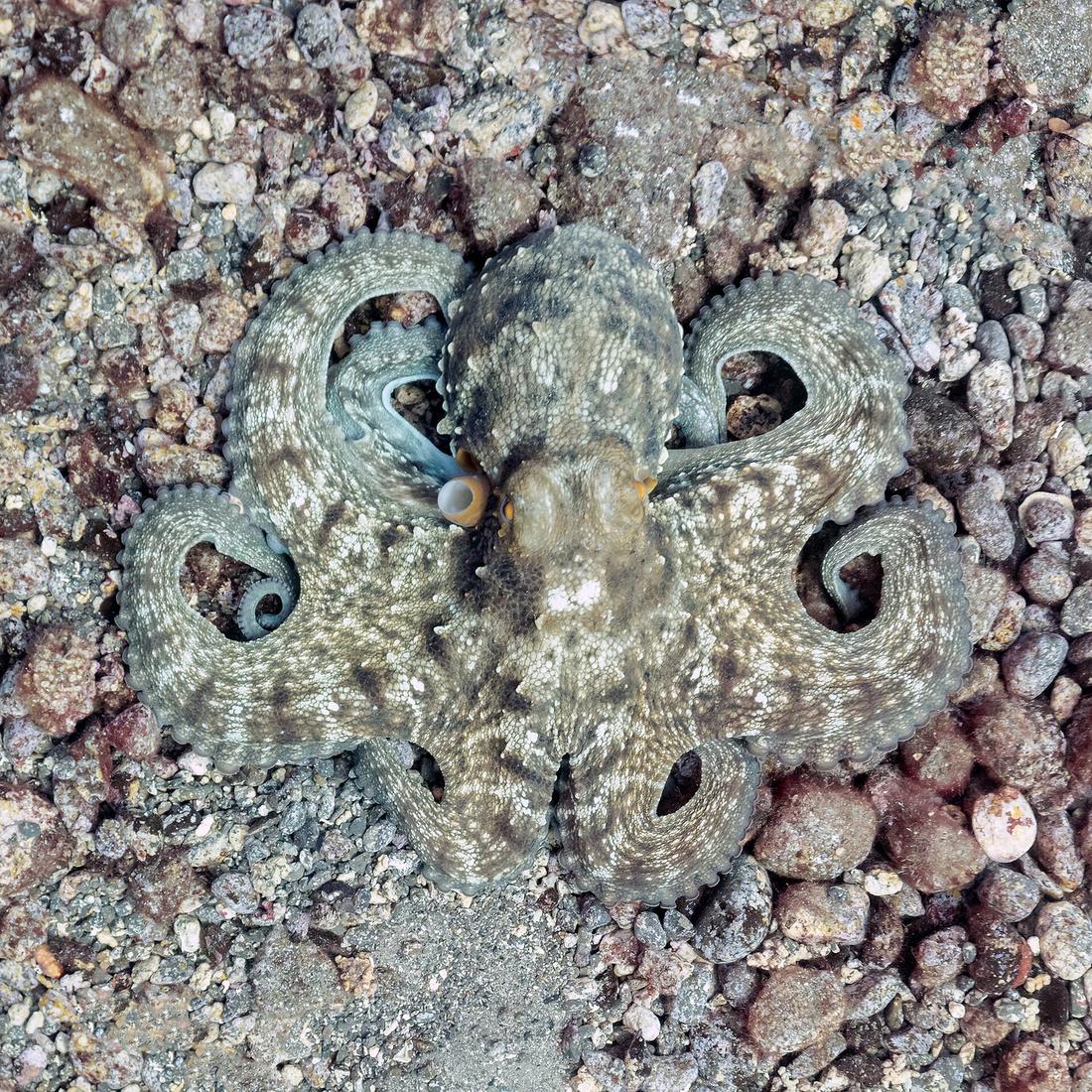
Scientists find how octopuses squeeze through very small holes
Octopuses use a three-step or four-step process to squeeze through small holes, depending on the size of the gap, Smithsonian magazine reports. The study was published November 5 in the Journal of Experimental Biology. It could help engineers design soft robots.
Octopuses use a three-step or four-step process to squeeze through small holes, depending on the size of the gap, Smithsonian magazine reports. The study was published November 5 in the Journal of Experimental Biology. It could help engineers design soft robots.
The team tested three common octopuses and four Mayan octopuses, Smithsonian reports. They placed each animal in a tank with a single hole in a clear partition, the magazine says.
Hole sizes were based on the distance between each octopus's eyes, Discover reports. That distance shows the size of the semi-rigid cartilage casing around the brain, Smithsonian says.
For bigger holes, an octopus first probed the gap with one arm, Smithsonian reports. Then it sent more arms through and used them to pull the rest of its body through, the magazine says.
For smaller holes, the common octopuses added a step, Discover reports. They pushed the rest of their arms through first, then their head and mantle, Discover says.
The Mayan octopuses did not even try the smaller holes, Discover reports. They sat in a corner of the box and ignored the gap, the magazine says. Only when given a choice of two holes did they explore the smaller one, before picking the larger, Discover reports.
"Octopuses can change their body shape to squeeze through tiny holes, almost like water flowing through a gap," said Wenci Xin of the National University of Singapore, Discover reports.
Octopus bodies have only two stiff parts, the casing around the brain and the beak, Smithsonian reports.
The findings could help design robots for search-and-rescue missions, Smithsonian says. Xin said existing rescue robots have slender, snake-like bodies, which costs them some ability to sense and handle things, Discover reports.
What we know: Octopuses change their squeezing method depending on the size of a hole. What we don't know: Whether other octopus species use the same steps.
Where outlets agree Smithsonian magazine and Discover report that a new study found octopuses use different step-by-step methods to squeeze through holes depending on the hole's size.
Where they differ The cited reports agree on the key facts so far.