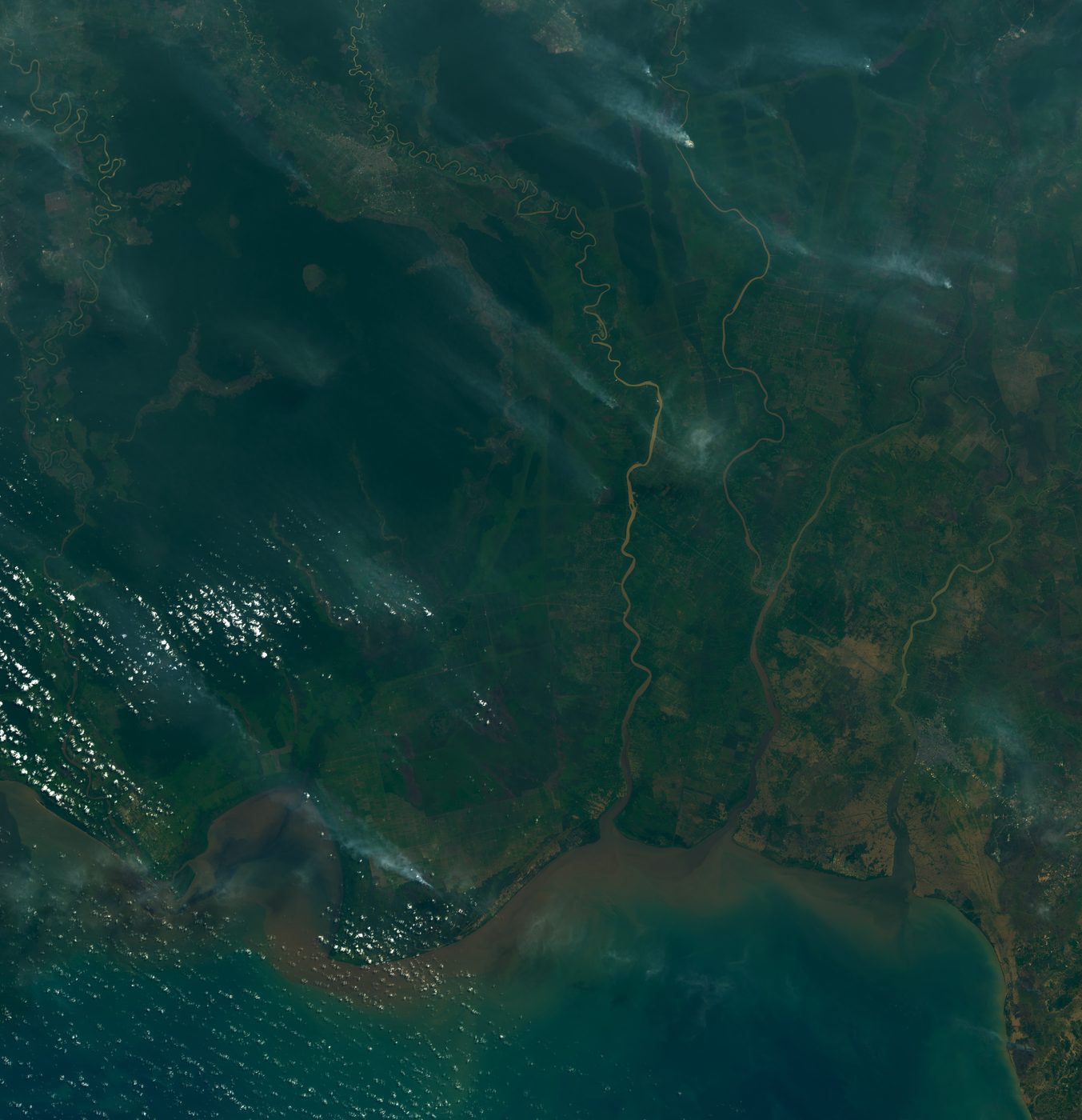
Study ties Indonesia's worst fires in a decade to heat
A World Weather Attribution study found global heating and a strong El Niño fueled Indonesia's worst fires in at least a decade. The fires have burned almost 3 million hectares, The Guardian says. Land conversion also left the land prone to fire, The Guardian and Reuters say.
Indonesia's fiercest fires in at least a decade were made worse by a strong El Niño and by heat driven mainly by fossil fuels, scientists said. The findings come from World Weather Attribution, according to The Guardian and a Reuters report carried by The Sacramento Bee. The blazes have burned almost 3 million hectares, or about 7.4 million acres, this year. They sent haze across much of Southeast Asia, The Guardian reports. Reuters cites the monitoring platform Nusantara Atlas. It puts the area hit by fire from January through October at almost 2.88 million hectares, with nearly 1 million in October alone. The platform says the burned area in the first nine months was 35 percent above the same period of 2019, Reuters reports.
The team studied peak fire season from August to October in Java, Kalimantan, and Sumatra, The Guardian reports. Global heating, driven mainly by the burning of oil, gas, and coal, raised temperatures by 1.6 degrees Celsius in that period. That dried the land and vegetation, the scientists found. El Niño, which is on course to break records, added a further 0.3 degrees Celsius and cut rainfall by about 50 percent, The Guardian says. Reuters says September was Indonesia's fifth-driest since 1991. Rain was below normal across 84 percent of the country, it says.
Friederike Otto, a professor of climate science at Imperial College London, said El Niño "turned off the taps," but fossil fuel emissions "turned up the heat," The Guardian reports. The hot, dry air conditions were made three times more likely by climate change and five times more likely by El Niño, the study found. Decades of logging, the spread of plantations, and the draining of peatlands also left the landscape more prone to fire, The Guardian and Reuters report. Pramudhian Firdaus of Melbourne University said landscapes have changed dramatically over 30 years, The Guardian and Reuters report.
Fires were still burning because El Niño has helped keep conditions dry, The Guardian says. Otto warned that fire weather in El Niño years will grow more severe as the world continues to warm, unless countries move away from fossil fuels and strengthen land protections.
What we know: Researchers say global heating, a strong El Niño, and land conversion helped drive Indonesia's severe fires this year, which burned close to 3 million hectares. What we don't know: How much longer the fires will burn, and how governments will respond to the study's findings.
Where outlets agree Scientists with World Weather Attribution say a mix of global heating, a strong El Niño, and land conversion helped drive Indonesia's severe fires this year.
Where they differ The cited reports agree on the key facts so far.