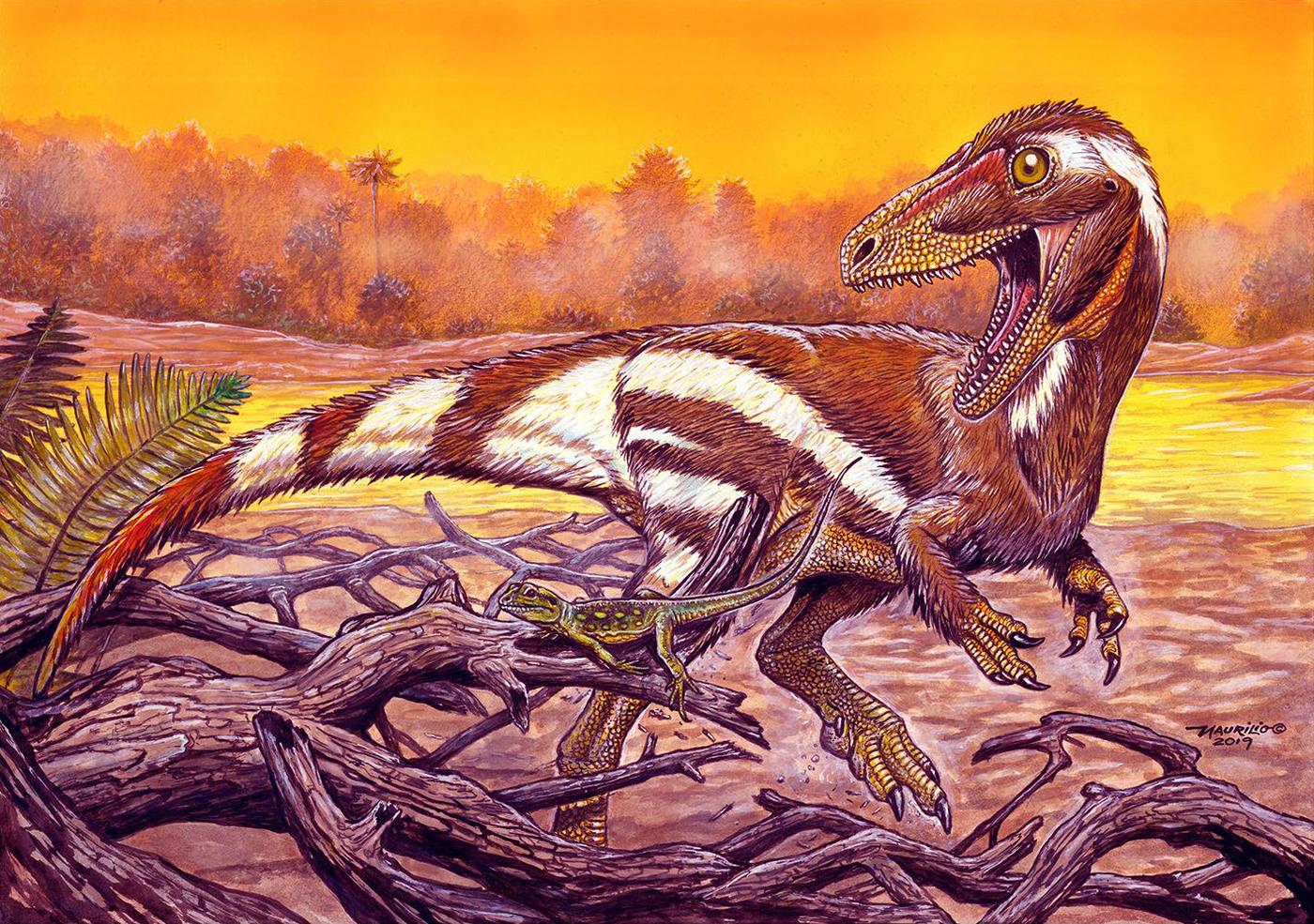
Scientists report fossilised red blood cells in a 115-million-year-old dinosaur bone
Scientists say they have found what appear to be fossilised red blood cells in the leg bones of a 115-million-year-old dinosaur from Brazil, the Guardian reports. Chemical tests found heme, the compound that lets blood carry oxygen. Another scientist says she is not convinced.
Researchers say they have found what look like fossilised red blood cells in a dinosaur's leg bones, the Guardian reports. The small meat-eater is called Aratasaurus. The animal lived and died 115m years ago in what is now north-eastern Brazil.
The study was published on Monday in the journal Proceedings of the National Academy of Sciences, Popular Science reports.
Electron microscope images showed small, round structures that look like red blood cells in fine channels where blood vessels once ran, the Guardian reports. Chemical tests found heme, the compound that lets haemoglobin carry oxygen around the body.
"To detect intact heme-derived molecules in 115-million-year-old red blood cells is astonishing: this really is a landmark discovery," said Kliti Grice of Curtin University, who led the team, according to New Atlas.
The dinosaur was about 3 metres long and was probably around four years old when it died, New Atlas reports. Its remains were found in a mine in 2008 and are held at the National Museum of Brazil, the Guardian says.
Grice said a manganese mineral called hausmannite may have helped preserve the cells before they fossilised, the Guardian reports.
The team says the work could help the study of dinosaur blood and how active the animals were, Popular Science reports.
The findings are already stirring debate, the Guardian reports. Mary Schweitzer of North Carolina State University has found soft tissue in dinosaur fossils. She is not convinced that the team has found red blood cells, the Guardian says.
What we know: The team reports heme and cell-like shapes in the bone.
What we don't know: Whether other scientists will accept that the shapes are blood cells.
Where outlets agree The Guardian, New Atlas and Popular Science agree that a team led by Kliti Grice reports heme and cell-like structures in the leg bones of a 115-million-year-old Aratasaurus.
Where they differ Popular Science says the team confirmed mineralised red blood cells, while the Guardian reports that the claim is controversial and that at least one outside scientist is not convinced.