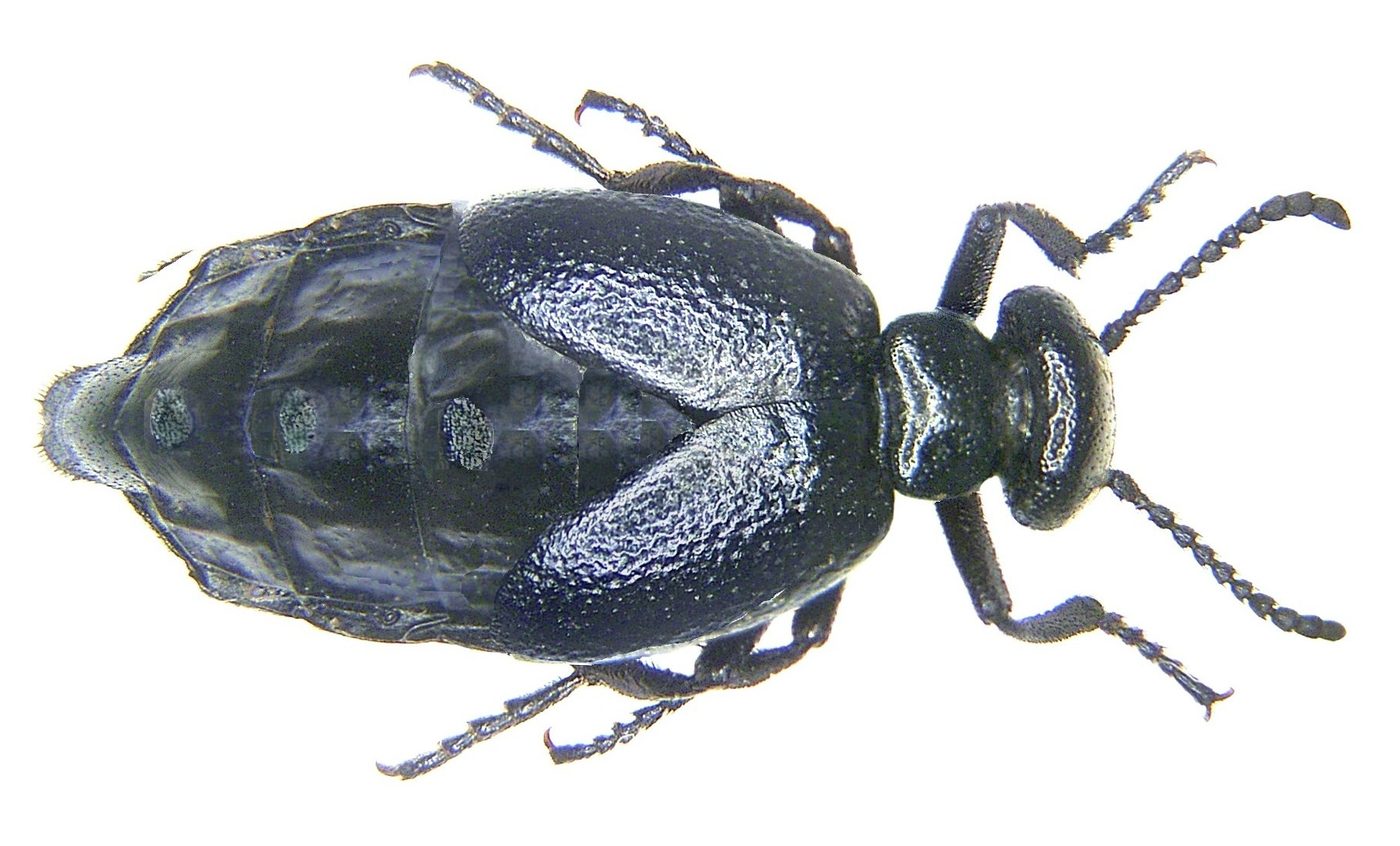
Rare oil beetle that oozes from its knees breeds in Wales
A rare beetle that oozes an oily liquid from its knees when scared has been found breeding in Wales, the Guardian and the BBC report. Surveyors found young short-necked oil beetles at a site in Pembrokeshire. Experts call the find a good sign for the species.
A rare beetle has been found breeding in Wales, which experts call a good sign for the species, the Guardian and the BBC report.
Surveyors found larvae of the short-necked oil beetle at the Castlemartin range in Pembrokeshire, according to Natural Resources Wales. The number and spread of the larvae suggest that a larger batch of young beetles hatched there.
The beetle gets its name from its stubby shape. When it is alarmed, it can ooze an oily, yellow-orange liquid from its knee joints. Adults grow up to 24 millimeters, or about 0.9 inches, long and live about a year, the BBC reports. They are most active on warm, sunny days from March to June, in coastal grassland and sand dunes full of flowers.
Its life depends on solitary bees. The larvae wait on flowers and grab onto a passing bee with hook-like feet. Once inside the bee's nest, they feed on pollen. Only about one in 10,000 larvae lives to become an adult, the Guardian reports.
Habitat loss pushed the beetle close to extinction in Britain during the 1900s. It is rated vulnerable on a global list of threatened species, the BBC reports.
Recent surveys at the site in 2022 and 2025 found only dead adult beetles, which raised worries. The new find is "very exciting," said an officer from the Bumblebee Conservation Trust, which helps run the project.
Castlemartin is the only place in Wales where the species is found, the BBC reports. Elsewhere in Britain, it was seen again in Devon in 2006 and on several Scottish islands since 2009.
The work is part of a Welsh program called Natur am Byth, which protects rare plants and animals that share the beetle's habitat.
What we know: The beetle is breeding at one site in Wales.
What we don't: How many beetles live there.
Where outlets agree The Guardian and the BBC agree that larvae of the short-necked oil beetle were found at Castlemartin, suggesting the species is breeding in Wales again.
Where they differ The outlets differ on the timeline, with the BBC saying the beetle had not been seen in Wales for 60 years and the Guardian reporting that a charity found it at the same site in 2020.