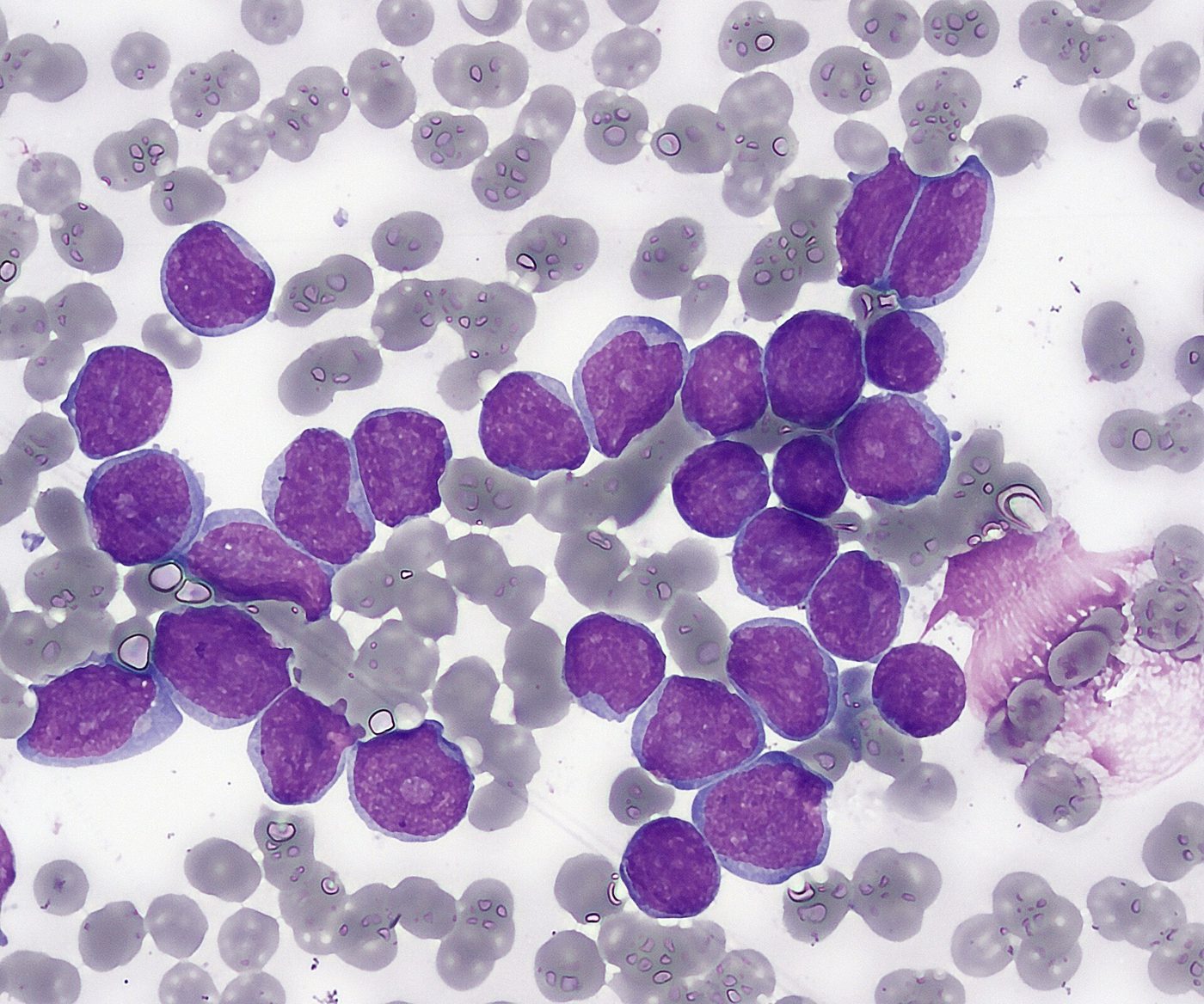
Chemo-free combination beats standard care for one type of leukemia
A chemo-free pair of drugs beat standard care for adults newly diagnosed with one type of leukemia, The Limbic and CancerNetwork report. In a trial, 86% of patients on ponatinib and blinatumomab went two years with no major setback, compared with 67% on imatinib plus chemo. Fewer of them died early, too.
A chemotherapy-free treatment improved results for adults with a type of blood cancer called Philadelphia chromosome-positive acute lymphoblastic leukemia, The Limbic and CancerNetwork report. The findings come from the GIMEMA ALL2820 trial, published in the New England Journal of Medicine.
The trial enrolled 236 newly diagnosed patients. They were randomly assigned to the drug ponatinib plus the immunotherapy blinatumomab, or to standard imatinib plus chemotherapy, with two patients in the new group for every one in the control group. Patients in the control group could switch if signs of leftover disease persisted or came back.
After two years, 86% of patients on the new regimen were alive without a major setback, called event-free survival, compared with 67% in the control group, the outlets report. Survival with no detectable leftover disease was 68% versus 42%. Overall survival was 90% versus 85%.
Fewer patients died early during the first phase of treatment, 3% versus 9%, the outlets report. Serious side effects of grade 3 or higher hit 34% of patients on the new regimen and 47% in the control group, CancerNetwork reports. Only 19% of patients on the new regimen had a stem cell transplant, compared with 26% in the control group.
The Limbic quotes the study as saying formal hypothesis testing was not done for secondary end points. Still, those results also favored the new regimen. In an editorial, Professor Adele Fielding of the University of York said the evidence of a safer and more effective approach was definitive. She noted the regimen's cost could slow its wider use.
What we know: The chemo-free regimen improved event-free survival and caused fewer serious side effects.
What we don't: How widely it will be used, given its cost.
Where outlets agree The Limbic and CancerNetwork agree that two-year event-free survival was 86% with ponatinib and blinatumomab, compared with 67% with imatinib plus chemotherapy.
Where they differ The cited reports agree on the key facts so far.