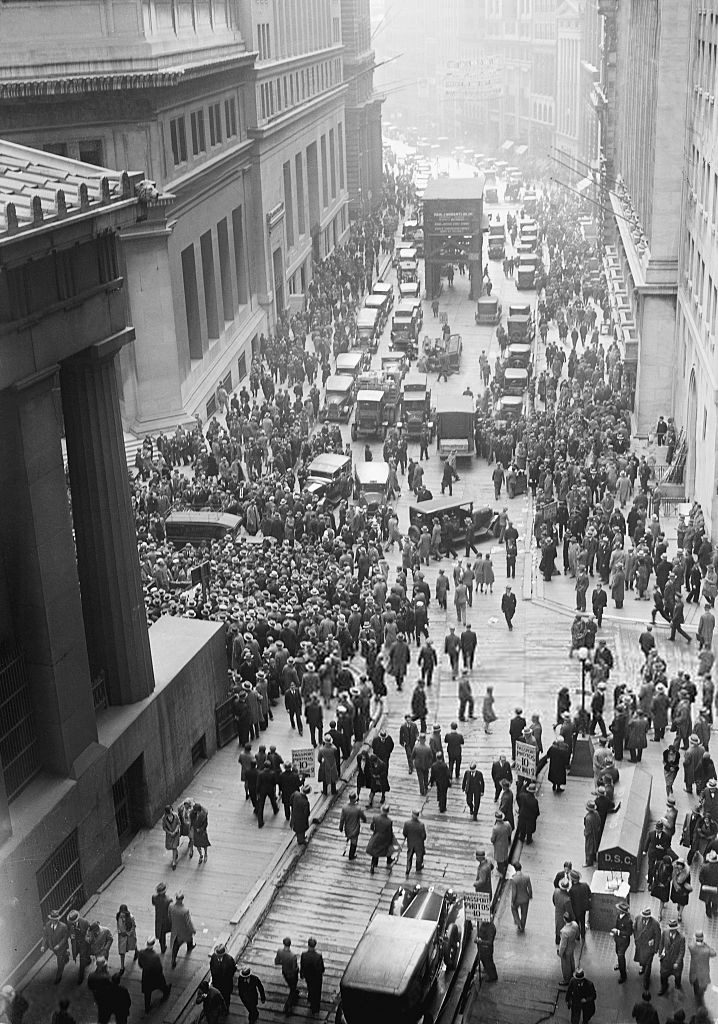
On this day, 1929: Wall Street crashes on Black Tuesday
On October 29, 1929, stock prices collapsed on the New York Stock Exchange in a day known as Black Tuesday, History.com and Federal Reserve History report. More than 16 million shares traded. The crash helped speed the slide into the Great Depression.
On October 29, 1929, the New York stock market collapsed in a day that became known as Black Tuesday, History.com and Federal Reserve History report.
Stocks had soared through the 1920s. Federal Reserve History reports the Dow Jones Industrial Average rose sixfold, from 63 in August 1921 to 381 in September 1929. Many ordinary people bought stocks with borrowed money. They often paid just 10 percent of the price and borrowed the rest.
Prices began to slip in September and early October, History.com reports. Panic set in on October 24, Black Thursday, when a record 12.9 million shares traded. Bankers bought large blocks of stock to steady the market, and prices recovered a bit.
The fall resumed on Monday, October 28. Federal Reserve History reports the Dow dropped nearly 13 percent that day. On the following day, Black Tuesday, it fell nearly 12 percent more.
History.com reports 16,410,030 shares traded on Black Tuesday. Stock tickers ran hours behind because the machines could not keep up. Billions of dollars were lost, and thousands of investors were wiped out.
By mid-November, the Dow had lost almost half its value, Federal Reserve History reports. The slide went on until the summer of 1932, when the Dow closed at 41.22. That was 89 percent below its peak. It did not return to its pre-crash high until November 1954.
The crash was not the only cause of the Great Depression, History.com notes. But it sped up a global economic collapse. By 1933, nearly half of America's banks had failed, and about 15 million people were out of work.
What we know: Stocks collapsed on October 29, 1929, after a steep fall the day before.
What we don't: Exactly how much the crash, apart from other causes, drove the Great Depression.
Where outlets agree History.com and Federal Reserve History describe Black Tuesday, October 29, 1929, as a day of collapsing stock prices.
Where they differ The cited reports agree on the key facts so far.