Scientists recreate Roman color-changing Lycurgus glass
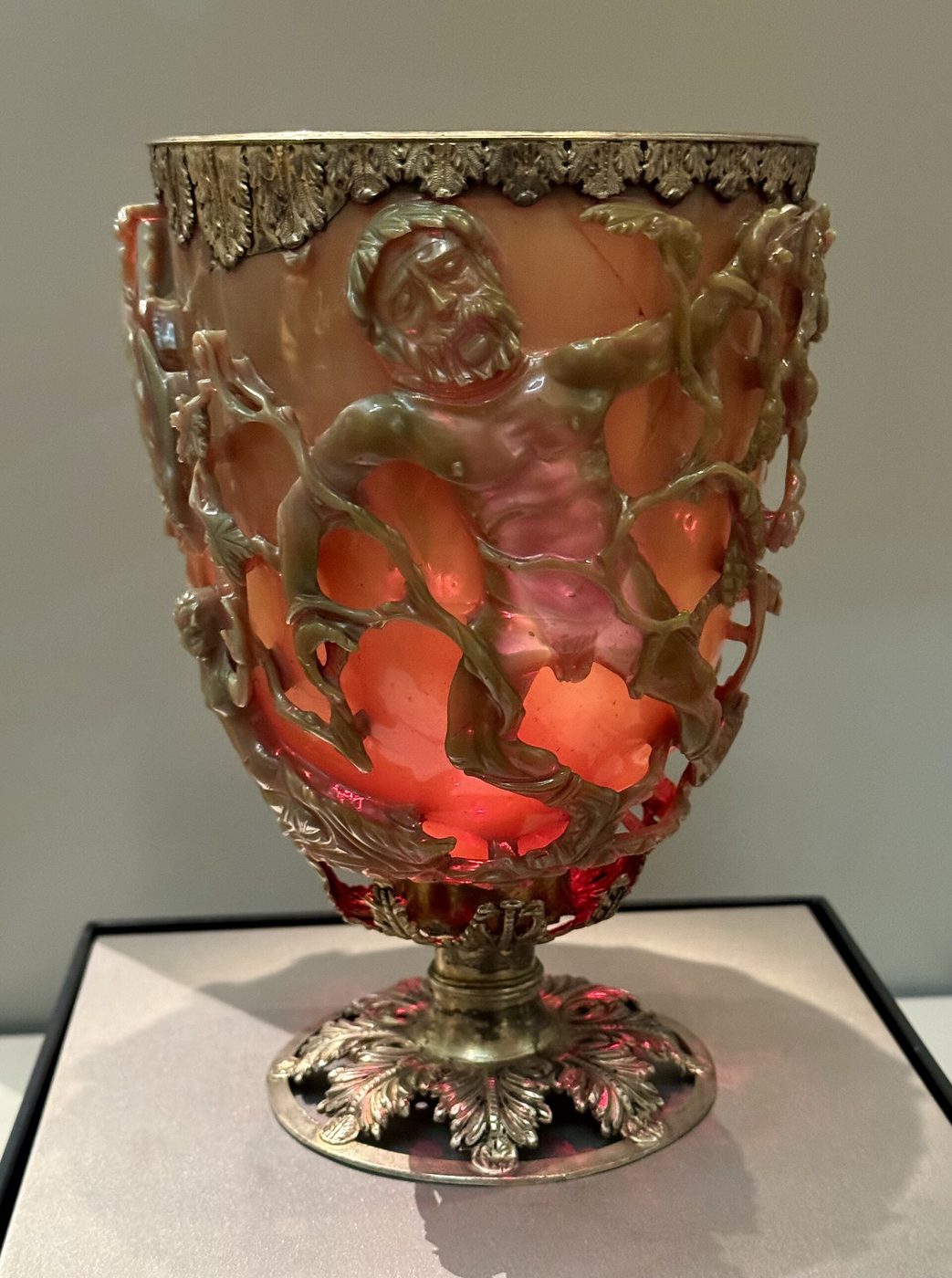
Sheffield scientists say they remade the color-changing glass of Rome's Lycurgus Cup, which looks green in normal light and red when lit from behind, The Guardian and GB News reported. Tiny gold and silver bits create that light shift effect.
Scientists at the University of Sheffield say they have replicated the two-color glass effect of the fourth-century Lycurgus Cup, which looks jade green in reflected light and ruby red when lit from behind, The Guardian and GB News reported. The British Museum holds the original cage cup carved with the myth of King Lycurgus.
Researcher Dr. Hallam Hollands worked with Roman glass expert Prof. Caroline Jackson. They grew gold and silver tiny particles in cooling molten glass at well over 1,000 degrees Celsius. Those particles, far smaller than light wavelengths, block blue and green when light passes through, leaving reds and oranges, The Guardian reported.
A 1960s lab copy was less faithful to the cup's green and red shades, emeritus professor Ian Freestone said. Sheffield's piece will appear at the Millennium Gallery for the Festival of the Mind from November 6 to 15 before a permanent display at the Turner Museum of Glass.
GB News called the work a breakthrough in matching the ancient recipe. Hollands said the project felt like a link to Roman makers who first locked gold and silver into glass more than 1,600 years ago.
The Lycurgus Cup has long been a star of the British Museum's glass rooms. Matching its green and red shift was a hard target even for modern labs. Sheffield's public show will let visitors see the new sample beside talks on Roman craft.
Gold and silver bits sit inside the glass. Light then splits into green or red views. The museum cup still draws big crowds.
What we know: Sheffield recreated Lycurgus-style two-color glass with gold and silver tiny particles.
What we don't: Whether the method matches every Roman workshop step, and commercial uses.
Where outlets agree The Guardian and GB News report Sheffield scientists recreating the Lycurgus Cup's green-to-red glass effect.
Where they differ The cited reports agree on the key facts so far.