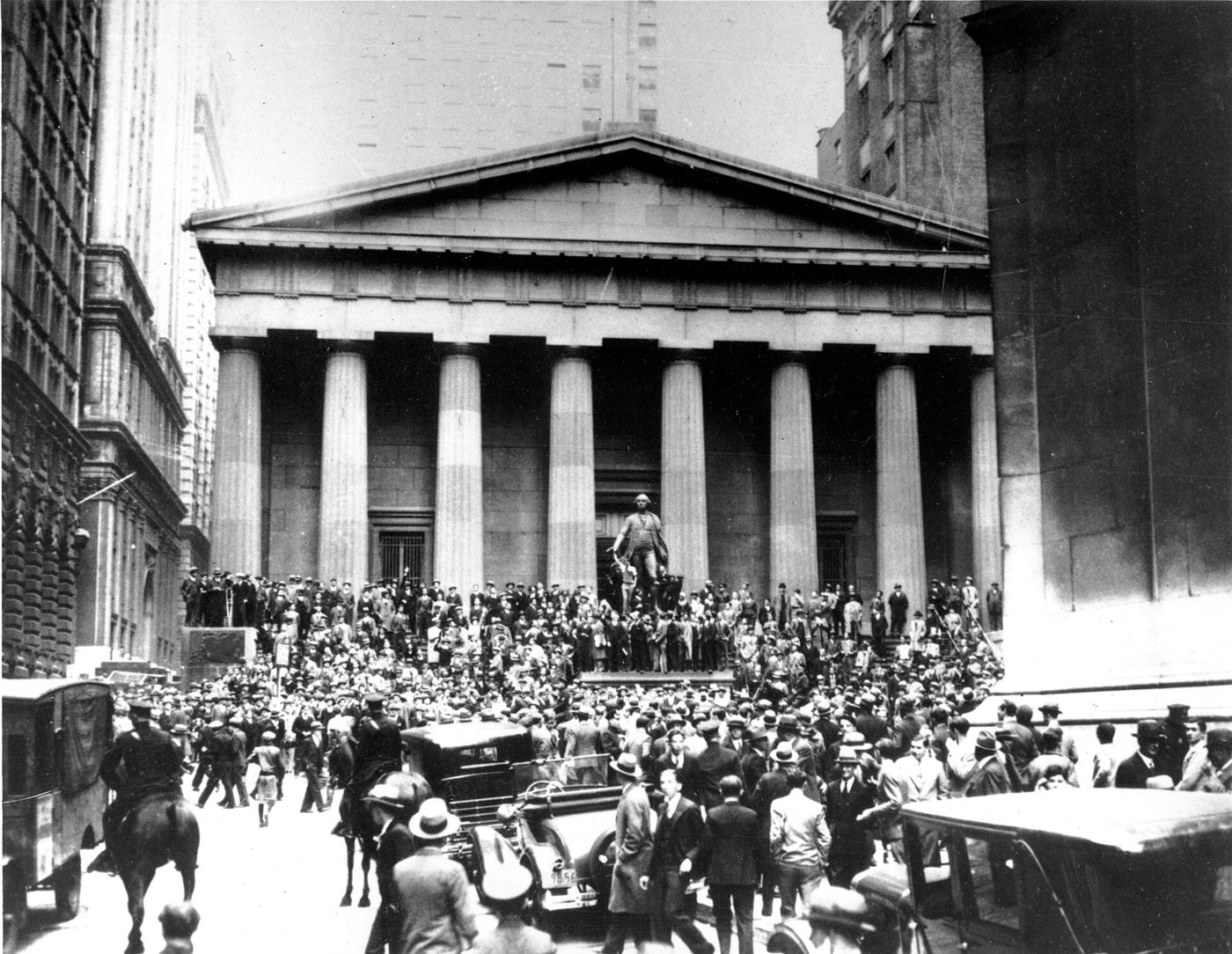
On this day in 1929, Wall Street saw Black Thursday
On this day in 1929, a record about 12.9 million shares traded on Black Thursday as Wall Street panicked, Britannica and History.com reported. Leading bankers bought stock to slow the drop. The crash deepened days later on Black Tuesday and led into the Great Depression.
On this day in 1929, the New York Stock Exchange saw Black Thursday, Britannica and History.com reported. A record about 12.9 million shares changed hands as prices plunged and panic spread.
Britannica's page on the Wall Street crash of 1929 dates Black Thursday to October 24, 1929. History.com also dates the panic to that day and cites 12,894,650 shares traded. The market had already been shaky after a September peak of 381.17 on the Dow Jones Industrial Average, Britannica said.
At the open on Black Thursday the market lost 11% of its value, Britannica reported. The ticker ran hours late, so many investors did not know live prices. Leading bankers met and sent Richard Whitney, a New York Stock Exchange vice president, onto the floor. He bid for large blocks of blue-chip shares, including US Steel, above the market to steady trading, Britannica said. The Dow closed down 6.38 points, or 2.09%, that day after the support bid.
The calm did not last. On October 28, Black Monday, the Dow fell 38.33 points, or 12.82%, Britannica reported. On October 29, Black Tuesday, about 16.4 million shares traded and the Dow fell another 30.57 points, or 11.73%. Together those two days cut 68.90 points, or 23.05%, from the index. By July 8, 1932, the market had lost about 90% of its pre-crash value, Britannica said.
Congress later passed the Glass-Steagall Act and created the Securities and Exchange Commission to curb the speculation and banking risks tied to the crash, Britannica reported. Scholars still debate how much the crash alone caused the Great Depression, but Black Thursday remains the day the panic went public.
What we know: October 24, 1929, brought record volume and a market panic later called Black Thursday.
What we don't: Nothing material is in dispute in the cited sources about the date or the roughly 12.9 million share volume.
Where outlets agree Britannica and History.com date Black Thursday to October 24, 1929, with about 12.9 million shares traded.
Where they differ The cited reports agree on the key facts so far.