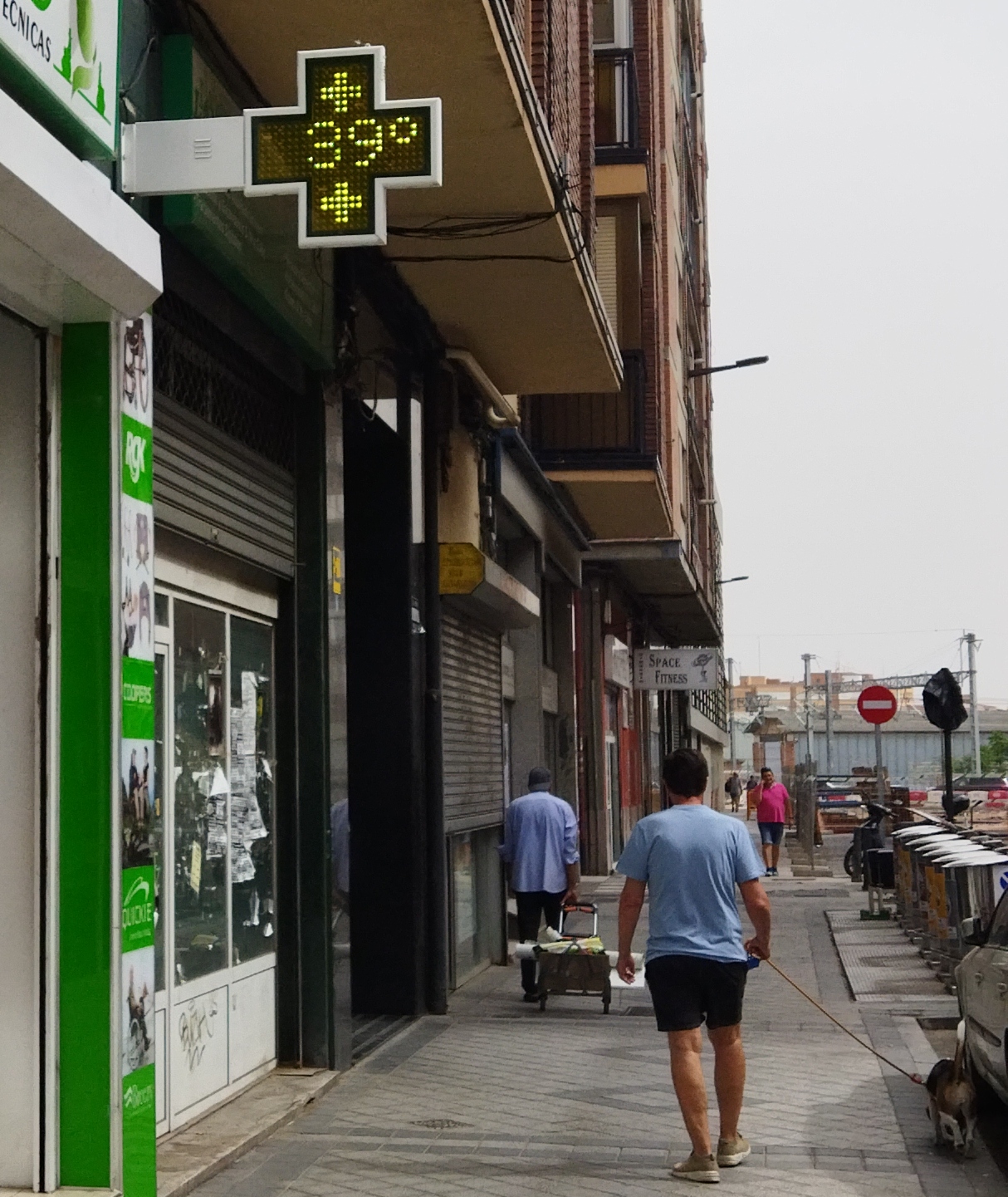
Study finds summer heat killed about 50,000 people in European cities
Heat killed more than 50,000 people in European cities this summer, a new study found, according to the Guardian and AP. About two-thirds of those deaths were blamed on human-caused climate change. The Guardian said the toll was the worst on record.
Heat killed more than 50,000 people in European cities this summer, according to a new study reported by the Guardian, AP and Inside Climate News.
Researchers modeled heat deaths in 854 European cities from June to August, the Guardian and AP reported. They found that 50,391 people died from the heat, AP said. Of those, 32,619 deaths were caused by the extra heat from burning coal, oil and gas, according to AP. The study is set to run in the journal Nature Health, AP and Inside Climate News reported.
The toll was 71% higher than the deadliest summer before it, 29,480 deaths in 2022, AP reported. The Guardian said it was the worst on record.
People died from heat at the highest rates in Malta, Italy and Hungary, the Guardian reported. Italy, France, Spain and Germany had the most deaths overall, the Guardian and AP said. Naples was the hardest-hit city, with 815 deaths per million people, the Guardian reported.
About one-third of the deaths came during one heat wave from June 17 to July 1, AP reported. Most of the dead were very old, but more than 800 people aged 20 to 44 also died, AP and the Guardian said.
"In some sense, the absolute numbers of the heat-related deaths estimated across the 854 urban areas are indeed staggering," said Malcolm Mistry of the London School of Hygiene & Tropical Medicine, a co-author, according to the Guardian.
"Much of Western and Northern Europe, our infrastructure is just not designed to cope with the sort of temperatures that we are seeing now because of the effects of human-caused warming," lead author Clair Barnes of Imperial College London said, according to AP.
The cities studied hold about 40% of Europe's people, the Guardian and AP reported. AP said the figures are likely too low because they leave out a deadly heat wave in May.
The share of heat deaths linked to climate change has grown to 65%, the Guardian and AP reported.
What we know: Researchers estimate more than 50,000 heat deaths in European cities this summer.
What we don't: The full toll outside the 854 cities studied.
Where outlets agree The Guardian, AP and Inside Climate News report that a study estimates more than 50,000 heat deaths in European cities this summer, with more than 32,000 tied to human-caused warming.
Where they differ The Guardian says people over 85 made up almost half of the deaths, while AP says more than half of those who died were 85 or older. The Guardian says the climate share rose from about 40% at the start of the century, while AP says it rose from about 45% in the early 2000s.