Physicists trap a single antimatter particle for months
Physicists have trapped one positron, the antimatter twin of the electron, and kept it for months, New Scientist reported. A team led by Gerald Gabrielse cooled it to its lowest energy state, Nature reported. They have not yet done the precise tests meant to compare it with the electron.
Physicists have trapped a single positron, the antimatter twin of the electron, and cooled it to its lowest possible energy state, according to Nature and New Scientist. The team, led by Gerald Gabrielse at Northwestern University, kept the particle trapped for months, New Scientist reported. The work was published Wednesday in Physical Review Letters.
Positrons have the same mass as electrons but the opposite charge. When one meets an electron, the pair destroy each other. That makes positrons hard to study, New Scientist reported.
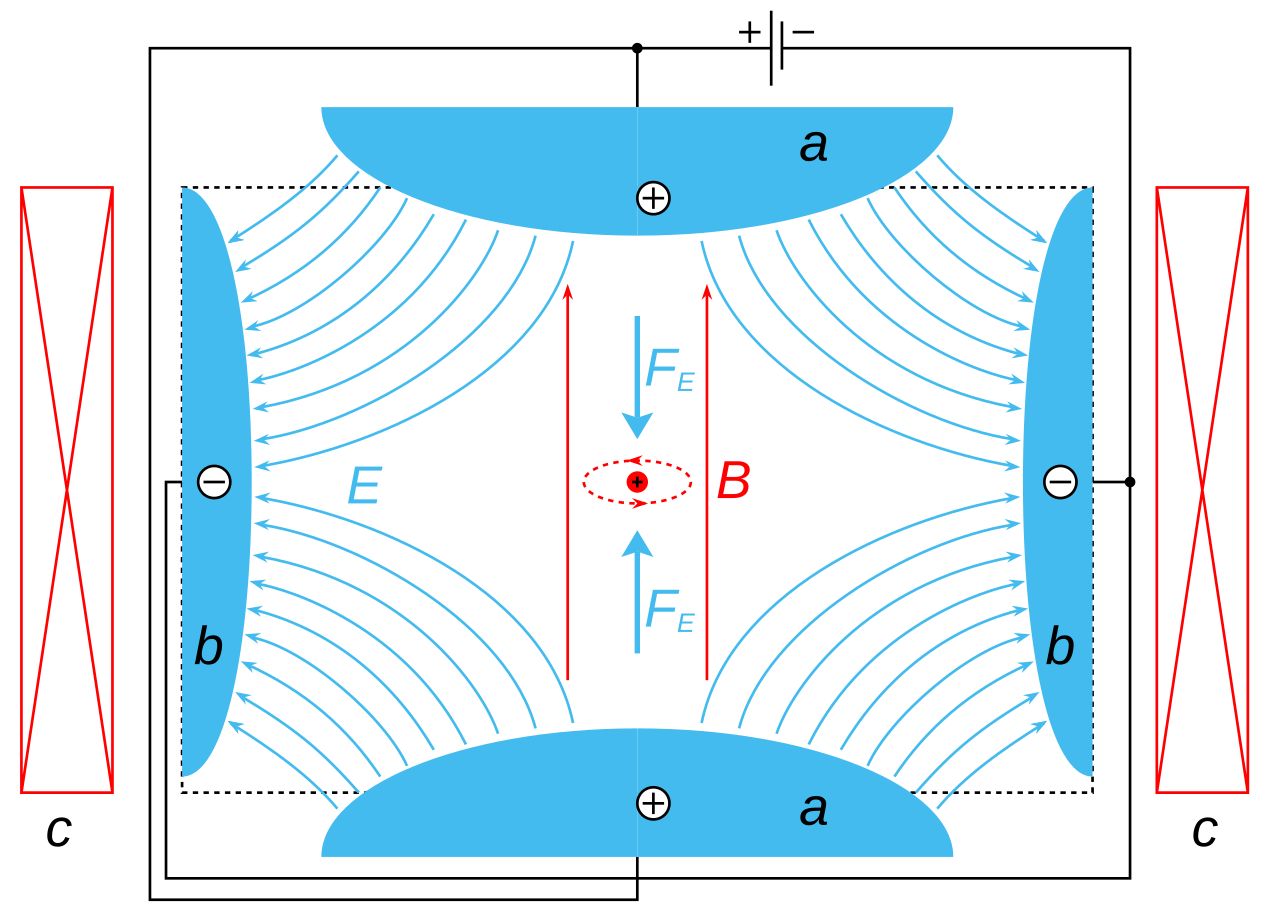
The team got positrons from a radioactive form of sodium, New Scientist reported. The particles were moving fast, so the researchers slowed them by sending them through a tungsten crystal. Many were destroyed, but the team fed the slowest survivors into a trap, Nature reported. The paper says the positron is held in the magnetic field of a Penning trap.
"It's a real kick to stand in my lab and watch a positron making transitions," Gabrielse said, according to New Scientist.
No precision measurement has been made yet. The team plans to measure the positron's magnetic moment. That number shows how it responds to a magnetic field. It would then compare that with the electron's. Nature reported that it can be measured 10,000 times more precisely than in the proton tests done so far. The researchers aim to have data within the year, New Scientist reported.
No one knows why the universe is made almost entirely of matter, Nature reported. If matter and antimatter had formed in equal amounts, "all the matter and antimatter would annihilate and there'd be no Universe left," Gabrielse said, according to Nature. Finding a mismatch "would be revolutionary in physics," he said.
Outside physicists praised the work. Barbara Maria Latacz, an antimatter physicist at CERN, called it a "remarkable achievement," Nature reported. "I cannot wait to see their first precision measurements," physicist Stefan Ulmer said, according to Nature. In New Scientist, Ulmer said the work "has the potential to become one of the most precise measurements of a fundamental constant in physics."
What we know: A Northwestern team trapped a single positron, cooled it to its lowest energy state and held it for months.
What we don't: Whether the planned measurements will find any difference between matter and antimatter.
Where outlets agree Nature and New Scientist report that Gabrielse's team trapped a single positron and plans to compare its magnetic moment with the electron's.
Where they differ Nature and New Scientist don't conflict on the findings, though Nature lists Stefan Ulmer at Heinrich Heine University Düsseldorf while New Scientist places him at Japan's RIKEN institute.