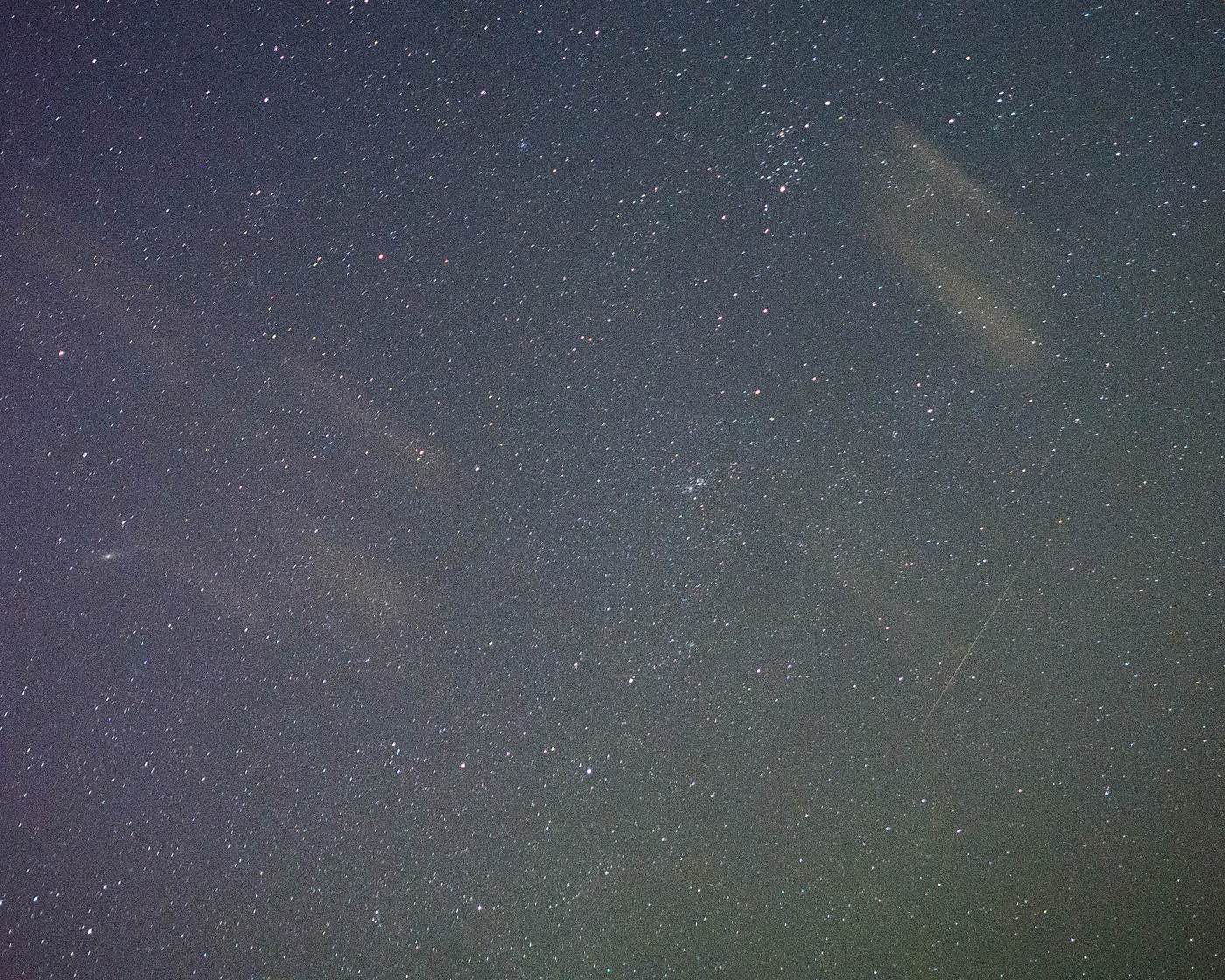
Orionid meteor shower peaks Wednesday night into Thursday morning
The Orionid meteor shower, made of dust from Halley's Comet, will peak overnight Wednesday into Thursday, Space.com, BBC Weather and Forbes reported. A bright moon sets after about 2 AM, leaving a dark window before dawn. Viewers may see 10 to 20 meteors an hour.
The Orionid meteor shower will peak overnight Wednesday, October 21, into Thursday, October 22, Space.com, BBC Weather and Forbes reported.
The meteors are tiny pieces of debris from Halley's Comet, Space.com and Forbes reported. Earth passes through the comet's dust trail each October, and the particles burn up in the atmosphere, creating bright streaks, BBC Weather and Forbes reported. Halley's Comet last passed through the inner solar system in 1986 and will return in 2061, Forbes reported.
The Orionids are fast, entering the atmosphere at about 41 miles per second, and can produce long glowing trails and fireballs, BBC Weather reported. They appear to fan out from the constellation Orion, near the red star Betelgeuse, Space.com and BBC Weather reported, though they can show up anywhere in the sky, Forbes reported.
A bright waxing gibbous moon will light the sky this year, Space.com, BBC Weather and Forbes reported. But the moon will set shortly after 2 AM local time, leaving about three and a half hours of dark sky before dawn, Space.com reported. The best time to look is the dark hours after moonset and before dawn on Thursday, Forbes reported.
Viewers in that window may see 15 to 20 meteors an hour, Space.com reported. Forbes put the rate at around 10 to 20 an hour.
To watch, find a dark spot away from city lights, get comfortable and give your eyes about 20 minutes to adjust, BBC Weather reported. Orionid meteors tend to be faint, so city lights can wash them out, Space.com reported. Orion reaches its highest point in the southern sky around 5 AM, when the view should be best, Space.com reported.
In the UK, wet and windy weather may get in the way, though clear spells are possible in parts of England, Wales and Northern Ireland late Wednesday night, BBC Weather reported.
What we know: The Orionids peak overnight Wednesday into Thursday, with the best viewing after moonset and before dawn.
What we don't: Local cloud cover, which will decide how many meteors people actually see.
Where outlets agree Space.com, BBC Weather and Forbes report that the Orionids peak overnight October 21 into October 22, with a bright moon limiting viewing until it sets.
Where they differ Space.com says viewers may see 15 to 20 meteors an hour, while Forbes puts the rate at around 10 to 20 an hour.