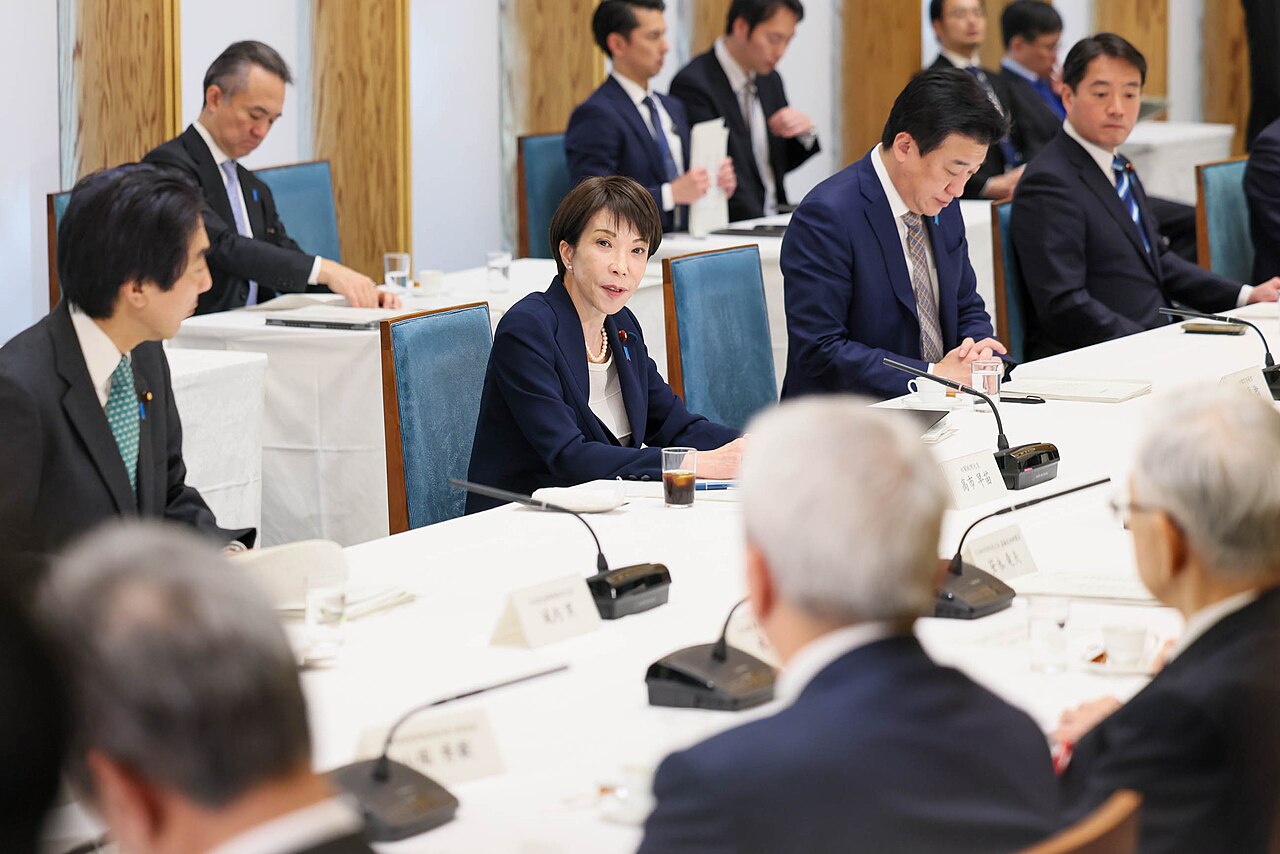
Takaichi denies blame for weak yen and high rates in parliament
Japanese Prime Minister Sanae Takaichi said in parliament on Monday that she is not to blame for the weak yen or high interest rates, Reuters and Bloomberg reported. She said a strong economy would build trust in the yen. She also said her government would keep bond sales in check.
Japanese Prime Minister Sanae Takaichi on Monday denied in parliament that her policies are behind the weak yen and high interest rates, Reuters, as cited by CNBC, and Bloomberg reported.
"I have been repeatedly criticized for 'Takaichi's weak yen' and 'Takaichi's high interest rates,' but I clearly deny that," she said, according to a Reuters translation cited by CNBC. Bloomberg, in a report carried by The Straits Times, quoted her as saying, "I categorically reject those claims."
Takaichi said her government would build confidence in the yen by building a strong economy, Reuters (via CNBC) and Bloomberg reported. She also said it would appropriately control the amount of government bond issuance, Reuters (via CNBC) and Bloomberg reported. Bloomberg reported that she linked that pledge to next fiscal year's budget and also spoke of keeping finances sustainable.
She was answering a question from opposition lawmaker Yoshifumi Hamano about a second supplementary budget, CNBC reported.
Under Takaichi, yields on Japanese government bonds have risen to multi-decade highs, while the yen weakened to its lowest level since 1986, CNBC reported. That drop led Tokyo, and even Washington, to step into currency markets to support the yen, CNBC reported.
Investors are watching how the government will pay for a planned sales tax cut on food and higher defence spending without adding to Japan's heavy debt, Bloomberg reported. Finance Minister Satsuki Katayama has said Takaichi is not a reflationist, a label long tied to the prime minister, Bloomberg reported.
Bank of Japan Governor Kazuo Ueda, who appeared in parliament with Takaichi, said underlying inflation is very close to the bank's 2% target, Bloomberg reported. He also said long-term yields could rise if markets think the bank is not raising rates at a proper pace, Bloomberg reported.
What we know: Takaichi denied in parliament that her policies caused the weak yen and high rates.
What we don't: How markets will react, or how much new debt next year's budget will need.
Where outlets agree Reuters, as cited by CNBC, and Bloomberg report that Takaichi denied in parliament on Monday that she is to blame for the weak yen and high rates, and that she pledged to control bond issuance.
Where they differ The cited reports agree on the key facts so far.