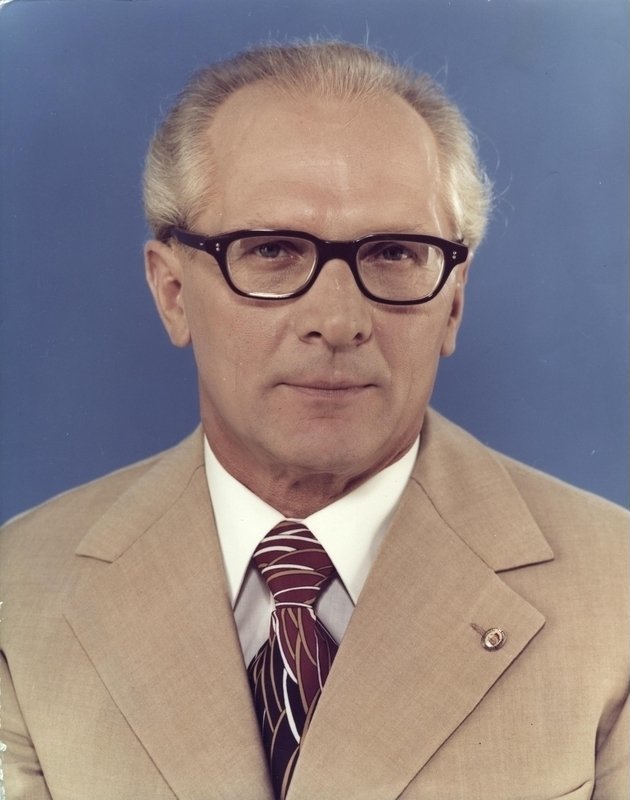
On this day, 1989: Erich Honecker resigns as East German leader
On October 18, 1989, East German leader Erich Honecker resigned, and Egon Krenz took his place, BBC On This Day and Chronik der Wende reported. The official reason was ill health, the BBC said. It said the real reason was seen as his failure to deal with growing anger, as thousands fled to the West.
On October 18, 1989, East German leader Erich Honecker stepped down, BBC On This Day and Chronik der Wende reported. He had been in power for 18 years, the BBC reported. The Central Committee of the ruling SED party elected Egon Krenz as its new general secretary, at Honecker's suggestion, Chronik der Wende reported.
The official reason given was ill health, BBC On This Day reported. The German government's history page quotes the party's statement that Honecker asked to be relieved of his posts "aus gesundheitlichen Gründen," which means "for health reasons." The same page says he did not go willingly. It says the party leadership had decided the day before to remove him, against his will.
BBC On This Day said the real reason was seen as a failure to deal with growing anger in the country and the party. Up to 120,000 people had marched in Leipzig that Monday to demand reform, the BBC reported. Thousands of people were still leaving the country for the West, it said. A recent visit by Soviet leader Mikhail Gorbachev, who had criticized the East German leadership, was also seen as a factor, the BBC reported.
Honecker had groomed Krenz for the job for more than a decade, the BBC reported. Two of Honecker's closest allies, Günter Mittag and Joachim Herrmann, were also removed, Chronik der Wende reported. That evening, Krenz gave an hour-long speech on East German television, according to the government history page.
The opposition group New Forum said Krenz's appointment showed the party had "no intention of sharing power," the BBC reported. "Krenz must show that he has the will to change things, and not only cosmetically," East Berlin vicar Rainer Eppelmann said, according to the BBC.
The change did not stop the pressure. On November 9, 1989, the Berlin Wall opened after 28 years, according to the German government's history page. East and West Germany united on October 3, 1990, the BBC reported.
What we know: Honecker resigned on October 18, 1989, and the party picked Egon Krenz to lead it.
What we don't: The full story of the closed-door meetings that forced him out, which accounts still describe in different ways.
Where outlets agree BBC On This Day and Chronik der Wende date Honecker's resignation and the choice of Egon Krenz to October 18, 1989.
Where they differ The outlets cited here report the same key facts so far.