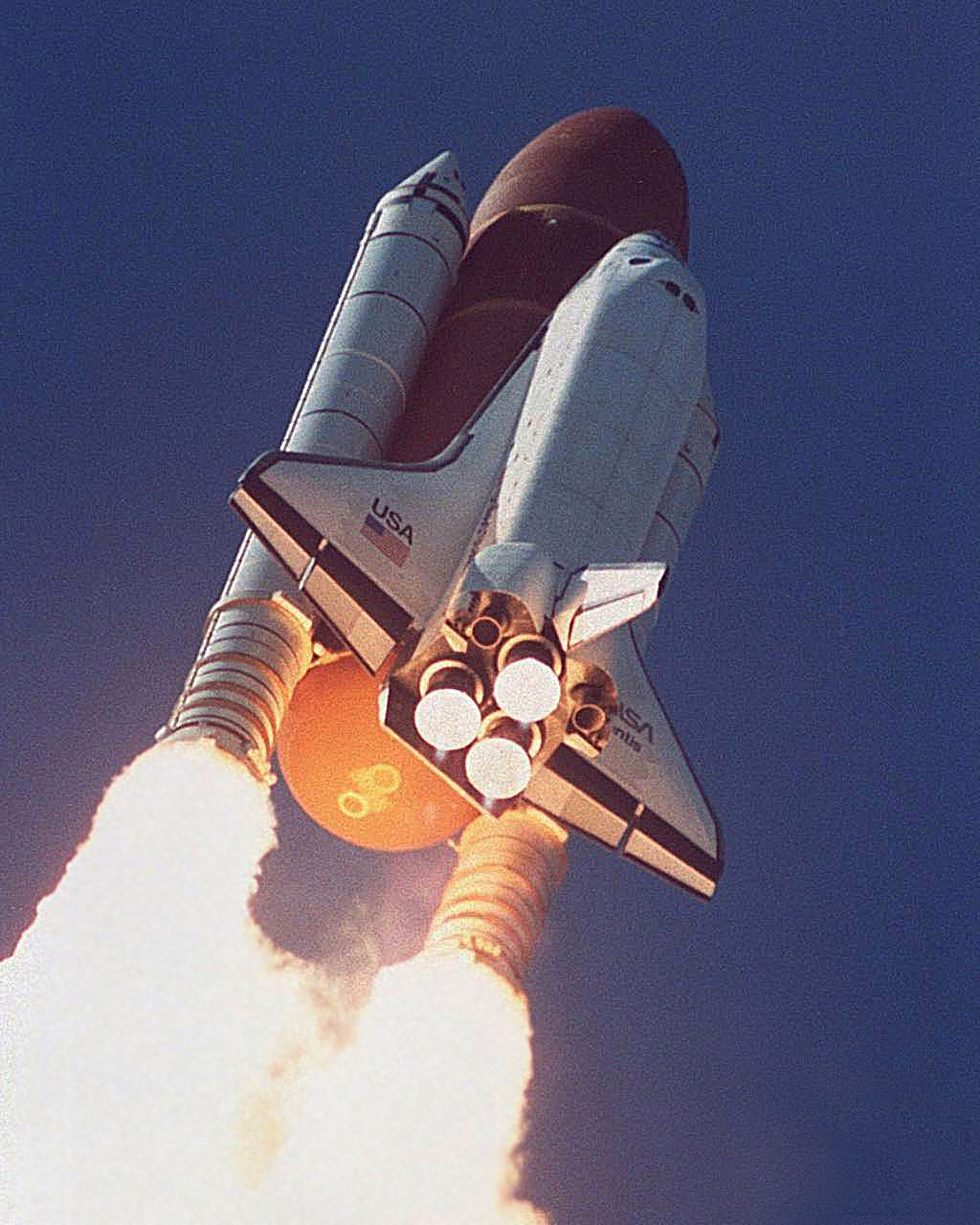
On this day, 1989: Atlantis launches Galileo toward Jupiter
On October 18, 1989, the space shuttle Atlantis took the Galileo probe into space and sent it on its way to Jupiter, the Los Angeles Times and UPI reported. The probe cost $1.4 billion. The crew let it go about six hours after liftoff, despite protests over its nuclear power packs.
On October 18, 1989, the space shuttle Atlantis carried the Galileo probe into orbit and sent it on its way to Jupiter, the Los Angeles Times and UPI reported. NASA's history office gives the same date.
Atlantis lifted off from Florida at 12:53 in the afternoon Eastern time, NASA's history office says. The crew released the $1.4 billion probe about six hours later, the Los Angeles Times and UPI reported. A booster rocket then pushed Galileo out of Earth orbit, UPI reported.
"Galileo is on its way to another world," the shuttle's commander, Donald Williams, said as the probe drifted away, UPI and NASA reported.
Galileo could not fly straight to Jupiter, the Los Angeles Times and UPI reported. It first swung past Venus and then past Earth twice to gain speed, the two news groups reported. The launch had been delayed for years, UPI reported. The five astronauts planned to spend five days in space and then land in California, UPI reported.
The launch went ahead despite protests from activists who said its plutonium power packs were unsafe, the Los Angeles Times and UPI reported. NASA said tests showed the power packs were safe, and last-minute legal efforts to stop the launch failed, UPI reported.
Galileo reached Jupiter in December 1995, NASA says. It dropped a small probe into the giant planet's clouds and then circled Jupiter for years, NASA says. The mission ended on September 21, 2003, when Galileo plunged into the planet, according to NASA.
What we know: Atlantis launched the Galileo probe toward Jupiter on October 18, 1989, and Galileo reached the planet in December 1995.
What we don't: Little is in doubt about the launch itself, which NASA's own records describe in detail.
Where outlets agree The Los Angeles Times and UPI report that Atlantis launched the $1.4 billion Galileo probe toward Jupiter on October 18, 1989.
Where they differ The outlets cited here report the same key facts so far.