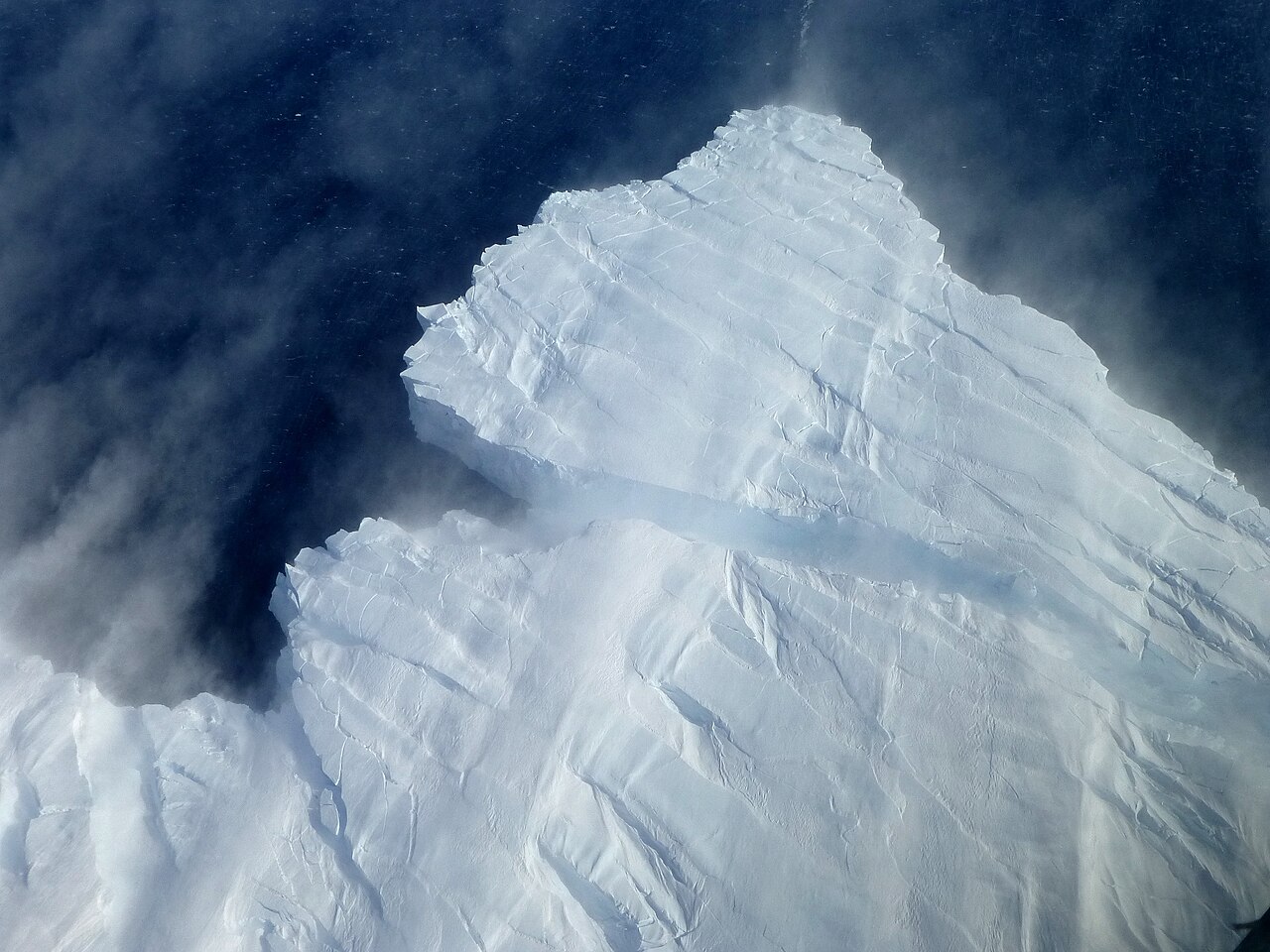
Tall glacier ice cliffs can break off faster than models predict
Tall ice cliffs in Antarctica and Greenland can break off much faster than models predict, a new study found, New Scientist and Earth.com reported. But none of the glaciers it tracked fell into a runaway collapse. A British Antarctic Survey scientist said such a collapse is still a risk to watch, New Scientist reported.
Tall ice cliffs at the edges of some glaciers in Antarctica and Greenland can break off faster than ice-sheet models predict, but none of the glaciers studied collapsed in a runaway chain, according to a study published in the journal Science, New Scientist and Earth.com reported. The thickest glaciers may calve icebergs up to three times faster than previously predicted, New Scientist reported. "None of the glaciers we observed underwent unstable retreat, even though they did retreat much faster than our current models predict," lead author Caroline Needell of the MIT-WHOI Joint Program said, according to New Scientist.
The work tests a theory that the tallest cliffs could fail one after another, with each collapse exposing a taller, weaker cliff behind it. Runaway collapse of such cliffs could double the sea level rise expected over the next 100 years, according to an Intergovernmental Panel on Climate Change report cited by New Scientist.
The team mapped 15,330 observations of ice cliffs around Antarctica and Greenland from NASA aircraft and the ICESat-2 satellite, Earth.com reported. Most cliffs are modest, and only 16 glaciers had cliffs taller than 90 meters (295 feet), close to the height at which the theory says ice should fail, Earth.com reported. At four retreating glaciers, a cliff about 100 meters (330 feet) high lost ice at more than three times the rate the collapse formula predicts, Earth.com reported. But cliff heights rose and fell, and the fronts advanced again after each burst of retreat, Earth.com reported. "We now know that cliff calving can be faster than commonly assumed, but that sustaining these rapid rates is actually quite hard," co-author Catherine Walker of the Woods Hole Oceanographic Institution said in an interview with Earth.com.
Other scientists said the danger is not settled. Antarctica's Thwaites Glacier is now steadied by underwater ridges, and "over the next decades, it's going to jump from one pinning ridge to another," Douglas Benn of the University of St Andrews said, according to New Scientist. Robert Larter of the British Antarctic Survey noted that runaway cliff collapse has not yet been observed. "It's a possibility we have to keep our eye on," he said, according to New Scientist.
What we know: A study in Science found that tall ice cliffs can calve faster than models predict but did not collapse in a runaway chain at the glaciers studied.
What we don't: Whether much wider glaciers such as Thwaites would stabilize the same way as Antarctica keeps warming.
Where outlets agree New Scientist and Earth.com both report that the study found tall ice cliffs can calve faster than models predict but did not collapse in a runaway chain.
Where they differ The outlets cited here report the same key facts so far.