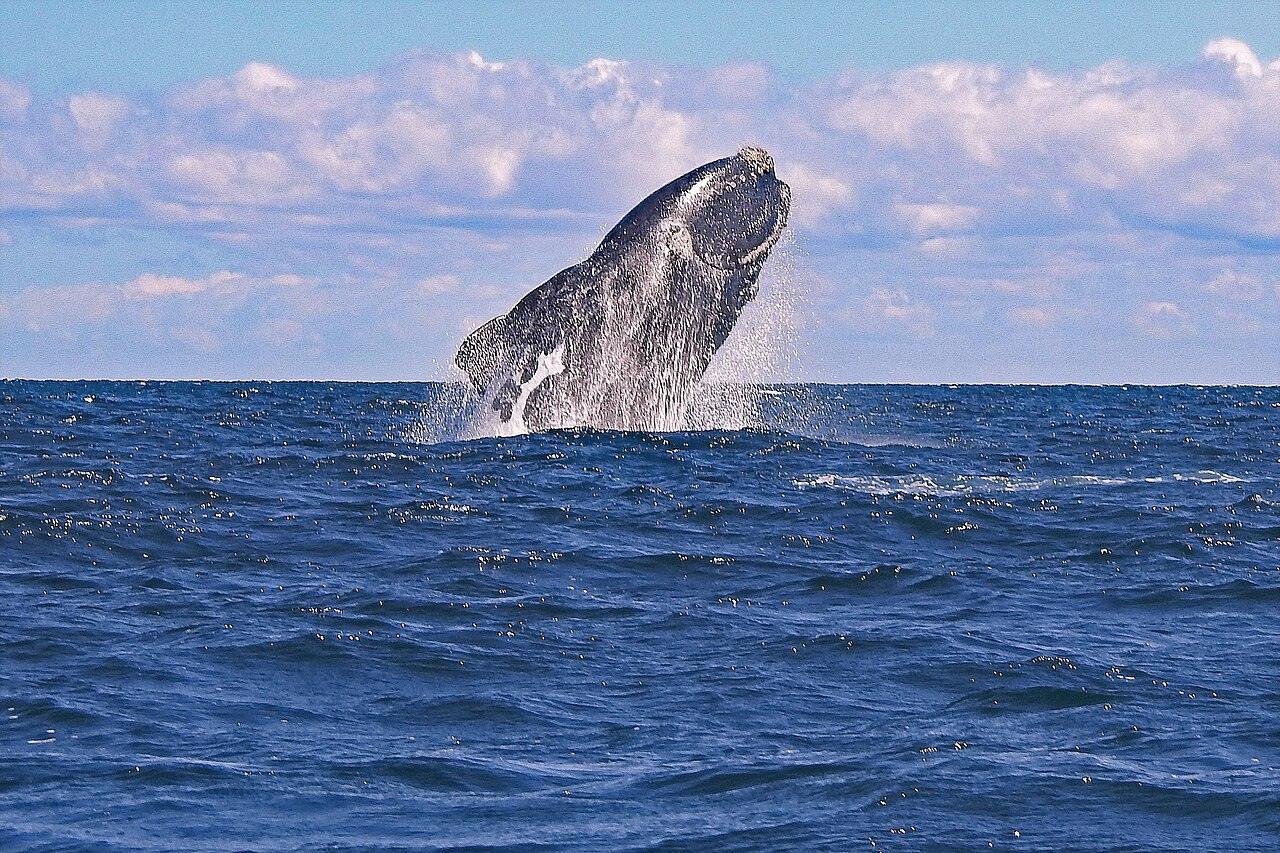
Scientists suspect bacterium in unusual right whale deaths off Argentina
Scientists in Argentina suspect a bacterium in an unusual number of right whale calf deaths around Península Valdés, El Mundo and ADNSUR reported. El Mundo said more than 350 dead whales have been found this year, against 80 in 2025. A government scientist told ADNSUR that older whales have now started washing up too.
Scientists in Argentina suspect a bacterium in an unusually high number of southern right whale calf deaths around Península Valdés, the Spanish newspaper El Mundo and ADNSUR, a news site in Argentina's Chubut province, reported. Quotes below are translated from Spanish.
More than 350 whales have been found dead on the peninsula's beaches so far this year, compared with 80 in 2025, El Mundo reported. ADNSUR reported that early records from the Whale Conservation Institute suggest this season's deaths could top 2012, when 113 dead calves were documented.
"It has been a somewhat unusual season, we have had more deaths than we normally have" (translated), Mariano Coscarella, a biologist with Argentina's CONICET science agency, told ADNSUR.
El Mundo reported that 2,200 whales were recorded in the waters of Golfo Nuevo in 2025, when 80 were found dead, and about 1,200 right whales have been recorded this year. ADNSUR reported that a September census counted 1,375 southern right whales off Chubut, including 409 calves.
Scientists suspect a bacterium that causes erysipelas, El Mundo reported. Víctor Fratto, who studies whales in Argentina, said the disease can show up in calves as diamond-shaped skin lesions, El Mundo reported. He said he believes kelp gulls, which peck at the whales' backs, are carrying the bacteria into the calves. A 2016 Argentine study found the bacteria in gull-wound lesions on two calves examined in 2013, El Mundo reported.
Coscarella told ADNSUR that preliminary reports point to that bacterium in the calves, but final reports are still pending. He said juveniles and adults began appearing over the weekend, and researchers think that may be a different phenomenon. One possible cause is algae linked to red tide, which whales can swallow when they start feeding in October, he said. "Something has changed" (translated), he told ADNSUR, noting that this is an El Niño year.
Marine biologist Juan Cruz Martín told El Mundo there is so far no evidence that human factors caused the deaths. Samples were sent to the Malbrán Institute in Buenos Aires, and experts hope to have more certainty by the end of the month, El Mundo reported.
Coscarella asked residents to stay away from the animals, ADNSUR reported. Martín warned that close contact could be dangerous because the cause of death is not yet known, El Mundo reported.
What we know: An unusual number of right whale calves have died around Península Valdés this year, and scientists suspect a bacterium.
What we don't: The confirmed cause; final lab results are still pending.
Where outlets agree El Mundo and ADNSUR both report that scientists suspect an erysipelas-causing bacterium in this season's unusual right whale calf deaths.
Where they differ El Mundo says more than 350 dead whales have been found this year, while ADNSUR cites early figures suggesting calf deaths could top the 2012 record of 113.