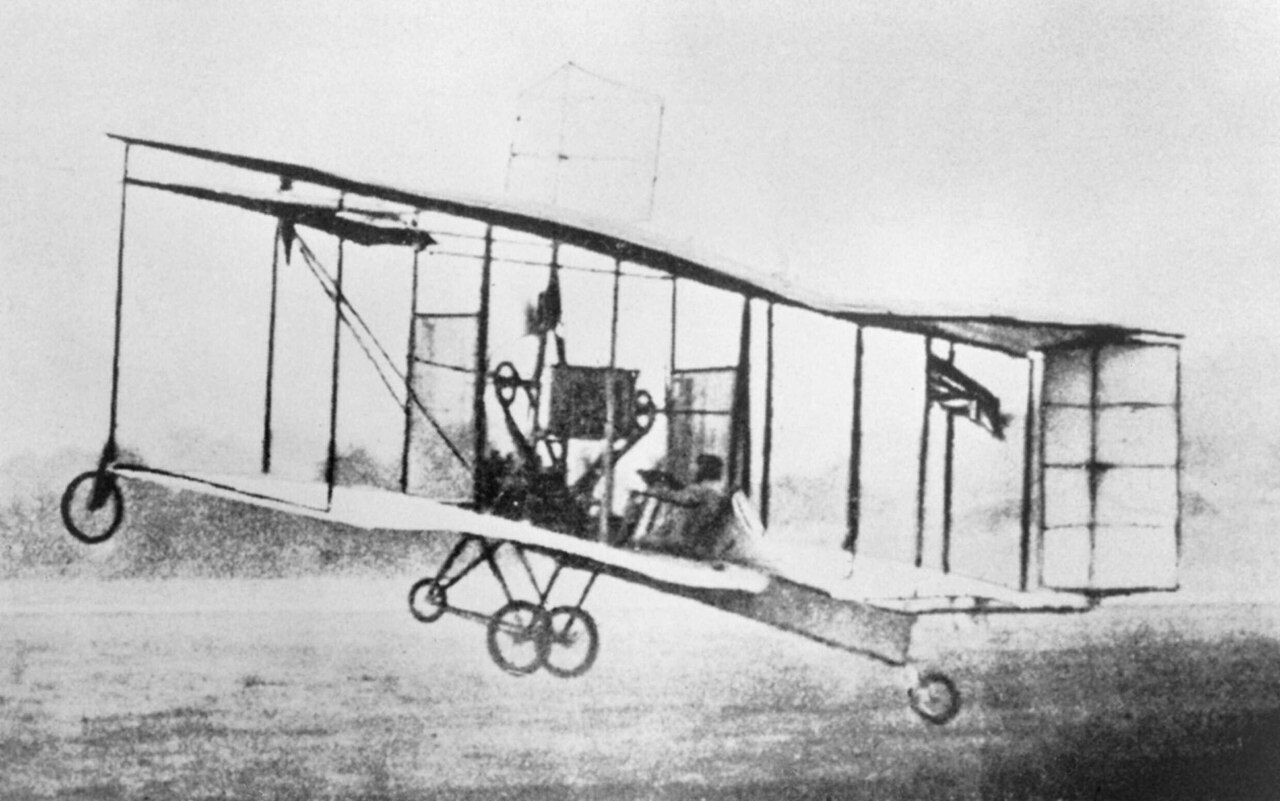
On this day, 1908: Samuel Cody makes Britain's first powered flight
On Oct. 16, 1908, Samuel Cody flew a British Army plane at Farnborough in what is credited as the first powered airplane flight in Britain, the BBC and The Guardian reported. The flight lasted about 30 seconds. It ended in a crash landing after a gust of wind hit the plane.
On Oct. 16, 1908, American-born showman and inventor Samuel Franklin Cody took off from Farnborough in southern England in British Army Aeroplane No. 1, in what is credited as the first powered airplane flight in Britain, the BBC and The Guardian reported.
The plane, known as the Cody Flyer, rose 16 to 20 feet off the ground and flew over a clump of trees before a gust of wind brought it down in a crash landing, the BBC reported. Cody was in the air for just 30 seconds, the BBC said. The Royal Air Force Museum says the flight covered 424 meters, or 1,390 feet.
Cody had an unusual path to aviation. He came to Europe in 1890 and claimed to be the son of Buffalo Bill Cody, the BBC said, and he did a cowboy act in British music halls, the outlets reported. The Guardian said he was born Samuel Cowdrey and "impertinently borrowed the name for its commercial allure."
He became interested in kites and built one that could lift a man a thousand feet into the air, the BBC reported. He then turned to the British Army for backing, the BBC said. He was later based at the government's aviation test site, the Balloon Factory, which the Guardian described as "a cathedral-sized shed on the north side of Farnborough Common."
In 1907, Cody piloted Britain's first airship, Nulli Secundus, on a flight from Farnborough to central London, the BBC reported.
After the 1908 flight, the Army was not convinced that airplanes were worth the money, the BBC said. It withdrew Cody's funding, and he kept building planes with his own money.
The Guardian called the plane "the superbly elemental-sounding Army Aeroplane Number One."
What we know: Cody's Oct. 16, 1908, flight at Farnborough is credited as Britain's first powered airplane flight.
What we don't: How many people saw the flight.
Where outlets agree The BBC and The Guardian both report that Cody made Britain's first powered airplane flight at Farnborough on Oct. 16, 1908.
Where they differ The outlets cited here report the same key facts so far.