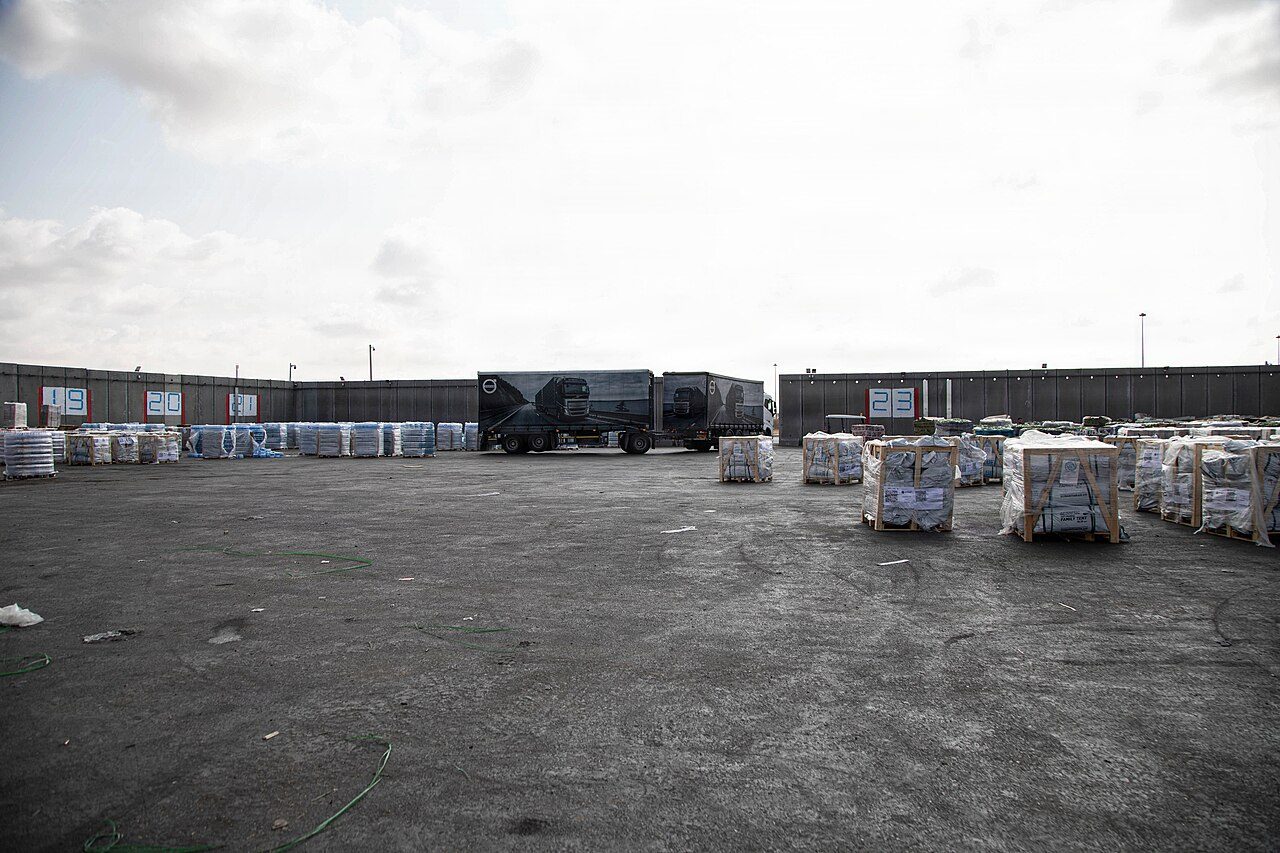
Israel says commercial goods have stopped entering Gaza over fee dispute
Israel says no commercial goods have entered Gaza for two days because traders stopped shipping over a fee set by Hamas, the AP and Reuters reported. Gaza officials deny the claim and say the fee is not a tax. Aid trucks are still getting in, but aid groups warn that prices could rise.
Israel's military body that oversees humanitarian affairs in Gaza says commercial goods have stopped entering the territory, blaming a dispute between local merchants and Hamas, The Associated Press and Reuters reported Thursday.
The body, known as COGAT, said no commercial goods had entered Gaza for two days, the AP reported. COGAT said traders stopped coordinating shipments in response to a 10,000-shekel fee, about $3,220, that Hamas imposed on each truck entering Gaza, plus a demand that 30% of sales be made in cash, Reuters reported. COGAT deputy spokesperson Lt. Daniel Kantorovich told the AP that the agency was acting on the merchants' decision and could reverse it at their request.
Gaza's government media office denied the claims. It said the fee was a voluntary contribution to a fund for widows, orphans and others in need, and that cash was encouraged because of a severe cash shortage, Reuters reported. The head of Gaza's private truckers union, Nahed Sheheiber, told the AP that Israel, not merchants, had imposed the restrictions. He said an economy ministry official told the union the fee was a donation to help pay civil servants, not a tax, the AP reported.
Sheheiber told Reuters that no truck carrying commercial goods from Israel entered on Thursday, while aid trucks and some commercial goods from Egypt did. COGAT said the halt would cut the total number of trucks entering Gaza by about half, to around 300 a day, according to Reuters. Israel is required under the U.S.-brokered ceasefire to allow at least 600 trucks a day, both agencies reported.
Aid groups mostly bring in staples such as flour, while merchants supply fruit, meat and other goods, according to COGAT data cited by the AP. "The humanitarian sector on its own cannot meet the needs of all the people," Shaina Low of the Norwegian Refugee Council told the AP. "The markets need to be functioning."
A global hunger monitor warned in July that more than two-thirds of Gaza's people could face acute hunger by the end of the year, Reuters reported.
What we know: Israel says commercial shipments into Gaza have stopped, and Gaza officials deny causing the halt.
What we don't: When commercial goods will resume and how much prices in Gaza will rise.
Where outlets agree The AP and Reuters both report that COGAT blamed the halt on a 10,000-shekel per-truck fee charged in Gaza, which Gaza officials say is not a tax.
Where they differ Reuters reported that Gaza's media office called the fee a voluntary contribution for widows and orphans, while the AP reported that an economy ministry official called it a donation to help pay civil servants.