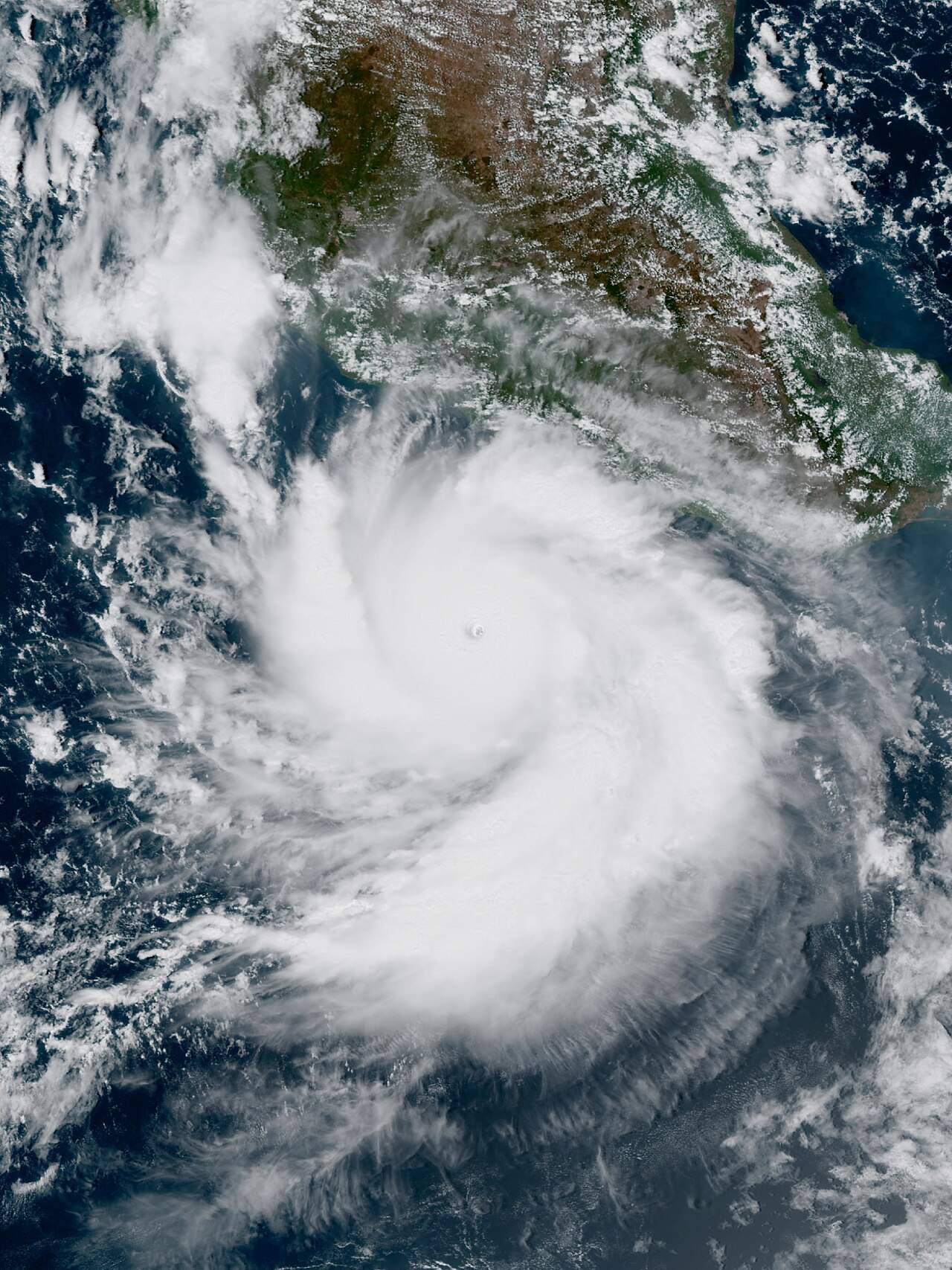
Study: Climate change rivaled El Niño in powering Hurricane Polo
Climate change did at least as much as a record El Niño to fuel Hurricane Polo's rapid jump to Category 5 last month, a quick study found, AP and El País reported. The study, not yet peer-reviewed, says warming made the storm's conditions about 23 times more likely. Some outside scientists said it may understate the climate effect.
Human-caused climate change was at least as big a factor as a record El Niño in fueling Hurricane Polo's explosive strengthening last month, a rapid attribution study found, The Associated Press and El País reported.
The World Weather Attribution study found that climate change made the conditions that fed the storm about 23 times more likely, while El Niño made them about 14 times more likely, the outlets reported. AP said Climate Central also took part and that the rapid study has not been peer-reviewed.
Polo grew from a tropical storm to a Category 5 hurricane in about 24 hours off Mexico, AP reported. AP said it was the longest-lasting Category 5 storm on record in the Pacific, at two and a half days. El País reported that Polo weakened and made landfall as a Category 2 storm in Baja California Sur, and that floods linked to it killed five people in Mexico.
Warming added about 6 mph to the storm's strength, according to the study, and El Niño added about 5 mph, a study co-author said, AP reported. "El Niño comes and goes, but climate change only gets worse," said Friederike Otto, who coordinates the team behind World Weather Attribution, AP reported.
"It is important to remember that every El Niño happening now is occurring in a warmer world," said Ben Clarke of Imperial College London, one of the researchers, El País reported.
Outside scientists weighed in. Brian Tang, a University at Albany atmospheric scientist who was not part of the study, said he was at first surprised that climate change came out as the bigger influence, AP reported. Jeff Masters of Yale Climate Connections, Michael Mann of the University of Pennsylvania and Carl Schreck of North Carolina State University said they believe the study underestimates the climate effect, AP reported.
Study co-author Daniel Gilford of Climate Central acknowledged the report could be underestimating climate change's role a bit but said he was being conservative, AP reported.
What we know: The study finds warming made Polo's fuel conditions about 23 times more likely and El Niño about 14 times.
What we don't: Whether peer review will confirm the findings, and how large the true climate effect is.
Where outlets agree AP and El País both report that the study found climate change made Polo's conditions about 23 times more likely and El Niño about 14 times.
Where they differ The outlets cited here report the same key facts so far.