Mystery Milky Way glow may be remains of a cosmic 'gold factory'
A strange source of high-energy light in the Milky Way may be the leftovers of two dead stars crashing together, a new study suggests. Such crashes make gold and other heavy metals. If confirmed, it would be the first one found in our galaxy, The Independent reported.
A strange source of high-energy light in our galaxy may be the leftovers of two dead stars smashing together, a new study suggests. Such crashes are known to make gold and other heavy metals.
The source is called HESS J1507-622, The Independent reported. It was spotted in 2006 and 2007 by the H.E.S.S. telescopes in Namibia, which look for gamma rays, the most energetic kind of light.
The source has puzzled scientists for years, the Independent said. It gives off gamma rays but almost no radio waves or X-rays. It also sits away from the flat disk of the Milky Way, where most stars and known gamma-ray sources are found.
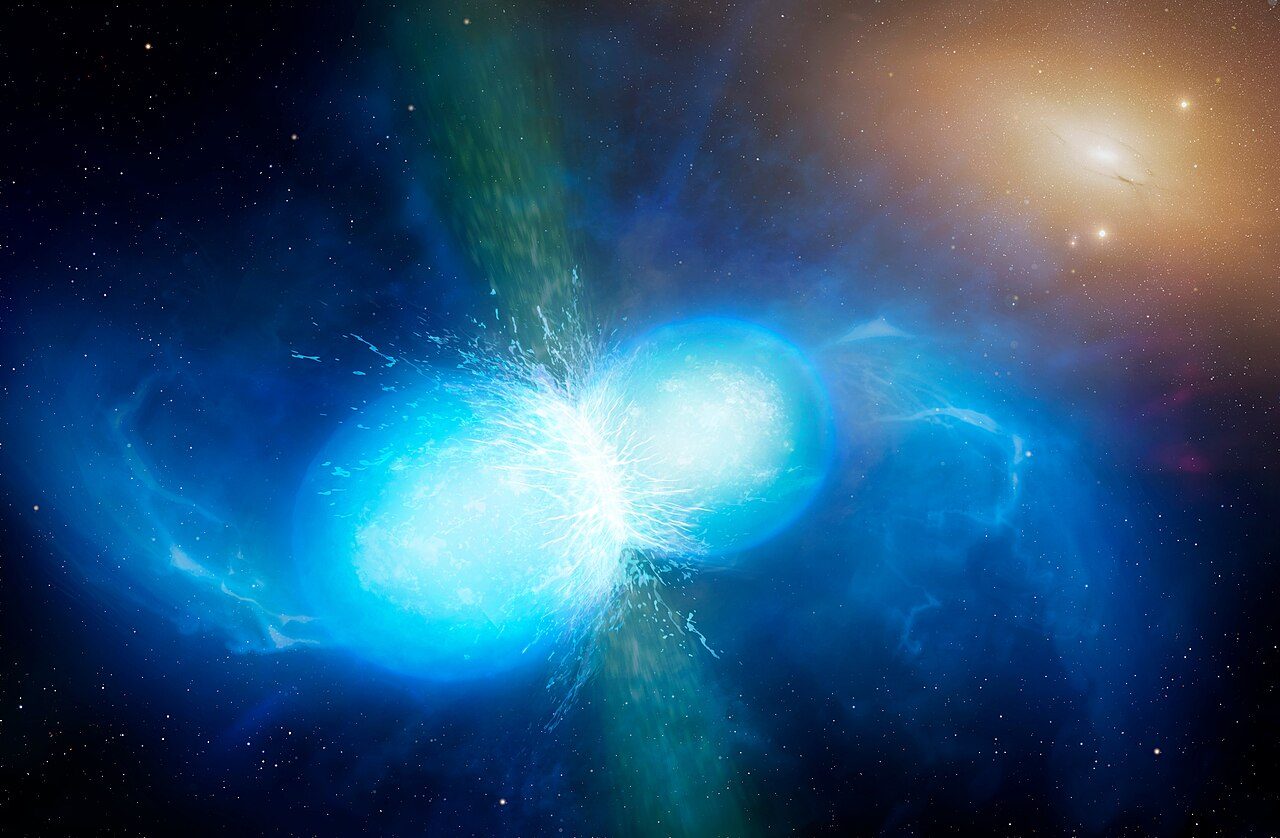
Researchers from the Chinese Academy of Sciences in Beijing and the University of Notre Dame in Indiana now propose an answer, the South China Morning Post reported. They say the glow could come from a "kilonova," the crash of two neutron stars.
Neutron stars are the collapsed cores of huge stars. They are so dense that a teaspoon of their matter would weigh about a billion tonnes, the Post said. When two of them spiral together and collide, the blast makes heavy elements such as gold, platinum and uranium, both outlets reported.
The team built a computer model of a kilonova's leftover cloud. It matched the gamma rays that astronomers had seen, the Independent said.
"Importantly, our analysis favours a kilonova remnant younger than 1,000 years," the scientists wrote, according to the Independent. The blast may have shone as brightly as Jupiter in the sky, the Post reported.
The study was posted on arXiv, a website for early research, and has not yet been checked by other scientists, both outlets noted.
If confirmed, it would be the first kilonova found in the Milky Way, the Independent said.
What we know: Scientists propose that a puzzling gamma-ray source is a young kilonova remnant.
What we don't: Whether future telescopes will confirm it.
Where outlets agree The Independent and the South China Morning Post both report that the study proposes HESS J1507-622 is a kilonova remnant younger than 1,000 years, and that it has not been peer-reviewed.
Where they differ The outlets cited here report the same key facts so far.